TL;DR: Australia's green energy transition is progressing at a highly uneven pace. While residential rooftop solar and big utility-scale battery installations are reaching record levels, the development of new wind and solar generation is falling short of the nation's 2030 targets. Additionally, a critical waste crisis is looming as millions of solar panels are discarded into landfills annually, highlighting a massive gap in the industry's circular economy and recycling efforts.
The Dual Realities of the Energy Grid
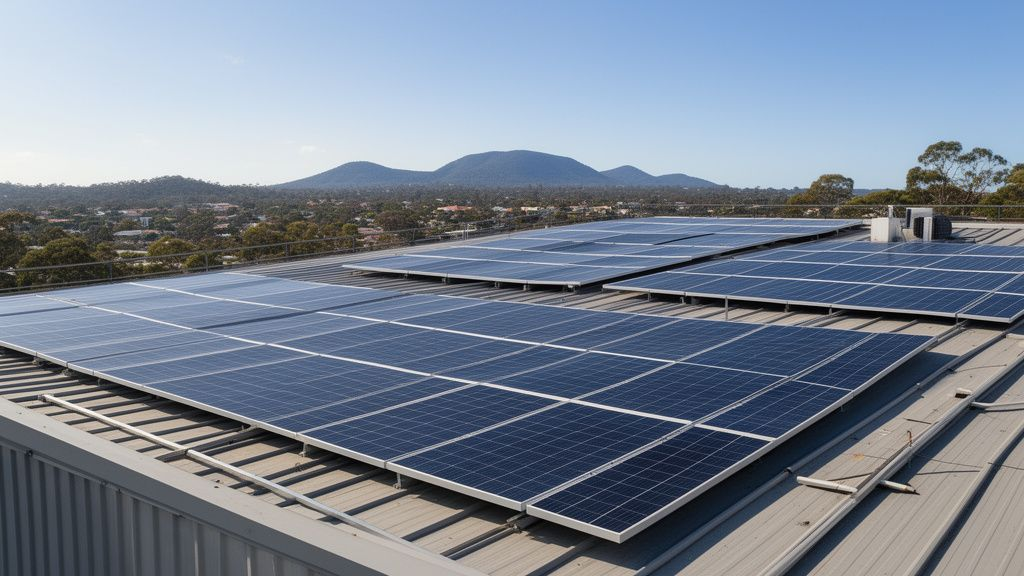
Australia's electricity grid is currently operating on an even split, powered by approximately 50 percent renewable energy and 50 percent fossil fuels. This represents a significant historical shift, largely driven by the rapid and enthusiastic adoption of rooftop solar systems by Australian households. Nationwide, more than 4 million homes—which equates to exactly one in three households—are now fitted with rooftop solar panels. This massive decentralized network has grown to provide 28 gigawatts (GW) of generation capacity to the national energy grid. To put this milestone in perspective, this household capacity eclipses the 22 gigawatts of total capacity provided by all of the nation's remaining coal-fired power plants. Furthermore, state and federal governments, such as in Victoria where solar energy is central to legislated renewable energy and net-zero emissions targets, continue to rely on this long-term demand certainty to drive the transition.
However, this decentralized triumph stands in stark contrast to the challenges faced by large-scale energy generation. The transition is not simply about household generation; it requires a massive, coordinated scale-up of utility-sized solar and wind farms to fully replace aging coal infrastructure before scheduled retirements. According to the Australian Energy Market Operator (AEMO), the nation's main grid achieved a record-breaking 9.1 gigawatts of new generation and storage capacity reaching full output during the 2025/26 financial year. This total was more than double the volume recorded in the previous financial year. However, more than half of this new capacity—just over 5 gigawatts—consisted of big battery storage. While these batteries are highly valuable for grid stability, the remaining additions comprised less than 4 gigawatts of new wind and solar generation capacity. This current rate of generation development falls critically short of the federal government's target of reaching 82 percent renewable energy by the year 2030.
Understanding Grid Integration Obstacles and Project Delays
According to AEMO's latest Connections Scorecard, there is an expanding pipeline of future projects, with the broader connections pipeline growing by 42 percent from 53 gigawatts to 75.4 gigawatts over the year. Additionally, AEMO received a record-breaking 12 wind project applications during the year, representing 5.2 gigawatts of potential capacity. This represents a clear improvement for wind energy, which has historically struggled as the "problem child" of the energy transition due to rising development costs, complex planning processes, transmission network congestion, and social licence challenges.
Despite the massive volume of applications, total registration and application approvals actually decreased compared to the previous year, falling to 7.4 gigawatts and 14.2 gigawatts respectively. This slowdown reveals that projects are getting stuck in the late stages of development. Margarida Pimentel, AEMO’s General Manager of Onboarding and Connections, points out that the primary cause of modern project delays is no longer just the connections process itself. Instead, late-stage project changes are the major contributor. Project developers frequently submit design changes and equipment substitutions during the approval process, which requires AEMO to conduct additional technical assessments and rework. Furthermore, factors such as project sales, extended financing negotiations, and delays in achieving commercial readiness are stalling progress.
Beyond technical grid connections, developers are facing severe commercial hurdles. Energy market analysts report that the single greatest roadblock is a lack of firm, long-term power purchase contracts. Very few retail utilities or corporate buyers are entering the market to purchase large-scale green power. While underwriting programs, such as the federal Capacity Investment Scheme and state-level schemes in New South Wales, offer financial security, they are not sufficient on their own to bring projects to financial close without additional corporate or utility buyers. Major legacy utilities have very little financial incentive to sign these agreements. If there is insufficient new generation built to allow old coal-fired units to close safely, these utilities will likely receive payments to keep their coal plants operating past their scheduled retirement dates. While there is a possibility that emerging commercial data centres could step in to purchase large volumes of renewable power, this market remains highly uncertain.
The Solar Landfill Crisis and the Recycling Bottleneck
As the deployment of solar technology grows, the industry faces an escalating environmental challenge at the end of the technology's life. The solar industry estimates that at least 4 million solar panels are removed from rooftops and utility-scale farms in Australia every single year, with the vast majority going directly into landfill. Rooftop solar panels are highly durable products designed to last for more than 25 years before environmental wear and tear diminishes their silicone cells and degrades their protective backing materials. However, the average age of the panels currently being sent to Australian landfills is only eight years. This premature disposal occurs because homeowners choose to discard perfectly functional older systems early in order to upgrade to newer, larger, and more efficient technology.


Previously, up to 2 million of these discarded rooftop panels were shipped overseas annually from Australia to developing economies to be resold. However, this secondary market has completely collapsed. The combined effects of rising global transport costs and the ultra-low cost of brand-new, Chinese-manufactured solar panels have made the shipping and reuse of second-hand panels economically unviable.
This massive annual accumulation of panels in domestic landfills represents a serious environmental hazard. Solar panels contain small, concentrated amounts of hazardous materials, including lead and cadmium. If panels are simply dumped, these heavy metals can slowly leach from landfills and contaminate local water tables. The lack of operational recycling pathways poses a major threat to the social licence of the renewable energy industry, as public support for the transition may degrade if clean energy projects result in massive domestic waste problems.
To address this, the federal Albanese government announced a $25 million pilot program in January. The program's goals were to kick-start a dedicated domestic solar recycling industry, recover valuable raw materials such as silver, copper, and aluminium, and establish a network of 100 collection points around the country to process 250,000 panels over three years. However, this pilot program was placed on an indefinite pause in May by the Department of Climate Change, Energy, the Environment and Water (DCCEEW) after a stakeholder lodged a complaint regarding the tender process. Environment Minister Murray Watt has confirmed that the government remains fully committed to the pilot and is actively seeking an administrator to run it, but the delay has drawn sharp criticism. Suzanne Toumbourou, Chief Executive of the Australian Council of Recycling, expressed deep concern over the lack of transparency and timing, noting that the ongoing delay means millions of panels will continue to go to landfill or potentially be exported illegally.
A Consumer Guide to Solar Acquisition and Management
For Australian consumers looking to navigate this complex landscape, making an informed decision is vital. According to Darryn Van Hout, founder of Brisbane-based Australian Solar Quotes, transition resources like solar calculators, online quoting tools, and comprehensive buyers' guides are crucial for helping homeowners evaluate system options. When selecting a solar system, consumers must weigh five critical factors:
- Price: Determining up-front affordability versus long-term financing options, such as structured solar payment plans.
- System Size: Assessing how much physical roof space is available to accommodate the panels.
- Installation Constraints: Evaluating the specific roof structure and the condition of the home's electrical switchboard.
- Location: Assessing geographical positioning, particularly comparing the costs and sunlight availability in metropolitan areas versus regional Australia.
- Financial Incentives: Maximizing available government rebates and securing favorable solar feed-in tariffs from electricity retailers.
Consumers should also consult comparison services like iSelect to analyze gas and electricity plans, ensuring their home energy setup effectively integrates renewable power with the retail market to maximize monthly savings.
Key Takeaways
- Generation Gap: Australia's grid is 50% renewable, but the installation of new wind and solar generation is falling far short of the 82% by 2030 target, even as battery storage installations break records.
- Connection Friction: Delays in grid connection are heavily driven by mid-process project modifications, equipment substitutions, project sales, and a lack of firm corporate energy contracts.
- The Recycling Dilemma: Over 4 million solar panels are discarded annually, with most ending up in landfills at an average age of just eight years. A critical $25 million federal recycling pilot program remains paused due to a tender dispute.
- Strategic Consumer Planning: Homeowners should carefully evaluate system size, switchboard condition, regional factors, and end-of-life recycling implications when purchasing a system to ensure long-term financial and environmental sustainability.
Related Guides
- The Solar Panel Landfill Crisis: Why Recycling Infrastructure is Paused
- The Australian Green Grid Transition: Analyzing AEMO's Latest Connections Scorecard
- A Homeowner's Guide to Buying and Managing Solar Energy in Australia
- Storage vs. Generation: Why Big Batteries Dominate Australia's Grid Transition