TL;DR: Selecting the correct residential solar package involves auditing your household's active energy demands and understanding how system sizes—such as 10 kW, 13 kW, or 19 kW packages—match seasonal electrical loads and future battery integration.
Assessing Your Household Energy Footprint
Investing in a home solar system requires selecting a package sized for your home's unique energy footprint. System engineering must account for how a household consumes energy throughout the day, seasonal load variations, and future appliances.
A professional residential solar assessment evaluates several core parameters:
- Estimated daily electricity consumption: The total kilowatt-hours used in a day.
- Maximum simultaneous loads: The peak power draw when multiple appliances are turned on together.
- Motor and compressor starting currents: The initial surge current required by appliances such as pumps, air conditioners, and fridges.
- Daytime versus overnight usage: Identifying when power is consumed to determine the potential benefit of battery storage.
- Roof orientation and shading: Evaluating how much physical roof area is available and whether shading will impact production.
Standard Solar Packages and Component Sizing
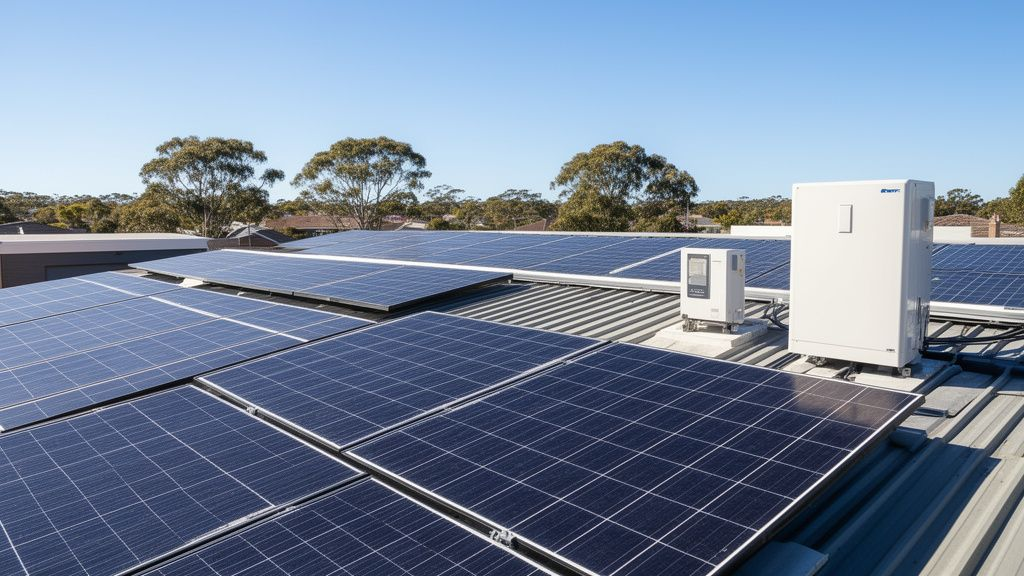
Residential solar packages, such as those provided by PSW Energy, are offered in variable sizes to match different household needs, including standard 10 kW, 13 kW, and 19 kW packages featuring high-efficiency panels like Risen modules.
- 10 kW Solar Packages: Ideally suited for standard family homes with moderate electricity usage, operating typical everyday appliances such as fridges, lighting, entertainment systems, and standard washing machines.
- 13 kW Solar Packages: Sized for homes with higher electricity needs, such as properties with ducted air conditioning, induction cooktops, or electric heat-pump hot-water systems.
- 19 kW Solar Packages: Designed for large residential properties, homes with workshops, swimming pools, multiple high-energy loads, or properties prepping for electric vehicle (EV) charging and large off-grid configurations.
Balancing Solar Generation with Storage Needs
To maximize the value of your solar investment, the panel array must generate enough surplus electricity during peak daylight hours to power the home while recharging a battery system. When sizing storage, homeowners should evaluate a battery's usable capacity rather than its nameplate capacity alone.

Other key battery performance factors to consider include:
- Maximum discharge output: The maximum amount of power the battery can supply at any one time.
- Battery charge rate: How quickly the battery can absorb power from the solar panels.
- Cycle life and warranty: The manufacturer-supported lifespan of the storage units.
- Inverter compatibility: Ensuring seamless communication between your solar panels, inverter, and battery storage.
Selecting Approved Products and Ensuring Compliance
All components in a home solar package must meet strict safety and quality standards. To be eligible for small-scale technology certificates (STCs) under the Small-scale Renewable Energy Scheme (SRES), all installed products must be listed on the Clean Energy Council’s (CEC) approved product lists and meet relevant Australian standards.
Installing compliant products ensures safety and eligibility for financial incentives. Homeowners should verify that their installers are accredited through Solar Accreditation Australia (SAA).
Regulatory agencies, including the CEC and the Australian Competition and Consumer Commission (ACCC), monitor product safety through a national electrical safety recall system. For example, on 19 November 2025, the ACCC issued a voluntary safety recall for Sigenergy single-phase 8 kW, 10 kW, and 12 kW energy controllers, highlighting the importance of using approved products and working with manufacturers committed to rectifying technical issues.
Key Takeaways
- Match System to Load: Select package sizes (such as 10 kW, 13 kW, or 19 kW) based on daily electricity consumption and peak starting currents rather than house size alone.
- Focus on Usable Storage Capacity: Assess a battery's usable capacity, charge and discharge rates, and inverter compatibility when planning for storage.
- Verify SRES and CEC Approval: Ensure all solar panels and batteries are on the CEC approved list and installed by SAA accredited installers to remain eligible for STCs.
- Monitor Safety Standards: Keep informed of national electrical safety recalls overseen by the ACCC to ensure the long-term safety of your home energy system.