TL;DR: Renewables offer the quickest path for Australia's energy demands because solar and wind projects are built faster, cost less per unit of energy, and adapt more readily to distributed generation models than traditional fossil fuel power stations. This rapid deployment capability helps stabilise energy prices and strengthens grid resilience.
Why Are Renewables Quicker to Deploy Than Traditional Power Stations?
Renewable energy projects, particularly solar and wind farms, roll out significantly faster than conventional coal or gas power stations. The modular nature of solar panels and wind turbines means components are manufactured in factories globally and then assembled on-site, a process far less complex and time-consuming than building a bespoke fossil fuel plant. A large-scale solar farm, for example, can move from ground-breaking to full operation within 12-24 months, while a new coal-fired power station often takes 5-10 years, sometimes longer, due to complex engineering, supply chains, and extensive environmental approvals. This speed allows for quicker scaling to meet increasing electricity demand.
How Modular Design Speeds Up Construction
The standardisation of solar panels and wind turbines simplifies construction dramatically. Companies like Trina Solar or JinkoSolar produce millions of panels annually, ready for deployment. These units are trucked to site, mounted on pre-fabricated frames, and connected. There is no need for large, custom-designed boilers, turbines, or extensive pipework. This streamlined approach minimises on-site fabrication and specialised labour, reducing both construction time and associated project risks. Project approvals still take time, but the construction phase itself is comparatively rapid. For instance, the Bomen Solar Farm in NSW, a 120MW project, began exporting power just over a year after major construction started.
Faster Approvals and Grid Connection for Smaller Projects
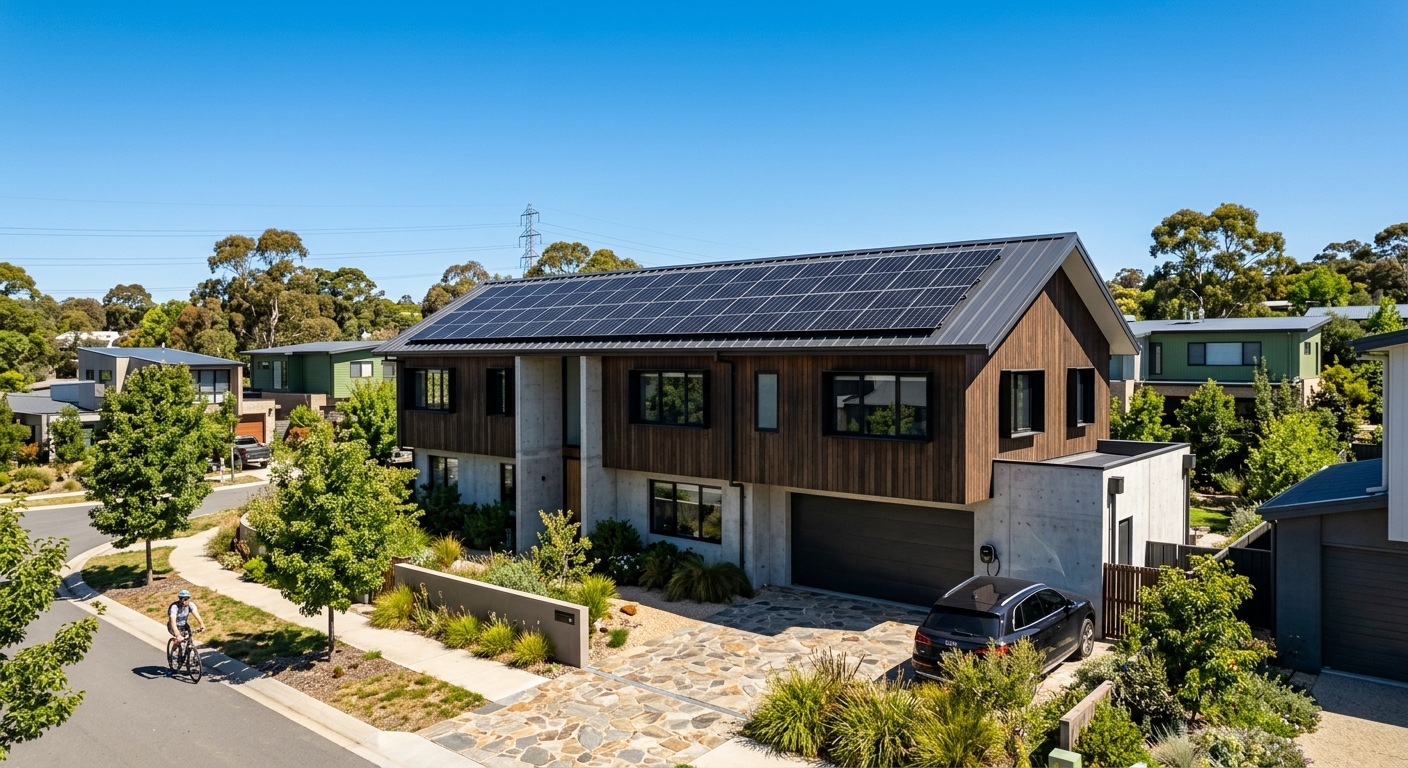
While large grid-scale renewable projects still navigate significant planning and environmental assessments, their inherent lower risk profile compared to fossil fuel plants can sometimes expedite certain phases. More importantly, rooftop solar, a massive component of Australia's renewable capacity, requires minimal approval and can be installed on a typical home in a single day. This distributed generation bypasses many of the major infrastructure hurdles associated with centralised power stations, adding capacity directly where it is consumed. We now have over 3.8 million Australian homes with solar, collectively forming a significant power source that was added comparatively quickly.
How Do Renewables Deliver Energy Security and Cost Stability for Australian Households and Businesses?
Renewable energy enhances Australia's energy security by reducing our reliance on volatile international fossil fuel markets and stabilising electricity costs. Unlike coal and gas, which have commodity prices influenced by global events and fluctuating supply, the "fuel" for solar and wind power — sunshine and wind — is free and abundant in Australia. This eliminates exposure to price shocks like those seen with gas during the recent European energy crisis, which pushed Australian wholesale electricity prices sky-high. By diversifying our energy mix with renewables, we insulate our economy from these external pressures, leading to more predictable and often lower long-term energy costs.
Lower Operating Costs Mean Cheaper Power
The Levelised Cost of Energy (LCOE) for new solar and wind projects has consistently fallen over the past decade, making them the cheapest forms of new electricity generation in Australia. Once built, their operating costs are minimal, primarily consisting of maintenance and monitoring. There are no ongoing fuel purchases. This contrasts sharply with gas-fired power stations, which face significant and variable fuel expenses. For consumers, this translates to lower wholesale electricity prices, which eventually flow through to retail bills. Many commercial solar installations offer businesses power purchase agreements (PPAs) at rates significantly below grid prices, often 10-20 cents per kilowatt-hour, providing long-term budget certainty.
Reduced Volatility in Retail Electricity Prices
The shift to renewables helps dampen the wild swings we've seen in retail electricity prices across states like NSW, Queensland, and Victoria. With more generation coming from sources with zero fuel cost, the overall market price becomes less susceptible to sudden spikes. While grid integration costs and network charges remain, the generation component of a bill stabilises. A typical Australian household in 2024 pays 30-40 cents per kilowatt-hour for grid power, but those with solar export surplus energy for feed-in tariffs often below 5 cents per kilowatt-hour. The vast difference shows the benefit of self-generation and how low the actual generation cost of solar is.
Can Our Existing Grid Handle a Rapid Shift to Renewable Energy?
Australia's national electricity grid is undergoing significant upgrades and modernisation to integrate the increasing share of renewable energy efficiently. While the grid was historically designed for large, centralised fossil fuel generators, new investments in transmission lines, battery storage, and smart grid technologies are adapting it for a future powered by distributed and intermittent renewables. This transition requires significant planning and infrastructure build-outs, but it is actively underway, supported by both government and private sector initiatives to ensure reliability and stability.
Grid Modernisation and Battery Storage Solutions
The Australian Energy Market Operator (AEMO) has outlined a clear plan, the Integrated System Plan (ISP), for this grid transformation, including thousands of kilometres of new transmission lines and substantial utility-scale battery storage. Projects like the Victorian Big Battery (300MW/450MWh) and the Hornsdale Power Reserve (150MW/193.5MWh) in South Australia demonstrate the effectiveness of large-scale batteries in providing grid stability, frequency control, and dispatchable power. These batteries can charge from abundant solar and wind and discharge during peak demand, effectively firming up renewable output and reducing reliance on fossil fuel peaker plants.


The Role of Virtual Power Plants and Demand Response
Beyond utility-scale solutions, the proliferation of rooftop solar and home battery systems (like Tesla Powerwall or Enphase Encharge) enables the development of Virtual Power Plants (VPPs). These VPPs aggregate many small, distributed energy resources into a single managed entity, allowing them to act like a single large power station. They can export power to the grid, participate in demand response programs, or absorb excess renewable energy. This decentralised approach adds significant resilience and flexibility to the grid, leveraging existing consumer investments to support the broader energy transition. We currently have over 30 VPP programs operating or under trial across Australia.
What Is the Economic Benefit of Australia's Rapid Renewable Transition?
Australia's rapid shift to renewable energy generates substantial economic benefits, extending beyond lower electricity costs to create new industries, jobs, and investment opportunities. This transition represents a significant economic pivot, transforming our energy sector into a source of future prosperity rather than a reliance on finite resources with volatile prices. By embracing renewables, Australia can become a global leader in green energy exports, attracting international investment and fostering local innovation.
Job Creation and Regional Development
The construction, operation, and maintenance of solar and wind farms create thousands of jobs, many of which are located in regional areas. The Australian Council of Social Service (ACOSS) suggests that a renewable-led recovery could create over 100,000 new jobs by 2030. These jobs range from engineers and project managers to electricians, civil construction workers, and maintenance technicians. The investment in large-scale renewable projects stimulates local economies through procurement of services, accommodation, and supplies, offering economic diversification for communities traditionally reliant on fossil fuel industries. For instance, the Hunter Valley region in NSW is now seeing significant investment in renewable energy zones.
New Export Opportunities and Green Manufacturing
Australia's abundant sun and wind resources position us uniquely to become a global superpower in green hydrogen and green ammonia production. These renewable-derived fuels can be exported to energy-hungry nations, much like our traditional fossil fuels. This creates a brand new export industry, leveraging our natural advantages and existing export infrastructure. Furthermore, the burgeoning renewable sector encourages local manufacturing of components like solar panels, inverters, and battery systems, fostering innovation and reducing reliance on overseas supply chains. Several Australian companies are already exploring local production of advanced solar technologies.
Key Takeaways
- Renewables are built faster, making them the quickest path to increase Australia's energy supply.
- Solar and wind have lower operating costs, translating to more stable and affordable electricity prices for everyone.
- Significant grid upgrades and battery storage are actively modernising Australia's electricity network for a renewable future.
- The shift to renewables creates new jobs, especially in regional areas, and opens up new export markets like green hydrogen.
- Australia can leverage its natural renewable resources to enhance energy security and drive economic growth.
Read More
For a comprehensive overview, check out our master guide: Read the Full Guide Here.