TL;DR: Australia's federal government is increasing the Small-scale Renewable Energy Scheme (SRES) limit from 100 kW to 1 MW to lower solar setup costs by roughly 20 percent for medium-sized systems. This budget-neutral reform, administered by the Clean Energy Regulator, starts on October 1, 2026, and introduces minimal compliance costs of just $1 to $2 per year for retailers.
The Financial Mechanics of the SRES
The Small-scale Renewable Energy Scheme (SRES) is one of the pillars of Australia's transition to clean energy, having successfully operated since 2011. Unlike direct government grants, the SRES operates on a market-based certificate system. When an approved renewable energy system is installed, it is entitled to generate Small-scale Technology Certificates (STCs). These certificates are then sold and traded on the open market, and the financial value of these certificates is applied as an upfront discount on the system's purchase price.
This system is administered at the federal level by the Clean Energy Regulator, keeping it entirely independent of individual state-run rebate schemes. By utilizing this established, safe, and familiar system, the federal government can expand solar access without creating new administrative bodies or complex red tape.
Expanding the Cap to 1 Megawatt
Historically, the SRES only supported systems up to 100 kW in size. While this cap was highly effective for residential households, it locked out larger energy users, such as factories, retail complexes, and large farming operations, whose daily energy needs far exceed a 100 kW capacity.
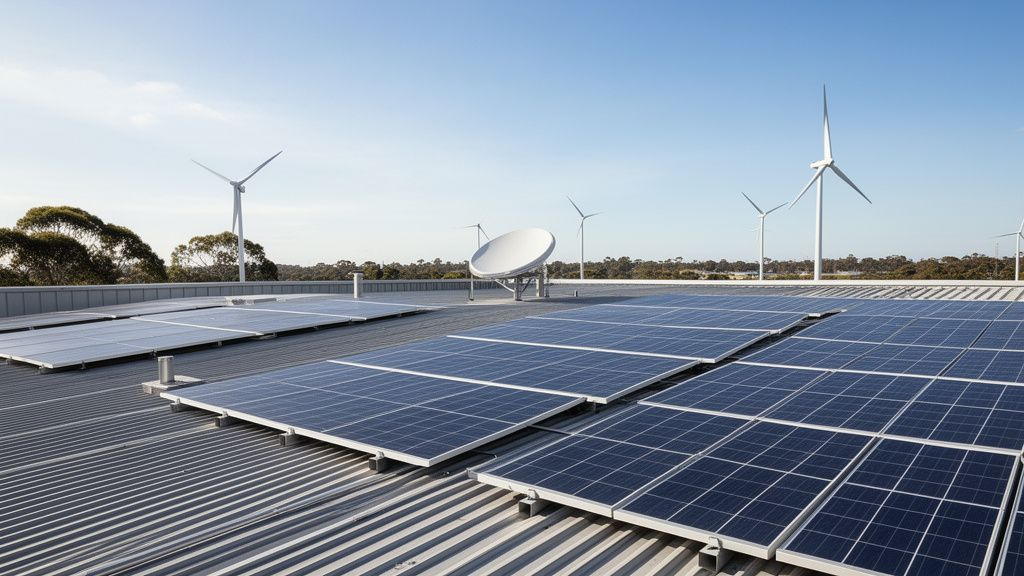
Starting October 1, 2026, the SRES cap will be officially raised to 1 MW. This tenfold increase in system capacity eligibility allows businesses to install solar systems up to 1 MW while still receiving the upfront financial benefits of the SRES. This change is projected to slash the upfront cost of installing medium-sized solar systems by approximately 20 percent, making clean energy highly competitive for commercial properties.
This reform addresses Australia's 'missing middle' of solar transition. Currently, residential roofs account for 22 GW of solar capacity, while commercial roofs account for only 5.6 GW. Unlocking systems up to 1 MW allows businesses to install larger arrays that match their large roofs and high daytime electricity consumption.
Budget Neutrality and Retailer Compliance Costs
A key benefit of expanding an established program like the SRES is that the transition is completely budget-neutral for the government. The scheme has always had a minor compliance cost for energy retailers, which is designed to reduce progressively each year until the scheme winds down in 2030.
According to federal policy details, the incremental compliance cost associated with adding systems up to 1 MW to the SRES is expected to be extremely small, amounting to approximately $1 to $2 per year. This ensures that the scheme continues to put downward pressure on energy prices. In fact, wholesale electricity prices have already dropped by 47 percent in the most recent quarter, driven by the expansion of cheap renewable generation.
This expansion joins other highly successful consumer-driven climate policies, such as the Cheaper Home Batteries program, which has achieved more than 490,000 installations since its launch in 2025. These combined efforts demonstrate how well-structured, market-based incentives can accelerate national renewable adoption.
Key Takeaways
- Tenfold Cap Increase: The SRES eligibility cap rises from 100 kW to 1 MW on October 1, 2026.
- Upfront Savings: The expansion reduces the installation cost of medium-sized solar systems by around 20 percent.
- Administered by the CER: The program remains under the federal Clean Energy Regulator and is separate from state-level programs.
- No Added Red Tape: Utilizing the proven SRES framework ensures zero new bureaucracy for businesses or installers.
- Budget-Neutral Design: The expansion adds negligible retailer compliance costs of $1 to $2 per year, which continue to decline to 2030.
- Wholesale Price Relief: The increase in renewable capacity supports a cleaner grid, building on the 47 percent reduction in quarterly wholesale prices.