TL;DR: Transitioning to a fully electrified home is one of the most critical and complex investment decisions an Australian household can make. Under the guidance of clean energy experts like Finn Peacock, a former CSIRO engineer and the author of Home Electrification 101, homeowners are realizing that electrification is a holistic journey. This comprehensive guide details how solar panels, inverters, and lithium-ion batteries function together, explains grid-management strategies like SA Power Networks' solar curtailment, and provides an engineering-backed approach to choosing vetted, professional installers.
The Transition to Home Electrification
Transitioning to a fully electrified home is a major step toward long-term energy independence and lower utility costs. The shift involves replacing gas-reliant appliances with highly efficient electrical alternatives and generating your own clean power. A complete, modern home electrification setup is a synchronized ecosystem of diverse components. Beyond standard rooftop solar panels, it includes home battery storage systems, energy-efficient reverse-cycle split or ducted air conditioning, hot water heat pumps, and electric vehicle (EV) chargers.
Since 2009, the scale of this movement in Australia has grown dramatically. Over one million Australians have explored their options to reduce grid dependence, seeking trustworthy advice to navigate a marketplace full of technical options. However, as home electrification is an investment that can span decades, understanding the underlying technology and the grid ecosystem is essential before making any purchasing decisions. Working with qualified, vetted professionals ensures that your system components are properly integrated and safely installed.
How Rooftop Solar Systems Generate and Distribute Power
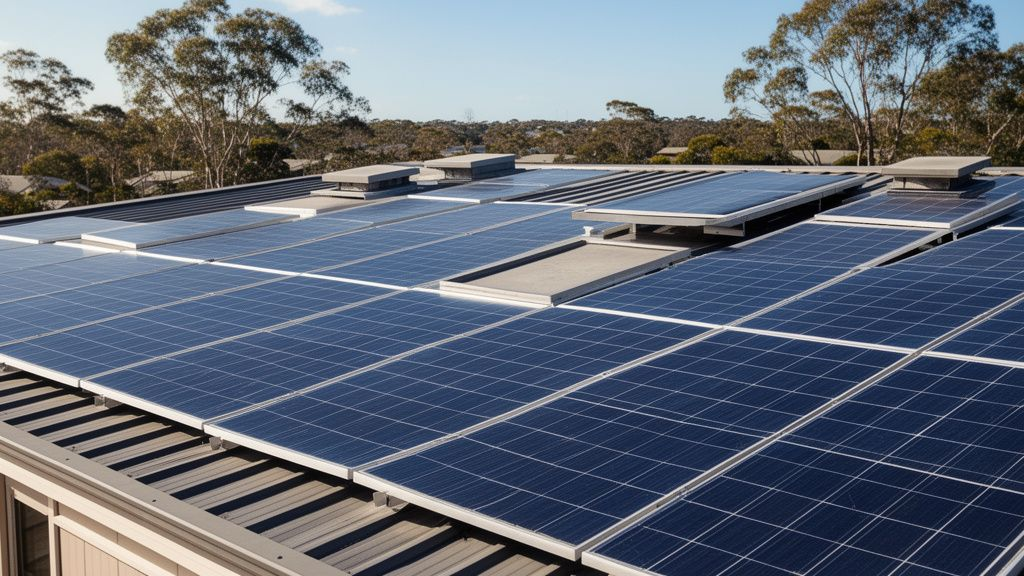
At the heart of any residential solar setup is the photovoltaic process. Solar panels mounted on your roof capture sunlight and convert it into direct current (DC) electricity. However, the appliances inside your home—from your washing machine and dishwasher to your refrigerator and air conditioner—require alternating current (AC) electricity to run. This is where the solar inverter plays its indispensable role, continuously converting the incoming DC electricity from the panels into usable AC electricity for the household.
Your residential energy system manages this power flow automatically without requiring any manual switching. Under standard operating conditions, your home uses the available solar electricity first to meet its immediate demand. If your appliances are running during the middle of the day, they draw directly from the solar panels. What happens when the solar panels generate more electricity than your household appliances are currently consuming? Without a storage solution, this excess daytime energy is either exported directly back to the wider electricity grid or, in some cases, limited by local network export restrictions. On cloudy or overcast days, the panels still generate electricity, although at a significantly lower rate than on a clear, sunny day. Under these conditions, your home runs on a dynamic blend of direct solar power and grid-supplied electricity.
The Role of Home Battery Storage
Rather than sending your valuable, self-generated electricity to the grid, a solar battery system redirects that surplus energy to charge its internal storage cells. Most modern residential batteries available today utilize lithium-ion technology. Lithium-ion is the preferred choice for Australian homes because of its strong operational performance, long operating life, and exceptionally low maintenance requirements.
When the sun sets and solar generation drops to zero, the home battery automatically begins discharging its stored DC electricity, which is then converted by the inverter into AC electricity to power your home through the night. If the home battery runs out of charge or if your household demands more instantaneous power than the battery can provide, the system automatically draws the difference from the electricity grid.
Many homeowners assume that installing solar panels and a battery guarantees immediate power during a utility outage. However, standard grid-connected solar and battery systems are engineered to automatically shut down during a blackout. This shutdown is a critical safety feature designed to protect grid technicians who may be working on local powerlines. For a home battery to operate when the grid is down, it must be specifically designed and configured for backup operation. When configured correctly, the system will automatically isolate your home from the grid during a blackout, allowing the battery to safely supply stored power to your selected household appliances.
Understanding Solar Curtailment and Grid Integration
While home solar systems offer immense benefits to individual households, the sheer volume of distributed rooftop generation presents unique challenges for grid operators. In regions like South Australia, rooftop solar has successfully grown to become the single largest generator of electricity in the state. On mild, sunny days when solar production is exceptionally high but overall energy demand is low, the grid can experience severe imbalances. If too much solar electricity is exported to the network without sufficient local consumption, the grid can become highly unstable.
To prevent widespread, unplanned outages, the independent Australian Energy Market Operator (AEMO) may issue emergency directions to network operators, such as SA Power Networks, to implement solar curtailment. Solar curtailment is the intentional reduction of solar power generated and exported to the network, used only as a last resort when all other balancing options are exhausted. In South Australia, regulations introduced in September 2020 require all newly installed solar inverters to feature remote disconnect capabilities, operated by designated Relevant Agents or via Dynamic Export functions.
When AEMO directs SA Power Networks to curtail solar, a strict, multi-step protocol is followed to minimize consumer disruption:
- Large-scale solar and wind utility farms are turned off.
- Large-scale commercial solar systems on shopping centers and factories are shut down.
- Residential exports are curtailed using Relevant Agent and Dynamic Export functions.
- Remaining older rooftop systems are tripped offline using Emergency Voltage Management (EVM) functions.
To prevent the frequent need for total solar curtailment, network operators are deploying world-leading innovations. One such technology is Flexible Exports, which allows for dynamic, real-time adjustments to export limits rather than implementing static, permanent limits on household systems. This ensures that customers can continue to benefit from maximum exports during times of high grid capacity, while protecting system stability when necessary.
Navigating the Quoting and Installation Process
Given the technical complexity of home electrification, selecting a qualified installer is a critical step. The Australian marketplace includes a wide variety of operators, making independent advice essential. Since 2009, SolarQuotes has helped 1,005,445 people navigate this journey across 3,10 Postcodes in Australia. The platform has compiled 100,064 uncensored reviews of 3,179 solar and home energy installation companies, maintaining a highly selective network of 670 trusted installers.
High-quality operators, such as SolarSummit, Shore Energy, Natures Spark Electrical, Isolated Electrical Qld, EnergyFlo Renewables, Audra Solar, Infinite Electrical and Solar Pty Ltd, and RESINC Solar, are carefully vetted to protect consumers from substandard workmanship. Vetted installers take the time to request comprehensive details about a home’s structure, electrical board, and energy usage to provide a tailored, reliable quote, rather than offering generic, one-size-fits-all packages.
Key Takeaways
- Holistic Integration: Successful home electrification pairs solar panels with inverters, lithium-ion batteries, heat pumps, and EV chargers for maximum efficiency.
- Automatic Management: Systems prioritize household power consumption first, battery charging second, and grid exports third without manual intervention.
- Blackout Configuration: Standard systems shut down during outages for technician safety unless specifically configured with a dedicated backup isolation system.
- Grid Safeguards: Solar curtailment is an essential last-resort protocol managed by AEMO and SA Power Networks to maintain grid stability during high-generation, low-demand periods.
- Professional Vetting: Utilizing trusted networks like SolarQuotes helps consumers bypass low-quality installers and connect with vetted, qualified electricians.
Related Guides
- How Solar Batteries Work: A Complete Technical Guide for Australian Households
- Understanding Solar Curtailment: Why SA Power Networks and AEMO Limit Rooftop Solar Exports
- Large-Scale Hybrid Renewables: Inside the 1.4GW Bungaban Wind, Solar, and Battery Project
- How to Safely Vet Solar Installers and Avoid Energy Scams in Australia