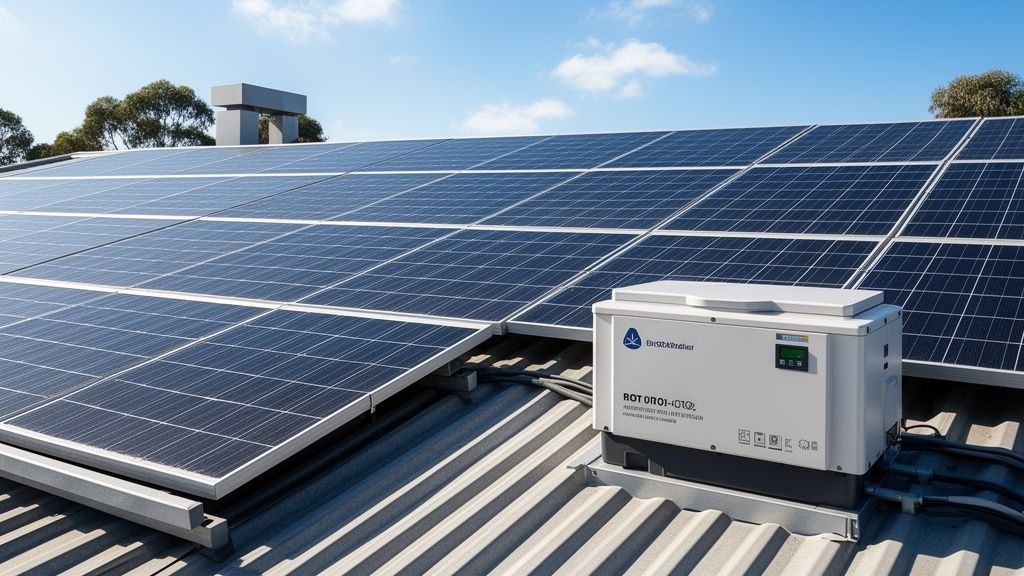
TL;DR: Understanding the mechanics of a solar battery is essential for maximizing your home's self-consumption of renewable energy. This technical guide outlines the conversion of DC to AC electricity, the physical prioritization of power distribution, and the specific configurations required to keep your lights on during a blackout.
What is a Solar Battery and Why Do You Need One?
A solar battery is a rechargeable storage unit designed to hold electricity generated by your rooftop solar panels. Many Australian households use the majority of their electricity during the morning and evening hours, whereas solar panels generate the most electricity during the middle of the day. Without a storage system, any excess solar energy generated during peak daylight hours is automatically exported back to the grid.
By installing a solar battery, you can capture and store this surplus energy for later use. This allows you to consume more of your own clean power, purchase less electricity from the grid, and gain greater control over your home's energy consumption. Most residential battery storage systems available today utilize lithium-ion technology. Lithium-ion batteries are favored across the industry because they deliver strong performance, offer a long operational life, and require very little maintenance.
The Daily Power Cycle: Managing Energy Flow Automatically
A typical residential solar and battery system manages the flow of electricity automatically. The process begins when your solar panels capture sunlight and generate direct current (DC) electricity. To make this power usable by your household appliances, an inverter converts the DC electricity into alternating current (AC) electricity.
During daylight hours, the system prioritizes electricity usage in a specific sequence:


- Direct Household Power: The system first directs AC electricity to run whatever household appliances are currently operating, such as refrigerators, washing machines, or air conditioners.
- Battery Charging: If the solar panels are producing more electricity than the home currently needs, the system automatically diverts the excess power to charge the solar battery.
- Grid Export: Once the battery is fully charged, any additional excess solar electricity is exported to the main utility grid, where permitted by local regulations.
When the sun sets and the solar panels stop generating electricity, the system reverses this cycle. The battery begins discharging its stored DC energy, and the inverter converts it into AC electricity to run your household appliances. If your household requires more electricity than the battery can supply, or if the battery reaches its minimum charge level, the system automatically draws power from the utility grid to cover the difference. On cloudy days, your home relies on a dynamic combination of direct solar generation, battery reserves, and grid power.
Blackouts and the Emergency Backup Configuration
A common misconception is that all home solar and battery systems will keep your lights on during a blackout. In reality, standard grid-connected solar and battery systems are engineered to shut down immediately when the grid goes offline. This shutdown is a critical safety mechanism designed to prevent the system from exporting electricity into powerlines, which could seriously injure utility technicians working to restore power.
If you want your solar battery to provide power during an outage, the system must be specifically designed and configured for backup operation. When properly set up, the battery system will disconnect your home from the utility grid during a blackout, creating an isolated "island" that can safely draw power from the battery storage cells.
Key Takeaways
- Lithium-Ion Dominance: Most modern home batteries utilize lithium-ion technology due to its durability, low maintenance, and high performance.
- Automatic Prioritization: Energy is directed first to immediate household loads, second to battery storage, and third to the utility grid.
- Inverter Conversion: The inverter is essential for converting DC electricity from the panels and battery into AC electricity for home appliances.
- Backup Needs Configuration: Standard solar systems shut down during blackouts; backup capabilities require specialized isolation configuration.


