TL;DR: Gas prices in Australia have jumped due to international supply shocks and domestic market pressures. This makes gas-fired power generation more expensive and highlights how grid-scale and home batteries offer a cheaper, more stable alternative for storing and releasing renewable energy, reducing grid reliance on gas.
Why Are Australian Gas Prices So High Right Now?
Australian gas prices have surged primarily due to the global energy crisis amplified by the war in Ukraine, coupled with domestic market dynamics. Before 2022, Australian gas prices generally sat around $6-8 per gigajoule (GJ). However, after Russia’s invasion of Ukraine, European countries scrambled for alternative gas supplies, causing a ripple effect across global liquefied natural gas (LNG) markets. Australia, as a major LNG exporter, found its domestic East Coast gas market tied directly to these higher international prices. Gas that could be sold overseas for $20-30/GJ or more meant local suppliers had little incentive to sell it cheaper domestically. This "export parity pricing" pushed up wholesale gas costs for power generators, which then translated into higher electricity prices for households and businesses. AGL and EnergyAustralia, for instance, saw their gas procurement costs rise significantly, passing these increases directly through to consumers. This global shock exposed the Australian grid's vulnerability, especially in states like Queensland and New South Wales, where gas often sets the wholesale electricity price during peak demand periods.
How Global Gas Demand Affects Our Local Grid
The significant demand for LNG from Europe means Australian gas producers can achieve much higher prices on the export market than locally. This commercial reality impacts the domestic supply available for Australian power generators and industrial users. The East Coast gas market lacks a "ring fence" that prioritises Australian supply, unlike some other resource-rich nations. Consequently, when international prices spike, our domestic wholesale gas prices follow suit. This has seen gas-fired power stations paying well over their historical average for fuel, sometimes peaking at hundreds of dollars per GJ on the spot market during supply crunches. These inflated fuel costs directly flow through to the National Electricity Market (NEM), increasing wholesale electricity prices and making gas-fired generation a much more expensive way to keep the lights on. It makes a clear case for reducing our reliance on this volatile commodity for electricity generation.
How Do Global Events Impact Our Local Power Bills?
Global events like the conflict in Ukraine directly push up Australian electricity bills by increasing the cost of gas, a key fuel for our grid's peaking power plants. When the price of gas skyrockets internationally, Australian LNG exporters naturally prioritise selling to the highest bidder overseas. This commercial decision creates a tighter supply of gas for domestic use, driving up the price that local power generators must pay. For example, in mid-2022, wholesale spot prices for electricity on the NEM regularly hit the market cap of $15,000 per megawatt-hour (MWh) for short periods, largely due to the high cost of gas generation. Retailers then factor these higher wholesale costs into their quarterly price reviews, leading to the substantial bill increases many Australians have experienced. An average household in NSW might see their annual bill increase by several hundred dollars as a direct consequence of these international market forces. Our energy security, especially on the East Coast, remains tethered to global gas market volatility.
The Role of Gas in Australia's Electricity Mix
Gas-fired power stations play a specific role in Australia's electricity grid: they act as "peaking plants." These facilities can start up quickly to meet sudden spikes in electricity demand or fill gaps when intermittent renewables like solar and wind are not generating enough power. They provide what is known as "firming capacity." This quick-start capability makes them useful, but also means they are often running on expensive fuel during critical times. The more expensive gas becomes, the higher the cost of providing this flexible power, and these costs are ultimately passed on to every household and business in Australia. A typical gas-fired power plant might cost $100-200/MWh to operate when gas prices are elevated, compared to $50-80/MWh for a coal plant or virtually zero for existing solar and wind. This difference highlights the financial incentive to replace gas with cheaper, cleaner alternatives.
How Do Batteries Help Australia Reduce Its Gas Reliance?
Batteries, both household and grid-scale, reduce Australia's reliance on gas by storing excess solar and wind power, then releasing it when demand is high or renewables are not generating. This process, often called "firming" renewable energy, essentially makes solar and wind power dispatchable 24/7, reducing the need for gas-fired power stations to provide quick-start capacity. For instance, a 100MW/200MWh grid battery can store enough energy to power tens of thousands of homes for several hours, completely replacing gas during those periods. Home batteries, like a Tesla Powerwall 2, allow solar homeowners to use their own generated electricity in the evening, rather than drawing from the grid (which might be supplied by gas) and paying retail prices of 30-40 cents per kWh. This shift makes the entire energy system more resilient and cost-effective.


Grid-Scale Batteries: The Heavy Lifters
Large-scale battery projects are changing the game. Australia now boasts several major grid batteries, such as the 300MW/450MWh Victorian Big Battery near Geelong and the 150MW/194MWh Hornsdale Power Reserve in South Australia. These units primarily provide grid stability services, like frequency control, and soak up excess renewable energy during the day. When the sun goes down, or the wind drops, they discharge, injecting clean, stored power into the grid. This directly displaces gas peaker plants, which would otherwise be needed to ramp up. The more grid batteries we have, the less frequently expensive gas plants are required, which helps to stabilise wholesale electricity prices for everyone. Projects like these represent investments of hundreds of millions of dollars, yet they deliver significant returns in grid reliability and cost savings over their 15-20 year lifespan.
Home Batteries: Empowering Households
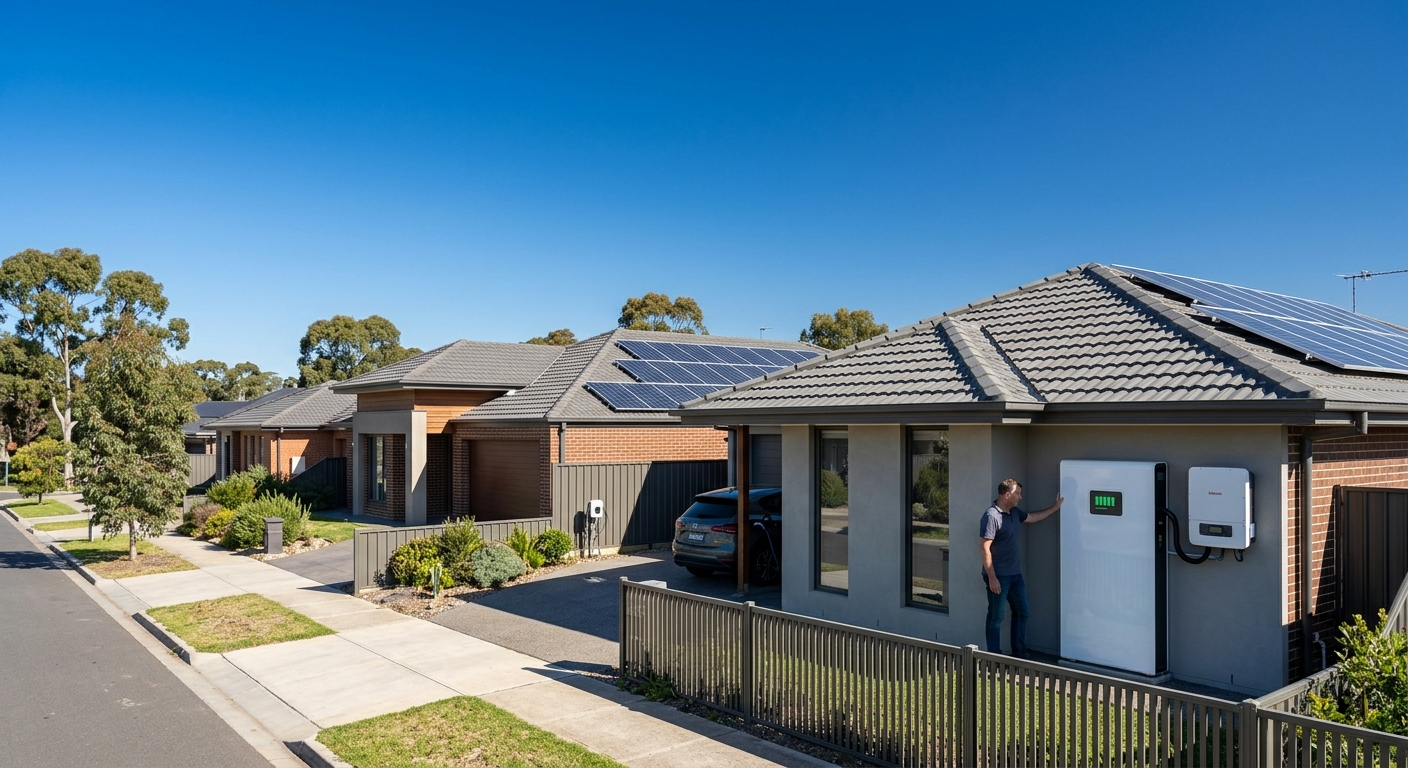
Household batteries complement the grid-scale efforts by increasing individual energy independence. A typical 10-13.5kWh home battery, costing around $10,000-$15,000 installed after government rebates in some states, allows a solar homeowner to capture most of their daytime solar generation for evening use. This means less reliance on expensive peak-time electricity from the grid, which often has a higher proportion of gas-fired power in its mix. Some households with batteries also participate in Virtual Power Plants (VPPs), allowing their stored energy to be dispatched to the grid during peak demand events. This not only earns them a credit but also helps balance the grid and further reduce the need for gas generation at those critical times. As battery costs continue to fall, more Australians will adopt this technology, collectively easing the pressure on our gas-dependent grid.
Key Takeaways
- Australia's gas prices are directly impacted by global events and export demand, leading to higher electricity bills for consumers.
- Gas-fired power stations, while flexible, are becoming an increasingly expensive and volatile component of our energy mix.
- Grid-scale batteries significantly reduce reliance on gas by storing and dispatching renewable energy, firming the grid and stabilising wholesale prices.
- Home battery systems allow solar owners to maximise self-consumption, reducing their draw from a gas-supplemented grid and potentially earning credits through VPPs.
- Investing in battery storage, both large and small, offers a robust pathway to greater energy independence and lower, more predictable electricity costs for Australia.
Read More
For a comprehensive overview, check out our master guide: Read the Full Guide Here.


