TL;DR: Australia is a global leader in residential solar, but transforming its "dig and ship" economy requires cheap, utility-scale solar to power heavy industries. To achieve this, the Australian Renewable Energy Agency (ARENA) is driving automation, robotics, and prefabricated modular arrays to lower installation costs and overcome severe labor shortages in remote regions.
The Dual Reality of Australian Solar
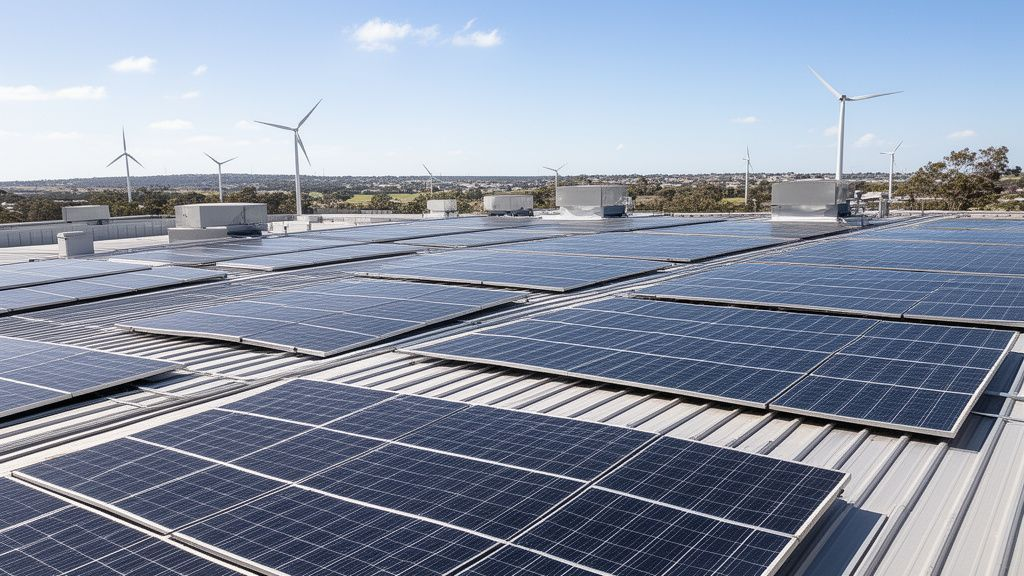
Australia has established itself as an undisputed global trendsetter in domestic renewable energy adoption. Over four million Australian homes are currently equipped with rooftop solar systems, representing a massive community-driven shift towards clean power. In the past year alone, households have installed more than 450,000 residential batteries to capture and store this abundant resource. This high rate of domestic generation has dramatically altered the grid, creating periods during the day when there is such a high volume of solar energy flowing into the system that electricity is offered for free during a midday window in several states.
However, a stark contrast exists between domestic success and industrial scale. According to the Australian Renewable Energy Agency (ARENA), Australia is not building enough utility-scale solar to satisfy the colossal energy demands of heavy industry. To successfully transition from an extractive, raw-material-exporting economy—historically described as a "dig and ship" economy—to an industrial powerhouse that processes resources domestically, the nation requires ultra-low-cost, large-scale electricity. Achieving this transformation depends entirely on deploying solar technology at a speed and price point that can compete with conventional industrial energy sources.
The Industrial Imperative: Green Metals and Processing
Scaling up solar power is not merely an environmental goal; it is the core economic pillar for the next phase of Australia's resource sector. Ultra-low-cost solar power is the key to unlocking intensive, high-energy industrial processing on shore. Cheap, reliable utility-scale renewable energy is required to power emerging industries such as green iron manufacturing, hydrogen production, and the processing of critical minerals.
Without a substantial reduction in the cost of generating and delivering this power, Australia risks missing the opportunity to add value to its resource exports before they leave the country. ARENA's focus has shifted toward this critical bottleneck, recognizing that the long-term viability of green metals and fuels depends on the nation's capacity to build massive solar installations rapidly and affordably.
The 30-30-30 Aspirational Goal
To focus the industry's attention and resources on the scale of the challenge, ARENA has established an ambitious, aspirational target known as "30-30-30" by the year 2030. This initiative sets three clear benchmarks:
- 30 Per Cent Efficiency: Achieving a solar module and cell efficiency rating of 30 percent.
- 30 Cents Per Watt: Bringing the total installation cost of solar farms down to just 30 cents per watt.
- By 2030: Reaching these targets by the end of the decade.
ARENA CEO Darren Miller has stated that work is well underway to ensure that efficiency goals for solar cells and modules are unlocked. However, the far greater challenge lies in building momentum for large-scale deployment at exceptionally low costs. Even if the industry does not meet every single component of the 30-30-30 target, the goal serves as an invaluable focal point to align the sector's efforts on the speed and scale required to power next-generation industries.
Deconstructing the Cost of Utility-Scale Solar
In modern solar farm construction, the solar panels themselves represent only a relatively minor fraction of the overall capital expenditure. The vast majority of the cost structure is tied up in heavy civil works and manual physical labor. Specifically, major expenditures include:
- Civil Engineering Works: Pouring massive volumes of concrete and preparing remote sites.
- Structural Demands: Drilling holes for heavy steel pilings and installing metal tracking systems.
- Electrical Infrastructure: Running miles of heavy cabling to connect the solar arrays.
- Manual Labor: Recruiting, transporting, housing, and paying large teams of workers in remote locations.
Because hardware costs have fallen dramatically, further cost reductions cannot be achieved simply by buying cheaper panels. Instead, the industry must radically change how these massive projects are built, financed, and integrated. This has led ARENA to invest heavily in revolutionary construction techniques, targeting the physical processes of installation to eliminate unnecessary labor and material expenses.


Automation and Robotics on the Frontier
To bypass high civil construction costs and severe labor constraints, ARENA is funding a suite of highly innovative technologies designed to automate the installation of large solar farms. By replacing traditional manual methods with robotic systems, these developers are demonstrating faster, safer, and more standardized ways to build renewable energy infrastructure.
One of the primary companies pioneering this space is Luminous Robotics. They have developed autonomous robotic units called "Lumis" that operate directly in the field. These machines move around the solar installation site, positioning heavy solar panels into their correct spatial coordinates and placing them onto the steel racks without requiring direct human intervention.
Additionally, ARENA is backing other advanced deployment and automation firms:
- Built Robotics: Specializes in automated piling systems, removing the need for manual drilling and heavy pile-driving crews.
- Nextpower: Focuses on specialized deployment systems to optimize the physical delivery of materials across massive sites.
- 5B: Known for producing highly efficient, prefabricated, modular solar arrays that can be folded, shipped, and rapidly deployed on-site.
- Zenith Energy: Uses these prefabricated 5B solar arrays to supply power quickly and reliably.
- Drones: Employed to automate the monitoring, scanning, and structural evaluation of massive, multi-megawatt projects.
Overcoming Labor Shortages and Extreme Conditions
Building utility-scale solar farms in remote areas like the Pilbara presents extreme logistical and occupational hazards. Historically, these projects have relied on itinerant workforces that are difficult to recruit and retain. The remote locations suffer from a critical shortage of skilled local workers, making labor incredibly expensive to source.
Furthermore, the physical conditions are brutal. Workers are required to repeatedly lift solar modules weighing more than 30 kilograms in ambient temperatures that frequently exceed 40 degrees Celsius. These extreme conditions pose serious health and safety risks, including heat stroke and musculoskeletal injuries.
By deploying Lumis and other robotic systems, developers can keep human workers out of harm's way. Automation allows skilled labor to shift into supervisory, technical, and maintenance roles, using robots to perform the heavy lifting and repetitive structural tasks. This not only dramatically improves occupational safety but also ensures projects can proceed steadily regardless of regional labor shortages or extreme weather events.
Key Takeaways
- Rooftop Dominance: Australia is a world leader in domestic solar, with over 4 million rooftop installations and more than 450,000 household batteries added in the past year.
- Industrial Bottleneck: Utility-scale solar must scale up cheaply to support energy-intensive domestic industries like green iron, critical minerals, and green hydrogen.
- The 30-30-30 Goal: ARENA's target aims for 30% solar module efficiency and an installed cost of 30 cents per watt by the year 2030.
- Civil Works Dominate Costs: The purchase price of solar panels is now a minor component; civil works, cabling, concrete, steel, and physical labor account for the vast majority of expenditures.
- Automation is Essential: Robotic innovations from Luminous Robotics (Lumis), Built Robotics, Nextpower, and 5B's prefabricated systems are reducing build times and safely speeding up solar farm deployment.
Related Guides
- ARENA White Paper Update 2026: Addressing Deployment Risks in Australia's Solar Transition
- Robots and Prefabrication: The Technological Frontier of Solar Panel Installation
- Australia's Rooftop Revolution: Milestones in Domestic Solar and Battery Storage
- Solar Technology Portfolios: Top Brands and Integration Options for Energy Consumers