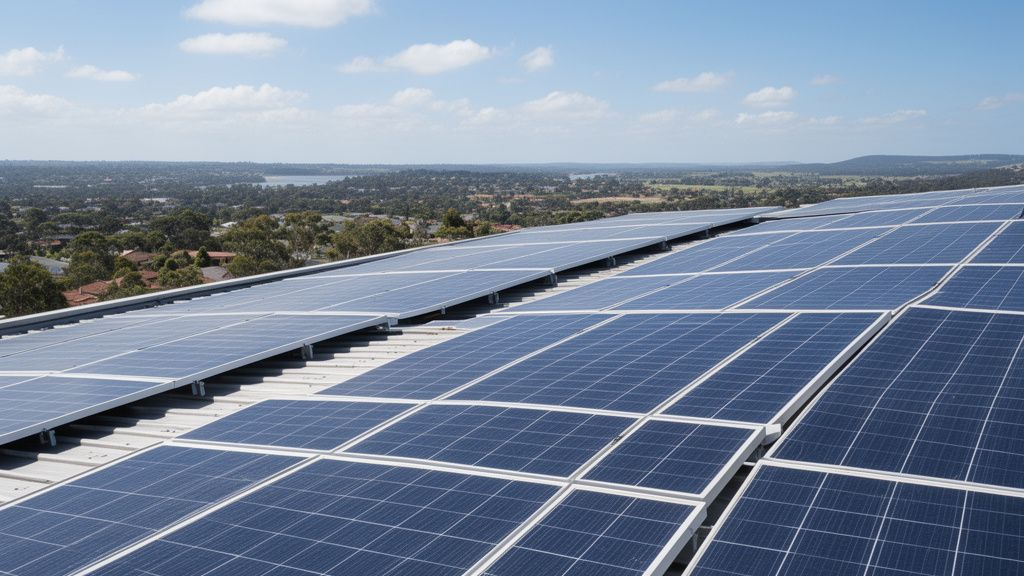
TL;DR: The Australian Renewable Energy Agency (ARENA) has released its Ultra Low-Cost Solar White Paper Update, warning that speed and scale of deployment represent the primary risks to Australia's clean energy ambitions. Despite technical innovations, progress is being slowed by grid connection delays, inflation, labor shortages, and a challenging investment environment.
The Core Message of the White Paper Update
Released on July 30, 2026, the Ultra Low-Cost Solar White Paper Update highlights a critical turning point for the nation's energy transition. While technological advancements in solar cells and panels continue to progress, ARENA warns that the ultimate window of opportunity could slip away without a structural shift in how large-scale solar projects are delivered.
According to ARENA CEO Darren Miller, Australia needs to change its focus from what is installed to how these projects are built, financed, and integrated into the wider national network. While high module efficiencies are within reach, the sheer speed and scale of deploying large-scale utility solar projects are now the primary risks threatening Australia's economic ambitions.
Systemic Pressures Slowing Down Construction
ARENA's updated analysis reveals that while innovative field projects are successfully demonstrating faster, safer, and more standardized construction techniques, these gains are currently being offset by powerful macroeconomic pressures. These headwinds are slowing down the deployment of critical solar technology and driving up overall project costs. The major systemic pressures highlighted in the white paper include:
- Workforce Constraints: A severe shortage of skilled manual labor and technical workers, particularly in the remote and regional areas where large-scale solar farms are constructed.
- Challenging Investment Environment: Rising interest rates and evolving financial markets have made securing large-scale capital more complex and costly for developers.
- Grid Connection Delays: Difficulties in physically connecting new utility-scale solar arrays to the existing electrical transmission grid, which delays project commissioning and revenue generation.
- Inflation: Increased costs for raw construction materials, including steel, cabling, concrete, and logistics, which eat into the cost reductions achieved via panel efficiency gains.
Without a coordinated approach to address these structural barriers, bringing solar costs down fast enough to support the next phase of the energy transition will remain extremely difficult.


Moving Innovation from Concept to Industrialization
To combat these issues, ARENA's portfolio of ultra low-cost solar projects is actively testing new approaches in real-world construction, system integration, and test-bed environments. By funding a robust pipeline of innovative pilot projects, ARENA is helping move novel concepts through the development cycle to scale them up for commercial industrialization.
Several key partner companies are demonstrating how to compress build times and improve worker safety on industrial sites:
- 5B: Deploying modular, prefabricated solar systems that dramatically reduce on-site assembly requirements.
- Built Robotics: Automating structural piling to streamline the initial phases of field construction.
- Nextpower: Rolling out specialized deployment technologies to optimize supply chains across massive project sites.
- Luminous Robotics: Testing automated panel installation systems that place heavy modules directly onto support structures.
Mr. Miller emphasized that while the progress shown by these projects gives confidence, the next few years will be absolutely critical to successfully turning this technological potential into industrialized reality.
Key Takeaways
- Strategic Delivery Shift: ARENA warns that Australia must focus on how large-scale solar is built, financed, and integrated, rather than just focusing on module technology.
- The Key Risks: Workforce constraints, grid connection delays, inflation, and a difficult investment environment are the primary threats slowing down utility-scale solar deployment.
- Industrialization Need: Transitioning innovations from small-scale concepts to real-world deployment is vital to lower generation costs for heavy, energy-intensive industries like green metals and fuels.
- Technology Portfolio: Real-world testing is underway using 5B's modular systems, Built Robotics' piling, Nextpower's deployment systems, and Luminous Robotics' automation to lower overall build times and protect workers.