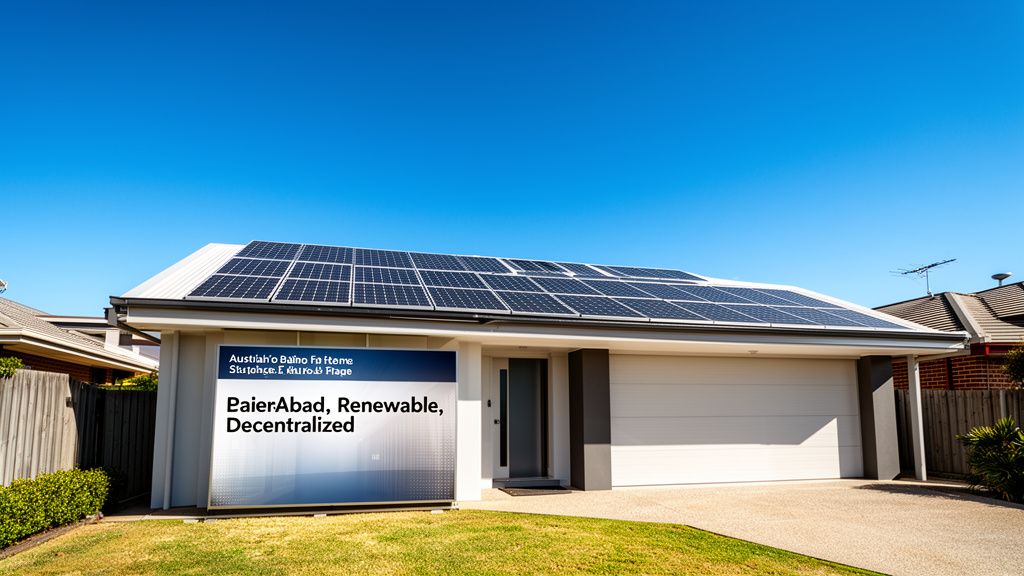
TL;DR: The future of data storage in Australia is moving towards smaller, renewable, and decentralized units, powered by local solar and battery systems. This shift enhances data security, reduces latency, and creates energy-independent digital hubs, bolstering resilience against traditional data centre vulnerabilities and natural events, while supporting a greener digital economy.
Why is Decentralized Data Storage a Growing Necessity for Australia?
Decentralized data storage is rapidly becoming a necessity for Australia due to increasing cybersecurity threats, the demand for lower-latency data access across vast distances, and the need for greater resilience against natural disasters and infrastructure failures. Our vast continent, with its dispersed population centres, inherently benefits from a data architecture that isn't reliant on a few central points. Large, monolithic data centres, while powerful, present single points of failure that can be catastrophic if compromised by cyber-attacks, physical damage, or prolonged power outages. Moving data closer to its point of use, across a network of smaller, interconnected storage nodes, fundamentally strengthens the entire digital ecosystem. This distributed approach not only improves data security by fragmenting potential targets but also ensures that critical information remains accessible even if parts of the network are disrupted.
Enhancing Data Sovereignty and Security Against Cyber Threats
The shift towards decentralized data storage significantly enhances data sovereignty and security, particularly against the ever-evolving landscape of cyber threats. By distributing data across numerous smaller, local nodes, the risk of a single, catastrophic breach is reduced. If one node is compromised, the impact is localised, and the majority of the data remains secure and accessible elsewhere. For Australian businesses and government, this means greater control over where data resides geographically, ensuring compliance with local regulations and reducing reliance on international data pipelines that can be vulnerable to foreign legal jurisdictions or espionage. Furthermore, these smaller nodes can be secured with highly tailored, robust local protocols, making them tougher targets than large, easily identifiable central hubs.
Reducing Latency and Improving Access in Regional Australia
For a country as geographically expansive as Australia, reducing data latency and improving access, especially in regional areas, is a critical driver for decentralized storage. Currently, data often travels long distances to large data centres located predominantly in capital cities, leading to delays that impact everything from streaming services to critical business applications. Placing small, localised data hubs closer to end-users – whether that's a remote mining operation, a regional hospital, or an agricultural research station – drastically cuts down on this travel time. This "edge computing" approach means faster processing, more reliable service, and a better digital experience for Australians living outside the major metropolitan areas, fostering greater digital inclusion and enabling innovation in regional industries.
How Do Solar and Batteries Enable the Shift to Small, Renewable Data Hubs?
Solar power coupled with battery storage systems provides the foundational energy independence needed to power small, distributed data hubs, transforming them into self-sufficient, green infrastructure nodes. Australia's abundant sunshine makes solar an incredibly attractive and viable option for generating electricity locally. By integrating solar panels directly onto or near these micro-data centres, and backing them up with advanced battery energy storage systems, these facilities can operate largely, if not entirely, off the main grid. This not only reduces their reliance on traditional fossil fuel-based electricity grids, which are susceptible to price volatility and outages, but also significantly lowers their operational carbon footprint. The intermittent nature of solar generation is perfectly complemented by battery storage, ensuring a continuous, stable power supply for always-on data operations, day and night.
The Economic Advantage of Self-Sufficiency with Australian Solar
Adopting self-sufficiency through solar and battery systems offers a compelling economic advantage for small, distributed data hubs in Australia. While the initial investment for a commercial-grade solar and battery setup might be in the range of $50,000 to $150,000 for a substantial off-grid or grid-integrated system, the long-term savings are significant. Businesses can drastically reduce or eliminate their electricity bills, shielding them from rising grid power costs and network charges. With feed-in tariffs often low in many states, generating and consuming your own power is the most cost-effective approach. The declining costs of solar panels and battery technology, combined with potential government rebates and incentives for renewable energy, make this investment increasingly attractive, leading to quicker payback periods and greater operational certainty.
Designing Robust Off-Grid Power Solutions for Data Integrity
Designing robust off-grid power solutions is paramount to ensure data integrity and continuous operation for small, renewable data hubs. This isn't just about slapping some solar panels on a roof; it involves sophisticated energy management systems that prioritise uptime. Key considerations include oversizing solar arrays to account for cloudy days, pairing them with appropriately sized battery banks that can supply power for multiple days without sunshine, and incorporating redundant power sources like small, clean-burning backup generators or grid connections as a tertiary fail-safe. Advanced monitoring and control systems are also crucial, allowing operators to track energy production and consumption in real-time, predict demand, and proactively manage power flow to prevent any disruptions to the vital data services.


What Are the Broader Benefits of Local, Green Data Infrastructure for Australians?
The broader benefits of local, green data infrastructure for Australians extend beyond mere data storage, encompassing significant environmental advantages, economic opportunities, and enhanced community resilience. By decentralizing data centres and powering them with renewables, we move towards a digital economy that is inherently more sustainable and less prone to the vulnerabilities of centralisation. This shift contributes directly to Australia's climate goals by reducing the energy consumption footprint of our digital lives, a footprint that is rapidly growing. Furthermore, it stimulates local economies, creates skilled jobs in renewable energy and IT in regional areas, and equips communities with robust digital foundations that are essential for disaster recovery and ongoing prosperity.
Lowering Our Digital Carbon Footprint and Boosting Local Economies
This decentralized, renewable approach plays a crucial role in lowering Australia's overall digital carbon footprint. Traditional data centres consume enormous amounts of energy, often from fossil fuels. By transitioning to solar-powered micro-centres, the emissions associated with storing and processing our data are dramatically cut. Environmentally, this is a significant step forward. Economically, establishing these local hubs creates new jobs – from solar installers and battery technicians to IT specialists and data engineers – often in regional communities that benefit most from economic diversification. This investment in local infrastructure and green technology stimulates growth, keeping expertise and capital within Australian borders rather than relying solely on overseas providers.
Fostering Innovation and Resilience in Regional Communities
Fostering innovation and resilience in regional communities is a core benefit of this distributed, green data infrastructure. With reliable, low-latency access to data processing and storage, regional businesses and entrepreneurs can innovate more effectively. Farmers can leverage AI for crop management, regional hospitals can utilise telemedicine with greater efficiency, and local startups can develop data-intensive applications without geographical limitations. Furthermore, these local hubs provide critical resilience during emergencies. In the event of natural disasters like bushfires or floods, which can knock out central communication lines, a self-sufficient, local data node can maintain essential services, ensuring communities remain connected and critical data remains accessible when it's needed most.
Key Takeaways
- The future of Australian data storage involves a shift to small, renewable, and decentralized data hubs, moving away from large, vulnerable centralized centres.
- Localized solar power and battery storage systems are crucial for powering these distributed data nodes, ensuring energy independence and reducing carbon emissions.
- This approach significantly enhances data security and sovereignty, making it harder for cyber threats to compromise an entire system.
- Decentralized data storage improves data access and reduces latency, especially benefiting regional Australians and enabling local innovation.
- Investing in green data infrastructure creates economic opportunities, fosters resilience, and contributes to Australia's environmental sustainability goals.
Read More
For a comprehensive overview, check out our master guide: Read the Full Guide Here.