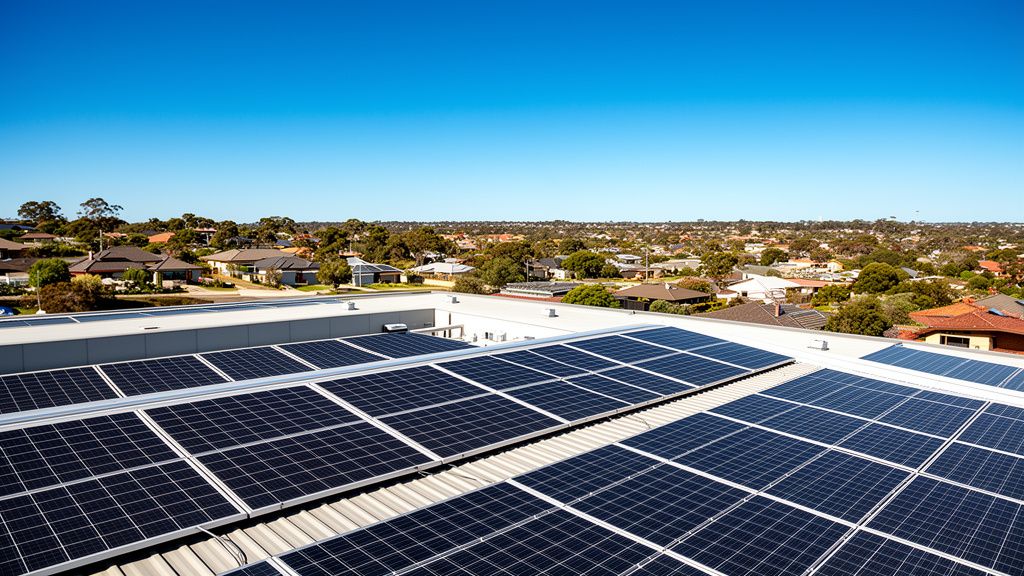
TL;DR: Australian data centres are increasingly integrating solar power and renewable energy solutions to reduce their significant environmental footprint. This shift requires substantial infrastructure investment in on-site solar, battery storage, and grid upgrades, driving both sustainability and long-term operational savings for digital infrastructure.
Why Are Sustainable Data Centres Crucial for Australia's Digital Future?
Sustainable data centres are crucial for Australia's digital future because they address the growing energy demands and environmental impact of our rapidly expanding digital economy. As more Australians work, shop, and entertain themselves online, the data centres underpinning these services consume vast amounts of electricity, primarily for powering servers and cooling equipment. Without a shift to sustainable practices, the carbon footprint of our digital infrastructure could quickly negate broader national efforts towards emissions reduction targets. Investing in green data centres ensures that our digital growth is responsible, resilient, and aligned with Australia's commitment to a cleaner energy future, providing stable, future-proof infrastructure for generations to come.
The Energy Appetite of Digital Infrastructure
Australia's data centres are notoriously energy-hungry beasts, guzzling megawatts of power around the clock. A single medium-sized data centre can consume as much electricity as a small town, with some larger facilities requiring tens of megawatts. This immense energy demand, traditionally met by fossil fuel-generated electricity, contributes significantly to Australia's greenhouse gas emissions. The cooling systems alone can account for up to 40% of a data centre's total energy consumption, keeping those servers from overheating in our often sweltering climate. Shifting this load to renewable sources like solar isn't just good for the planet; it offers a path to energy independence and price stability in a volatile market.
The Carbon Challenge for Australian Data Centres
Australia faces a dual challenge: meeting the exploding demand for digital services while striving for ambitious emissions reduction targets. Data centres currently contribute a notable portion of our industrial carbon emissions, and without intervention, this figure will only climb. Integrating sustainable practices, particularly renewable energy, allows Australia to decarbonise this critical sector. It demonstrates global leadership in green technology and helps foster a competitive advantage for Australian businesses committed to environmental, social, and governance (ESG) principles. For instance, major tech players are increasingly seeking out data centres powered by 100% renewables, making sustainability a key differentiator in attracting investment and clients.
How Is Solar Energy Powering Australian Data Centre Sustainability?
Solar energy is powering Australian data centre sustainability by providing a direct, renewable source of electricity, significantly reducing reliance on fossil fuels and lowering operational costs. Given Australia's abundant sunshine, solar photovoltaic (PV) systems offer an ideal solution for generating clean power, especially for facilities with large roof spaces or adjacent land. This integration helps data centres meet their energy demands with a clean, inexhaustible resource, enhancing their energy independence and resilience against grid fluctuations. By directly harnessing the sun's power, these facilities can dramatically shrink their carbon footprint, aligning with global corporate sustainability goals and consumer expectations for greener digital services.
On-site Solar and Power Purchase Agreements (PPAs)
Many Australian data centres are deploying significant on-site solar arrays, either on their rooftops or within their premises, to generate a portion of their power needs. For example, a commercial solar system generating 100kW might cost around $100,000-$150,000, but can offset substantial grid purchases. For larger energy demands, data centre operators are increasingly signing Power Purchase Agreements (PPAs) directly with large-scale solar farms. These long-term contracts guarantee a stable price for renewable electricity, shielding them from volatile wholesale energy markets. These PPAs enable data centres to claim 100% renewable energy usage even if the physical electrons don't come directly from a nearby solar farm, contributing to a greener grid overall.
Integrating Battery Storage for Reliability
While solar power is fantastic during the day, data centres require uninterrupted power 24/7. This is where battery energy storage systems (BESS) become critical. Integrating substantial battery banks allows data centres to store excess solar energy generated during peak sunshine hours and discharge it during the evening or on cloudy days, ensuring a continuous supply of clean power. A commercial-scale battery system can cost anywhere from $500 to $1,500 per kWh of storage capacity, representing a significant upfront investment but providing essential grid stability, backup power, and the ability to participate in grid services for additional revenue. This combination of solar and storage is a game-changer for achieving true energy independence and resilience.


What Infrastructure Investments Are Needed for Green Data Centres?
Significant infrastructure investments are needed for green data centres, spanning renewable energy generation, advanced cooling systems, and grid-scale storage solutions to support their sustainable operations. This isn't just about slapping solar panels on a roof; it involves a holistic approach to energy management, from sourcing to consumption. The upfront capital expenditure can be considerable, covering everything from high-efficiency servers and smart power distribution units to sophisticated cooling technologies and robust battery systems. However, these investments often yield long-term operational savings through reduced energy bills and improved resilience, making them financially viable in the long run.
Funding Renewable Energy Projects
Investing in renewable energy for data centres typically involves substantial capital. For a large facility, the costs of installing a multi-megawatt solar array could run into millions of dollars, potentially upwards of $1 million per megawatt peak (MWp), plus significant outlays for large-scale battery storage. These projects are often financed through a mix of corporate capital, green bonds, and government incentives like the federal Renewable Energy Target (RET) or state-specific programs. Private equity and infrastructure funds are also keen to invest in these sustainable assets, recognising the stable, long-term returns. Beyond direct generation, investments in smart grid infrastructure are crucial to efficiently integrate these decentralised energy sources.
Smart Grid Integration and Energy Efficiency
Beyond generating clean power, substantial investment is required in smart grid integration and energy efficiency technologies. This includes deploying advanced power monitoring and management systems that can dynamically shift loads, optimise energy use, and even feed excess power back to the grid when prices are favourable. Data centres are also investing in highly efficient servers, liquid cooling technologies, and AI-driven systems that predict and manage energy consumption more effectively. These investments, while initially costly, lead to significantly lower Power Usage Effectiveness (PUE) ratios – a key metric for data centre efficiency – reducing overall energy consumption and further enhancing sustainability credentials.
Key Takeaways
- Australian data centres are major energy consumers, making sustainability and decarbonisation critical for the nation's digital future and emissions targets.
- Solar power, both on-site arrays and through Power Purchase Agreements, is a primary driver for transitioning data centres to renewable energy sources.
- Integrating battery energy storage systems with solar is essential for ensuring 24/7 clean power supply and enhancing grid stability for data centre operations.
- Significant infrastructure investment is required for green data centres, covering renewable generation, energy efficiency upgrades, and smart grid integration.
- These investments, while substantial upfront, offer long-term operational savings, increased resilience, and strong alignment with corporate and national sustainability goals.