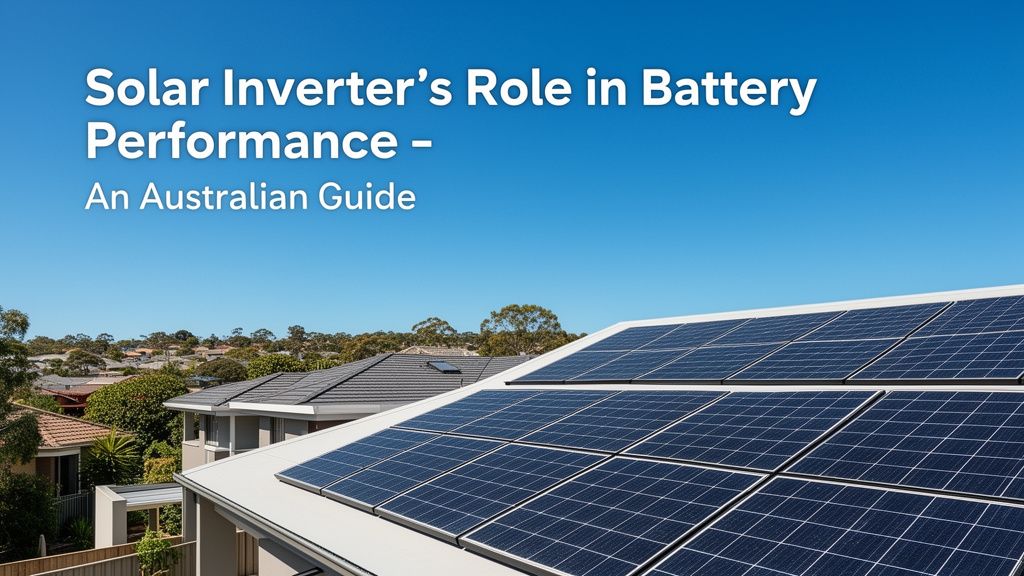
TL;DR: Your solar inverter converts power from panels for home use and battery charging. It directly influences how efficiently your battery stores and releases energy, affecting both its performance and how long it lasts. Choosing the right inverter ensures your battery system operates optimally.
How Does an Inverter Manage Solar Power for Batteries?
An inverter converts the direct current (DC) electricity from your solar panels into alternating current (AC) power for your home, and for battery charging, it handles the DC conversion again, often directing it straight into the battery. Think of it as the central traffic controller for all the energy generated by your solar system. Without it, your battery can't receive charge from the panels, nor can it send stored energy to power your lights and appliances. The inverter makes sure the right type of power goes to the right place at the right time.
Different Inverter Types and Their Roles
For systems with batteries, two main inverter types come into play: AC-coupled and DC-coupled (often called hybrid). An AC-coupled system uses a standard solar inverter for the panels, converting DC to AC, and then a separate battery inverter converts that AC back to DC to charge the battery, and then back to AC for the home. This involves multiple conversions. A DC-coupled system, usually a hybrid inverter, handles both solar and battery management within one unit. It takes the DC from the panels, uses some directly for home loads if needed, sends excess DC to charge the battery, and converts any remaining power to AC for home use or grid export. Hybrid inverters often simplify installation and can improve efficiency for battery charging because they minimise conversions.
Power Flow Management
The inverter decides where your solar power goes. When your panels are producing, the inverter prioritises sending power to your household loads. If there's surplus, it directs that electricity to charge your battery. Once the battery is full and your home's needs are met, any remaining power gets exported to the grid, earning you a feed-in tariff, which in some states might only be 3-5 cents per kilowatt-hour. When the sun isn't shining, or your panels aren't producing enough, the inverter pulls power from your battery to supply your home. If the battery is depleted, it switches to drawing power from the grid. This intelligent management of energy flow maximises your self-consumption and reduces your electricity bill.
How Does Your Inverter Affect Battery Efficiency and Lifespan?
The inverter's efficiency directly impacts how much energy from your panels makes it into your battery, and its charging algorithms influence the battery's health and longevity. Every time electricity changes form, from DC to AC or vice-versa, a small amount of energy gets lost as heat. A highly efficient inverter minimises these losses, ensuring more of your hard-earned solar power gets stored in your battery and is available for your home. This means you get more usable energy from your system.
Conversion Losses
An inverter's conversion efficiency typically sits between 95% and 98%. While this sounds high, those few percentage points add up over a year. For instance, a 2% loss on a 10kWh battery charge means 200Wh is wasted every cycle. Over ten years, this represents a significant amount of electricity that could have powered your home. With a DC-coupled hybrid inverter, the DC power from panels can go directly to the battery, bypassing the DC-AC conversion and subsequent AC-DC conversion required by AC-coupled battery setups. This direct path reduces energy losses, making DC-coupled systems generally more efficient for battery charging.
Battery Optimisation and Monitoring
A quality inverter plays a significant role in how long your battery lasts. It achieves this through advanced Battery Management System (BMS) integration and sophisticated charging and discharging algorithms. The inverter protects the battery from common issues like overcharging, deep discharging, and extreme temperatures, all of which shorten battery life. It ensures the battery operates within its optimal voltage and current parameters. Furthermore, modern inverters provide detailed monitoring of battery performance, letting you see charge cycles, state of charge, and historical data. This information helps you understand your energy usage and alerts you to any potential issues early on. For example, if you notice your battery isn't holding charge as long as it used to, the monitoring data can help diagnose whether it's a battery or an inverter issue.
What Should You Look For in an Inverter for a Battery System?
When pairing an inverter with a solar battery, look for hybrid capabilities, proven reliability, good warranty terms, and local support from the manufacturer. Your inverter is a long-term investment, often operating for a decade or more, so selecting the right one from the outset prevents headaches and additional costs down the track. A mismatch between your inverter and battery can lead to underperformance or even system damage.
Compatibility and Scalability
Ensure the inverter is explicitly compatible with the battery you intend to install. This means checking voltage ranges, communication protocols, and the inverter's maximum charging/discharging power. Some inverters are designed to work seamlessly with specific battery brands, like a Fronius Symo Hybrid with a BYD Battery-Box Premium, or a GoodWe hybrid inverter with their own Lynx Home U battery. Think about future expansion as well. Can you add more battery capacity later, or even expand your solar panel array? A good inverter will offer flexibility, allowing you to grow your system as your energy needs change. Choosing a system that allows for adding another 5kWh battery without replacing the entire inverter saves money and hassle.
Warranty and Support
A robust warranty gives you peace of mind. Most reputable inverter manufacturers offer a standard 5-year warranty, with options to extend to 10 years or more. Read the warranty terms carefully; some cover parts and labour, while others only cover the component itself. Local Australian support is another critical factor. If something goes wrong, you want a local team who can quickly diagnose and resolve issues, not a call centre overseas. This means faster turnaround times for repairs or replacements, reducing your system's downtime. Installers often recommend brands like SMA, Fronius, Sungrow, and Solaredge because they have strong local presence and a proven track record for support within Australia.
Key Takeaways
- Your inverter converts solar DC power to AC for your home and manages battery charging/discharging.
- Hybrid inverters often offer better efficiency for battery systems by reducing energy conversion losses.
- A quality inverter's efficiency and charging algorithms directly impact your battery's usable energy and its overall lifespan.
- Prioritise inverters with strong battery compatibility, scalability for future needs, and reliable local Australian warranty support.
Read More
For a comprehensive overview, check out our master guide: Read the Full Guide Here.