The Australian Homeowner's Guide to Solar Batteries
TL;DR: Home solar batteries allow you to store excess electricity generated by your solar panels for use after sunset or during grid outages. This increases your energy independence, maximises the value of your solar investment, and significantly reduces your reliance on energy retailers, especially as feed-in tariffs decrease.
Why Should Australian Homes Consider a Solar Battery?
Installing a solar battery offers Australian homeowners greater control over their energy usage and a buffer against rising electricity prices. With most electricity retailers offering feed-in tariffs below 5-8 cents per kilowatt-hour (kWh) in 2024, sending excess solar power back to the grid provides minimal financial benefit. A battery lets you keep that power, using it yourself to avoid buying more expensive electricity at peak times, which can cost 30-50 cents/kWh. This shift turns your home into a more self-sufficient power station, reducing your grid consumption substantially. Many households find that a battery system can help them offset 80-90% of their annual grid electricity purchases, compared to 60-70% with solar panels alone.
How Batteries Improve Solar Savings
A solar battery allows you to shift your solar energy use from daytime to nighttime. For example, a typical 6.6kW solar system might generate 25 kWh on a sunny day. If your home only uses 10 kWh during daylight hours, the remaining 15 kWh often goes back to the grid. With a 10kWh battery, you can store that excess, then discharge it when your panels are not producing, like after 5 PM. This means you avoid purchasing electricity from the grid during the expensive evening peak, directly lowering your quarterly power bill. Over a year, this strategy can save hundreds of dollars that would otherwise be spent on grid electricity, making your solar investment work harder.
Protecting Your Home from Blackouts
Many modern solar battery systems include a blackout protection feature, providing an uninterrupted power supply to essential circuits during a grid outage. While not all battery systems offer whole-home backup, most can power critical appliances such as lights, fridges, internet routers, and medical devices. When the grid goes down, the battery automatically switches to island mode, disconnecting from the grid and powering your selected loads. This offers peace of mind, ensuring your family stays comfortable and connected during unexpected power interruptions, a common concern in some regional Australian areas and during extreme weather events.
How Do Solar Batteries Work with Your Home System?
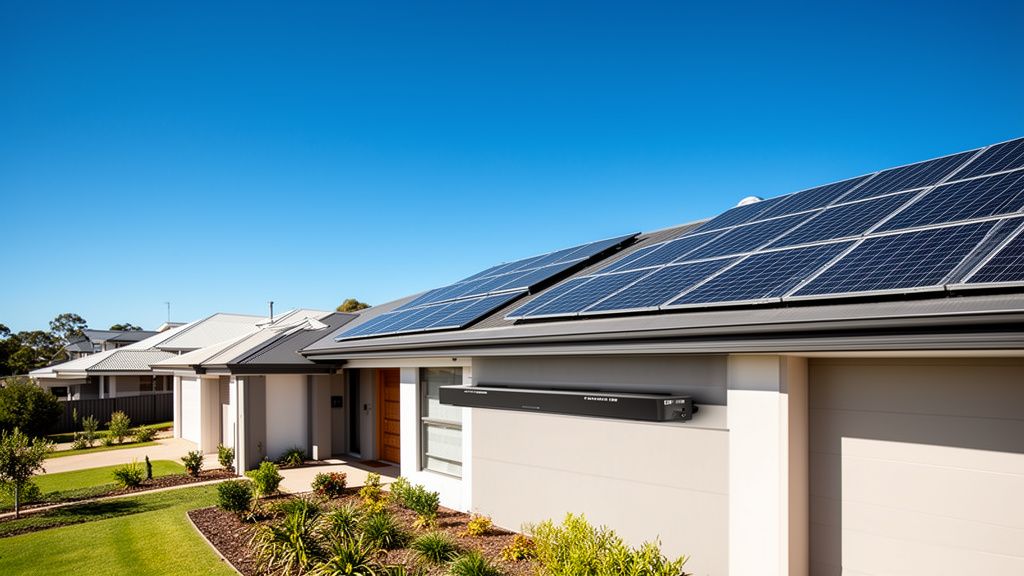
Solar batteries integrate into your existing or new solar power system by storing surplus electricity generated by your solar panels. During peak sunlight hours, your solar panels produce more electricity than your home consumes. Instead of exporting this excess energy directly to the grid for a low feed-in tariff, an inverter directs it to your battery. Once the battery is full, or if your home demand increases, the system prioritises powering your home first, then sending any remaining excess to the grid. When your panels aren't producing, like at night or on cloudy days, the battery discharges its stored energy to meet your home's needs, reducing your reliance on grid power.
Understanding Battery Chemistry and Capacity
The most common battery chemistry for home solar storage in Australia is Lithium-ion, specifically Lithium Iron Phosphate (LiFePO4). These batteries offer long lifespans, high energy density, and good safety characteristics. Battery capacity, measured in kilowatt-hours (kWh), indicates how much energy a battery can store. A typical Australian home often requires a battery between 5 kWh and 15 kWh. For instance, a 10 kWh battery can supply 10 kilowatts of power for one hour, or 1 kilowatt for ten hours. Larger capacities offer more extended backup and greater self-sufficiency, but they also cost more upfront. Most residential batteries come with a 10-year warranty, guaranteeing a minimum percentage of original capacity over that period.
Hybrid vs. AC-Coupled Systems
When integrating a solar battery, you typically choose between a hybrid system or an AC-coupled system. A hybrid system uses a single hybrid inverter to manage both solar panel power generation and battery charging/discharging. This approach often reduces installation complexity and component count, making it a streamlined option for new solar installations. An AC-coupled system, on the other hand, adds a battery and a separate battery inverter to an existing solar panel system with its own solar inverter. This makes AC-coupled setups ideal for homeowners who already have solar panels and want to add storage without replacing their current solar inverter. Both systems effectively store and discharge power, but their integration method differs.

What Are the Costs and Savings for an Australian Solar Battery?
The cost of a home solar battery in Australia varies significantly based on brand, capacity, and installation complexity. While the upfront investment is substantial, declining battery prices and increasing electricity costs make them more financially viable than ever before. For many households, the long-term savings on electricity bills, coupled with the security of backup power, justifies the initial outlay. Australian states and territories also offer various incentives that can offset the purchase price, improving the overall return on investment. It is essential to get multiple quotes from Clean Energy Council (CEC) accredited installers to understand the exact costs for your specific home and energy needs.
Typical Battery Costs and Installation in 2024
In 2024, a standard 10kWh home solar battery, fully installed, typically costs between $9,000 and $15,000 in Australia. Premium brands or larger capacities can push this figure higher. For example, a Tesla Powerwall 2 (13.5kWh usable) often sits at the upper end of this range, while a smaller, entry-level 5kWh battery might start from $6,000-$8,000 installed. These prices include the battery unit, battery inverter (if separate), installation labour, and electrical works. The exact cost depends on factors like your existing solar system, switchboard upgrades required, and the complexity of routing cables. While these costs represent a considerable investment, they have reduced significantly over the past five years.
Government Incentives and Payback Periods
Several state and territory governments in Australia offer rebates or interest-free loans to reduce the cost of home solar batteries. For instance, Victoria offers a rebate of up to $2,950 for eligible households, while the South Australian Home Battery Scheme provides subsidies based on battery size. These incentives directly reduce the payback period. Without incentives, a typical 10kWh battery might have a payback period of 7 to 12 years, depending on your electricity consumption patterns and prices. With a generous rebate, this period can shorten to 5 to 8 years. It is important to check the specific eligibility criteria and available funds for schemes in your state or territory before purchasing a battery system.
Key Takeaways
- Solar batteries maximise your solar investment by storing excess power, reducing grid reliance and expensive peak-time electricity purchases.
- Most modern battery systems provide essential backup power during blackouts, keeping critical appliances running.
- Lithium Iron Phosphate (LiFePO4) batteries are standard, with typical home capacities ranging from 5 kWh to 15 kWh.
- Expect to pay between $9,000 and $15,000 for a 10kWh battery system fully installed in Australia, prior to any rebates.
- Investigate state-specific government rebates and interest-free loans, such as those in Victoria or South Australia, to significantly shorten your battery's payback period.