TL;DR: Australia's energy plans are undergoing a major evolution in 2026. This comprehensive guide details how the National Consumer Energy Resources (CER) Roadmap, corporate investments from Origin Energy and AGL, and innovative peer-to-peer energy sharing agreements like Vinnies NSW's Next Share Direct program are rewriting the rules of generation, storage, and consumption.
Understanding Consumer Energy Resources (CER) and the National Roadmap
The landscape of Australian energy is undergoing a structural shift. At the heart of this transformation is the concept of Consumer Energy Resources (CER), which encompasses the decentralized technologies households and businesses use to manage, generate, and store electricity. According to the Australian Department of Climate Change, Energy, the Environment and Water (DCCEEW), these resources include residential rooftop solar systems, home batteries, electric vehicles (EVs), EV chargers, and smart, connected appliances such as air conditioners and hot water heaters.
To manage this transition, governments have established the National Consumer Energy Resources Roadmap (CER Roadmap). Updated on August 12, 2026, this plan provides a comprehensive framework to maximize the utility of these technologies while preserving the overall reliability and stability of the National Electricity Market (NEM). The 2025 CER Roadmap Implementation Plan Update details ongoing reforms across four primary pillars:
- Consumers: This pillar focuses on strengthening customer protections, preventing unfair utility charges, protecting consumers against underperforming energy products, and ensuring equitable access to clean energy benefits for renters, apartment dwellers, and regional communities.
- Technology: This area guarantees that individual CER devices are highly secure, reliable, interconnected, and optimized to deliver maximum performance to the end-user.
- Markets: This initiative creates new financial channels that reward consumers for flexibility, allowing them to save or even earn money by participating in specialized energy plans.
- Power System Operations: This focuses on grid integration, keeping the physical network stable so that more consumer-owned technologies can connect without requiring expensive, grid-wide infrastructure upgrades.
Virtual Power Plants: Unlocking the Value of Home Solar and Batteries
One of the most promising market opportunities highlighted by the CER Roadmap is the Virtual Power Plant (VPP). A VPP is defined as a coordinated network of consumer energy resources—such as residential batteries and solar systems—managed collectively by an electricity retailer or specialized coordinator. By operating in unison, a VPP behaves like a traditional centralized power station or a utility-scale battery, strategically buying, storing, and selling electricity. VPPs allow households to utilize more of their own generated energy, avoid high retail prices during peak periods, and establish a steady stream of extra income through dispatch incentives.
Major Australian energy retailers are reporting rapid expansion in this sector. For example, in its Full Year Results released on August 13, 2026, Origin Energy highlighted substantial growth in its proprietary virtual power plant, known as Loop. Origin Energy's overall customer portfolio reached 4.94 million accounts in FY26, with an increasing portion of these accounts integrating their home solar and storage systems directly into the Loop platform.
To support these advanced, software-driven energy orchestration products, Origin has leveraged its connection with Octopus Energy and the Kraken software platform. Kraken Technologies, which formally separated from Octopus Energy, completed a standout US$1 billion standalone equity raise in July 2026, reaching a look-through valuation of US$8.65 billion and expanding its contracted accounts to 95 million globally. This sophisticated technology allows retailers to orchestrate home solar, battery assets, and EV charging schedules dynamically, helping customers lower their household energy bills through specialized plans like Origin's "EV Power Up" program. This program enables users to shift their charging loads automatically to optimal, low-demand times of the day.
Next-Generation Commercial Energy Sharing: The Vinnies NSW Case Study
While residential energy plans are shifting toward VPP integration, the commercial and non-profit sectors are pioneering sophisticated peer-to-peer and site-to-site energy-sharing arrangements. A prime example of this innovation in action is the program established by St Vincent de Paul Society NSW (Vinnies NSW) in August 2026.
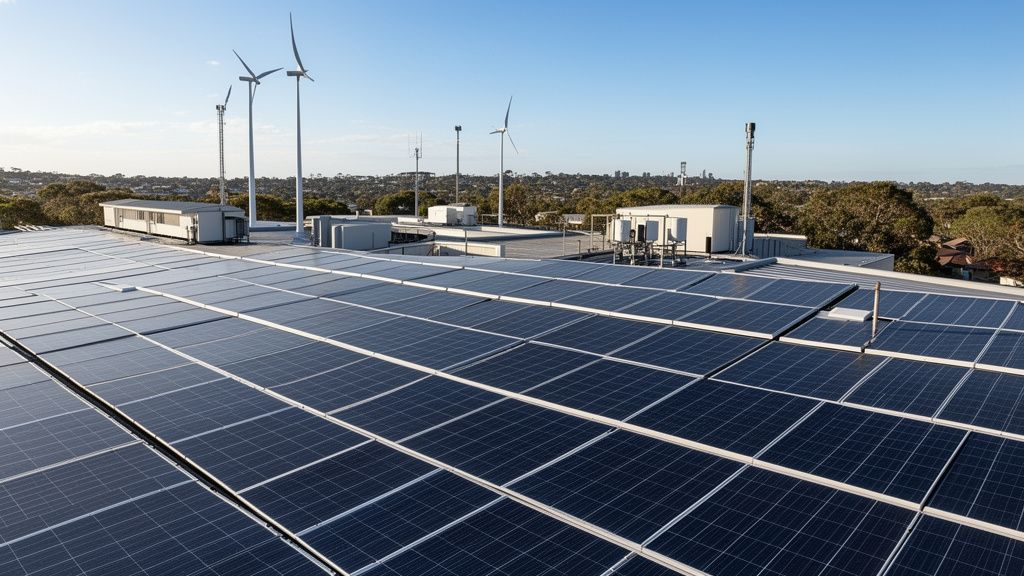
Working in partnership with electricity retailer Next Business Energy and software developer Enosi, Vinnies NSW has introduced a dynamic solar-sharing system that spans its massive geographic footprint. The charity operates over 100 local services and programs across New South Wales, alongside a retail network of op shops, crisis centers, and warehouses. Under this new model, rooftop solar generation at more than 30 active Vinnies locations is directly linked with the electricity consumption of more than 200 other Vinnies sites throughout the state.
This framework uses Next Business Energy's "Next Share Direct" energy plan, powered by Enosi's "Powertracer" software. The software tracks and matches surplus solar exports from participating properties against the energy demands of non-solar properties in half-hour intervals throughout the day. This structure delivers significant financial benefits:
- Asset Utilization: Rooftop solar assets on owned buildings can offset energy costs at leased premises or properties in dense urban centers where physical solar installations are impossible.
- Enhanced Tariffs: Vinnies NSW receives more than eight times the standard solar feed-in tariff when their excess solar exports are successfully matched with demand at another sister site within their network.
- Resource Redirection: The resulting utility bill savings directly free up operating capital, allowing the charity to allocate more funds to community support, crisis services, and helping people experiencing disadvantage and hardship.
How Retailers are Adapting: Origin and AGL's Decarbonisation Strategies
Australia's two largest energy retailers, Origin Energy and AGL, are realigning their retail offerings and corporate strategies to accommodate the clean energy transition. Both companies released their full-year financial and sustainability reports in August 2026, reflecting strong commercial performance alongside aggressive low-carbon initiatives.
Origin Energy reported a statutory profit of $1,574 million for FY26, up from $1,481 million in FY25. The company's Energy Markets division delivered a robust performance, helping to offset lower commodity-linked earnings in its Integrated Gas division. Crucially, Origin's strategy heavily emphasizes flexible generation and storage to support the influx of residential and commercial renewables. By August 2026, Origin had brought 1.3 GW / 4.1 GWh of large-scale batteries into commercial operation, out of a total 1.8 GW storage development pipeline.
Similarly, AGL's Managing Director and CEO, Damien Nicks, reiterated the company's commitment to supporting customer decarbonization and electrification in line with their Climate Transition Action Plan. AGL's operational portfolio continues to transition, balancing traditional coal-fired generation with a growing footprint in wind, hydro, utility-scale batteries, and residential orchestration services. Both providers are focusing on providing customers with greater digital tools, giving them direct visibility of their real-time usage statistics and more granular control over when they consume power from the grid.
Maximising Your Energy Plan: Practical Steps for Households and Businesses
For consumers looking to navigate this changing energy market in 2026, the federal CER Roadmap and recent retail products provide concrete pathways to maximize savings:
- Leverage Energy Data: Consumers should utilize digital portals provided by retailers (such as the Enosi platform used by Vinnies or Origin's upgraded usage applications) to analyze their consumption patterns and select optimal tariffs.
- Enroll in Orchestration Programs: Joining a VPP (such as Origin's Loop) or choosing flexible load-shifting programs (such as EV Power Up) allows consumers to take advantage of cheaper off-peak electricity.
- Explore Multi-Site Plans: Multi-site businesses or non-profits with a mix of owned and leased facilities should investigate structured corporate plans like Next Share Direct to share self-generated energy across their entire property portfolio.
- Utilize Dispute Resolution and Consumer Protections: Under the updated CER Roadmap, consumers have enhanced access to dispute resolution systems for faulty or underperforming solar and battery products, mitigating the financial risks of technology adoption.
Key Takeaways
- CER Roadmap Integration: The National CER Roadmap, updated in August 2026, coordinates consumer protections, device standards, and market design to make solar, batteries, and EVs easier to integrate and safer to run.
- VPP Growth: Virtual Power Plants like Origin Energy's Loop are scaling rapidly, supported by platforms like Kraken Technologies, which raised US$1 billion in standalone equity in July 2026.
- Innovative Sharing Schemes: Peer-to-peer commercial plans, such as Vinnies NSW's arrangement with Next Business Energy and Enosi, allow organizations to match solar exports across 200+ locations, yielding up to eight times the standard feed-in tariff when matched.
- Utility-Scale Storage Push: Major retailers are pairing consumer-focused digital plans with heavy grid-scale storage backing, exemplified by Origin Energy having 1.3 GW / 4.1 GWh of large-scale batteries operational as of August 2026.
Related Guides
- Commercial Solar in 2026: How Businesses and Non-Profits Are Maximising Rooftop Assets
- The Storage Revolution: How Residential and Utility-Scale Batteries Are Stabilising the Australian Grid
- FY26 Corporate Energy Highlights: Origin Energy and AGL Report Strong Transition Progress
- Residential Solar in 2026: Navigating the CER Roadmap and Smart Home Electrification