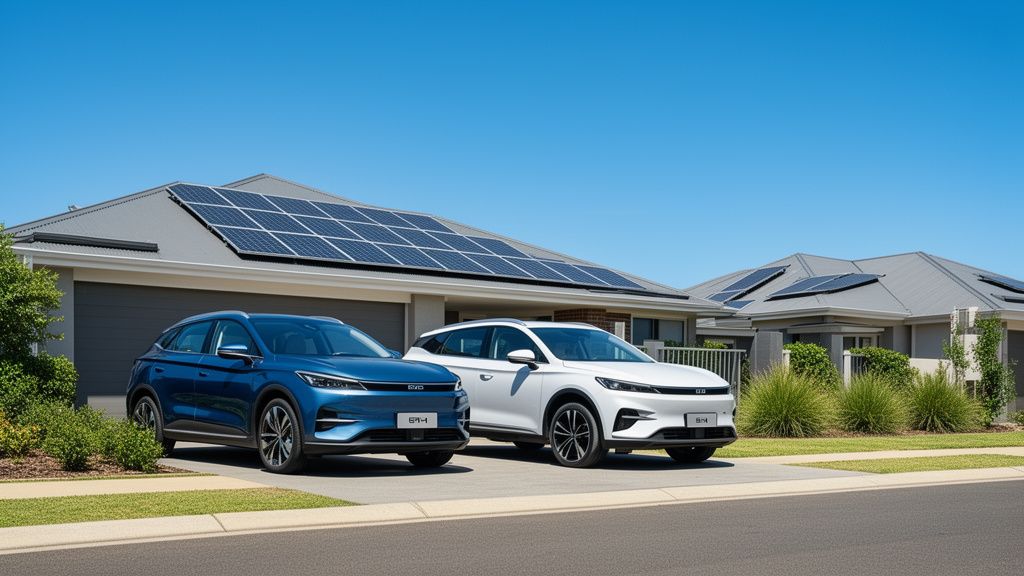
TL;DR: Chinese EV brands such as BYD and GWM are rapidly gaining traction in Australia, offering an appealing combination of affordability, advanced technology, and practical range. This influx is compelling traditional automotive manufacturers to recalibrate their strategies, accelerating the mainstream adoption of electric vehicles down under.
How are Chinese EV brands like BYD and GWM rapidly expanding their footprint in Australia?
Chinese EV brands like BYD and GWM are rapidly expanding their footprint in Australia by offering highly competitive, feature-rich electric vehicles at price points that significantly undercut established players. Their aggressive market entry strategy leverages direct-to-consumer sales models, robust dealership networks, and a strong emphasis on value, making electric vehicle ownership more accessible to a broader range of Australian consumers. These manufacturers have meticulously studied the Australian market, understanding the local demand for practical, affordable vehicles, and are now delivering precisely that in an electric package. This calculated approach is not merely about selling cars but establishing a long-term presence, backed by increasing investment in local charging infrastructure partnerships and customer service initiatives.
Market Share Growth
The growth in market share for Chinese EV brands has been nothing short of meteoric. In recent years, brands like BYD, with its popular Atto 3, and GWM (Great Wall Motors), through its Ora Funky Cat and Tank 500 Hybrid, have seen their sales figures surge. While exact percentages fluctuate, their combined presence has climbed from a niche segment to a significant contender in the broader Australian automotive market. This is particularly evident in the EV sector, where they are chipping away at the dominance of Tesla and offering a compelling alternative to more expensive European and Japanese models. Their rapid expansion signals a new era of competition, pushing the overall EV market towards greater maturity and diversity.
Strategic Pricing
Strategic pricing is arguably the most potent weapon in the Chinese EV arsenal. Brands like BYD are launching vehicles like the Atto 3, which starts from around $48,011 drive-away for the Standard Range, directly challenging the perception that EVs are a luxury only for the well-heeled. Similarly, the GWM Ora, with its starting price under $40,000 before on-road costs in some states, offers an entry point into EV ownership previously unseen in Australia. This affordability is crucial in a market where fuel prices are consistently high and consumers are increasingly environmentally conscious but budget-aware. By offering high-specification vehicles at lower price points, they are converting petrol car owners who might have previously dismissed EVs due to cost barriers.
Chinese EVs are disrupting the Australian market with an unbeatable combination of affordability and advanced technology.
Chinese EVs are indeed disrupting the Australian market by delivering an unbeatable combination of affordability, impressive range, and advanced in-car technology, challenging the perception that electric vehicles are exclusively a premium product. These manufacturers are not just competing on price; they are packing their vehicles with features typically found in much more expensive cars, from advanced driver-assistance systems (ADAS) to large, intuitive infotainment screens and vehicle-to-load (V2L) capabilities. This value proposition is making a strong case for switching to electric, especially as their battery technology matures, offering competitive ranges that alleviate range anxiety for most urban and inter-city Australian drivers. The blend of accessible pricing and cutting-edge features is forcing a paradigm shift in consumer expectations for what an EV should offer.
Pricing Advantage
The pricing advantage offered by Chinese EVs is a game-changer for the Australian market. Where many traditional EVs hover around the $60,000-$80,000 mark, BYD and GWM are consistently delivering models starting from under $50,000. This competitive edge is attracting a demographic that previously couldn't justify the switch to electric. For example, the BYD Atto 3 Extended Range offers a WLTP range of 420km for under $52,000 drive-away, presenting a compelling argument against petrol alternatives or higher-priced EVs with similar specifications. This aggressive pricing strategy is not only winning over new customers but also applying significant pressure on established brands to re-evaluate their own pricing structures in the Australian context.
Tech and Features
Beyond price, the advanced technology and generous feature sets in Chinese EVs are a major drawcard. Drivers are finding vehicles equipped with comprehensive safety suites, including adaptive cruise control, lane-keeping assist, and 360-degree cameras, as standard inclusions rather than expensive optional extras. Furthermore, the integration of large, high-resolution touchscreens, often with rotating capabilities like in the BYD Atto 3, provides a modern and engaging user experience. Practical innovations like V2L (vehicle-to-load) technology, allowing the car to power external appliances, are also becoming common, adding significant utility for camping trips or during power outages. These sophisticated features, combined with often stylish designs, redefine what drivers expect from an affordable EV.


What impact are Chinese EV brands having on traditional automotive manufacturers and the overall Australian EV landscape?
Chinese EV brands are profoundly impacting traditional automotive manufacturers in Australia by forcing them to accelerate their own EV strategies, re-evaluate pricing, and compete on features, while simultaneously expanding the accessible market for electric vehicles. This influx of affordable, high-tech options is no longer a fringe movement; it's a significant market force that demands a response. Established players are now under immense pressure to bring their own competitive EV models to Australia faster, and at more appealing price points, to avoid losing market share to these agile newcomers. This heightened competition ultimately benefits Australian consumers, who now have a wider array of choices, better value, and faster innovation in the EV sector.
Competitive Pressure
The competitive pressure exerted by BYD and GWM on traditional manufacturers is undeniable. Brands like Toyota, Hyundai, and Kia, while having their own EV offerings, are now facing direct challenges in segments they once dominated. The sheer volume and speed at which Chinese brands are introducing new models, coupled with their aggressive pricing, compel these legacy automakers to expedite their EV rollout plans for Australia. This means we are likely to see more diverse EV options from traditional brands, potentially with more competitive pricing and enhanced standard features, as they fight to retain their loyal customer base against the compelling value proposition of Chinese EVs.
Market Expansion
Crucially, the rise of Chinese EV brands is rapidly expanding the overall Australian EV market. By making electric vehicles more affordable and accessible, they are introducing EVs to a segment of buyers who might have previously been priced out or unconvinced by the offerings available. This broader market appeal helps to normalise EV ownership and accelerates the transition away from internal combustion engines. As more Australians adopt EVs, demand for charging infrastructure will increase, prompting further investment and development across the country. This creates a virtuous cycle where increased choice drives demand, which in turn fuels infrastructure growth, solidifying Australia's path towards an electrified automotive future.
Key Takeaways
- Chinese EV brands like BYD and GWM are democratising electric vehicle ownership in Australia through competitive pricing.
- These brands offer a strong value proposition, combining affordability with advanced technology and practical range.
- The influx of Chinese EVs is forcing traditional automotive manufacturers to accelerate their EV strategies and re-evaluate pricing.
- Australian consumers benefit from increased competition, leading to a wider selection of affordable and feature-rich electric vehicles.
- The growth of Chinese EVs is expanding the overall EV market in Australia, contributing to faster EV adoption and infrastructure development.
Read More
For a comprehensive overview, check out our master guide: Read the Full Guide Here.


