TL;DR: Electric vehicle adoption in Australia is rapidly increasing due to growing consumer awareness, government incentives, and the compelling cost savings when paired with home solar systems. This synergy is making EVs an increasingly attractive and sustainable choice for Aussie drivers looking to cut fuel costs and reduce their carbon footprint.
How is Electric Vehicle Adoption Accelerating in Australia?
Electric vehicle adoption in Australia is experiencing unprecedented growth, shifting from a niche market to a significant segment of new car sales. In 2023, EV sales more than doubled from the previous year, with over 87,000 new electric vehicles sold, representing over 7% of the total new car market – a stark contrast to just 0.8% in 2020. This surge is driven by a combination of factors, including expanding model availability, improving charging infrastructure, and increasing awareness among consumers about the long-term economic and environmental benefits. Popular models like the Tesla Model Y and BYD Atto 3 are regularly featuring in top-selling vehicle lists, demonstrating a clear shift in consumer preference towards electric. As more affordable options enter the market, this upward trajectory is expected to continue, positioning Australia closer to global EV adoption rates.
The Expanding Range of EV Models Available
The Australian market has seen a dramatic expansion in the variety of electric vehicle models available, moving beyond premium brands to include a broader range of price points and body styles. Consumers now have choices from SUVs, sedans, and even some light commercial vehicles, catering to diverse needs and budgets. This increased competition among manufacturers is not only driving down prices but also enhancing features and performance, making EVs more appealing to a wider demographic. The availability of models around the $40,000 to $60,000 mark is proving particularly effective in enticing mainstream buyers who might have previously found EVs out of reach financially.
Growing Public Interest and Awareness
Public interest in electric vehicles has never been higher, fueled by media coverage, word-of-mouth experiences from early adopters, and a greater understanding of environmental impacts. Many Australians are now actively seeking alternatives to traditional petrol cars, motivated by rising fuel prices and a desire to contribute to a greener future. Test drive opportunities are becoming more common, allowing prospective buyers to experience the smooth, quiet, and powerful performance of EVs first-hand, often converting curiosity into genuine purchase intent. Educational campaigns by industry bodies and governments also play a role in demystifying EV technology and addressing common misconceptions.
What Government Incentives are Driving EV Sales Down Under?
Government incentives are playing a crucial role in accelerating electric vehicle adoption across Australia, making the upfront cost of EVs more palatable for many consumers. These incentives vary by state and territory but generally aim to reduce purchase costs, ongoing running expenses, and improve the overall financial attractiveness of owning an EV. While there isn't a single national rebate, the combined effect of state-specific offers, along with federal tax exemptions, significantly lowers the barrier to entry for prospective EV owners. These measures underscore a commitment from various levels of government to support the transition to cleaner transport.
State-Specific Rebates and Concessions
Several Australian states and territories offer direct financial rebates for new electric vehicle purchases. For instance, in New South Wales, eligible EV buyers can receive a $3,000 rebate for vehicles costing up to $68,750, along with stamp duty exemption. Victoria offers a similar $3,000 subsidy for EVs priced below $68,740. Queensland provides a higher $6,000 rebate for vehicles under $68,000, or a $3,000 rebate for vehicles between $68,000 and $100,000, for households with an annual income below $180,000. These incentives directly reduce the purchase price, making EVs competitive with equivalent internal combustion engine (ICE) vehicles. Other states like South Australia, Tasmania, and Western Australia also offer various forms of concessions, such as reduced stamp duty or free registration, further sweetening the deal.
Federal Fringe Benefits Tax Exemptions
At a federal level, the Australian government introduced an important Fringe Benefits Tax (FBT) exemption for eligible electric cars provided by employers. This means that if an employer provides an EV to an employee for private use, the employer generally doesn't have to pay FBT on that benefit, provided the car meets certain criteria (e.g., first held on or after 1 July 2022 and value below the luxury car tax threshold for fuel-efficient vehicles). This makes salary sacrificing an EV through an employer significantly more attractive, potentially saving thousands of dollars for both the employee and the employer. This policy encourages businesses to transition their fleets to electric, driving bulk purchasing and increasing the second-hand EV market in the future.
How Do Home Solar Systems Enhance the Value Proposition of EVs?
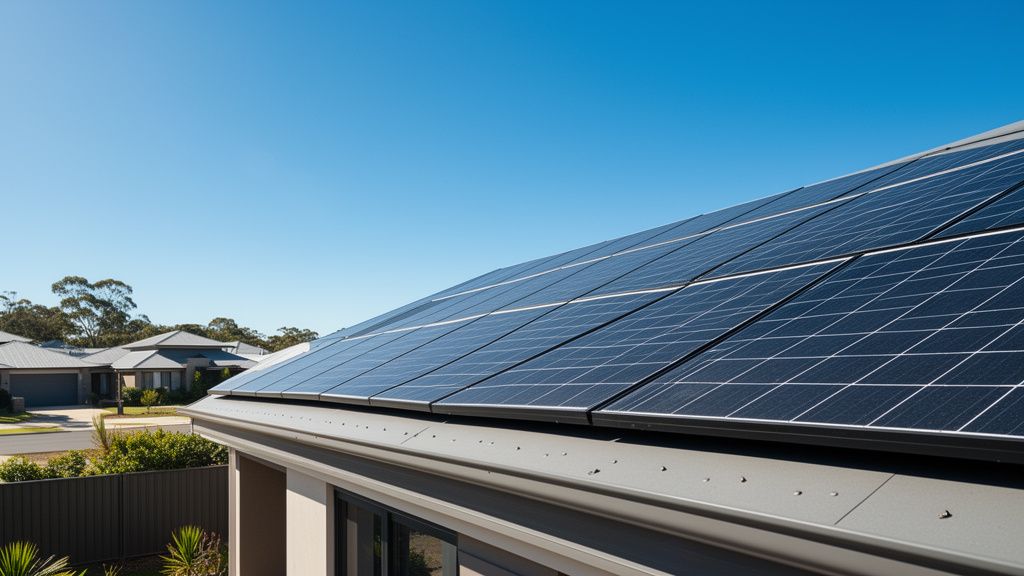
Home solar systems dramatically enhance the value proposition of electric vehicles by transforming the cost of "fuel" from a recurring expense into a negligible or even free operational cost. For Australian households with rooftop solar, charging an EV becomes incredibly economical, leveraging self-generated renewable energy rather than purchasing electricity from the grid at standard rates (typically 25-35 cents per kWh). This synergy positions solar-powered EV charging as one of the most compelling arguments for dual investment in both technologies, offering substantial long-term savings and increased energy independence. The ability to power your daily commute with sunshine makes the transition to electric transport even more attractive and sustainable.
Significant Savings on Fuel Costs
The most immediate and tangible benefit of pairing an EV with home solar is the elimination of petrol costs. A typical Australian driver might spend $1,500 to $2,500 annually on petrol, depending on mileage and fuel efficiency. When charging an EV exclusively with self-generated solar power, these costs are effectively reduced to zero, after the initial investment in the solar system. Even if some grid electricity is used, the cost per kilometre is dramatically lower than petrol. For example, charging an EV at home using solar might cost as little as 0-5 cents per kWh, compared to over 20 cents per kWh from the grid, and the equivalent of over $2.00 per litre for petrol. These savings accumulate rapidly, contributing significantly to the overall financial return on both the solar and EV investments.


Maximising Your Solar Self-Consumption
Owning an EV provides an excellent way to maximise your solar self-consumption, ensuring more of the electricity your panels generate is used directly in your home rather than exported to the grid for a lower feed-in tariff (typically 5-15 cents per kWh). Instead of getting a modest credit for excess solar, you can direct that energy into your vehicle, effectively "storing" it for transportation. This is particularly beneficial during peak solar generation hours in the middle of the day. Smart chargers can be programmed to only charge when there is surplus solar, optimising the use of free, clean energy. This increases the efficiency of your solar investment and reduces your reliance on grid power, creating a more robust and self-sufficient household energy ecosystem.
What Charging Infrastructure Challenges and Solutions Exist for Australian EV Owners?
While EV adoption is booming, the expansion of charging infrastructure presents both challenges and rapidly developing solutions for Australian EV owners. The primary concerns often revolve around the availability of public charging stations, particularly in regional areas, and the speed of charging. However, significant investment and innovation are addressing these issues, making EV ownership increasingly practical for a wider range of drivers. The focus is shifting towards a comprehensive network that supports both daily commutes and long-distance travel, ensuring that range anxiety becomes a thing of the past for most Australians.
Expanding Public Charging Networks
Australia's public charging network is growing at an unprecedented pace, with state governments, private companies, and energy providers investing heavily in new infrastructure. Fast and ultra-fast chargers (DC charging, 50kW to 350kW) are being rolled out along major highways and in urban centres, drastically reducing charging times. Companies like Evie Networks, Chargefox, and Ampol are rapidly expanding their footprints, connecting cities and regional hubs. While there's still work to be done to match the density of petrol stations, the trajectory is clear: a robust national network is emerging, making interstate travel in an EV increasingly feasible.
Innovative Home Charging and V2G Technologies
For most EV owners, home charging remains the most convenient and cost-effective solution, especially when coupled with solar. Standard wall sockets (Type 1 or 2) can charge an EV overnight, but dedicated Wallbox chargers (typically 7kW to 22kW) significantly speed up the process, fully charging many EVs in a few hours. Beyond simple charging, Vehicle-to-Grid (V2G) technology is an emerging solution with immense potential. V2G allows EVs to not only draw power from the grid (or your solar) but also to send power back to the home or grid during peak demand or to supplement household electricity. This bidirectional flow can turn an EV into a mobile battery storage unit, further enhancing energy independence and potentially generating revenue for the owner, revolutionising how we view energy consumption and storage in the home.
Key Takeaways
- Electric vehicle adoption in Australia is rapidly accelerating, with sales more than doubling in 2023, driven by increasing model availability and public interest.
- Government incentives, including state-specific rebates (e.g., $3,000 in NSW/VIC, $6,000 in QLD) and federal FBT exemptions, are significantly reducing the financial burden of purchasing an EV.
- Combining an EV with a home solar system offers substantial financial benefits, effectively eliminating fuel costs and maximising your solar energy self-consumption.
- Australia's public charging infrastructure is expanding quickly with fast and ultra-fast chargers, complemented by innovative home charging solutions and emerging V2G technology.
- Investing in an EV, especially with solar power, represents a smart, sustainable choice for Australian drivers looking to reduce running costs and environmental impact.