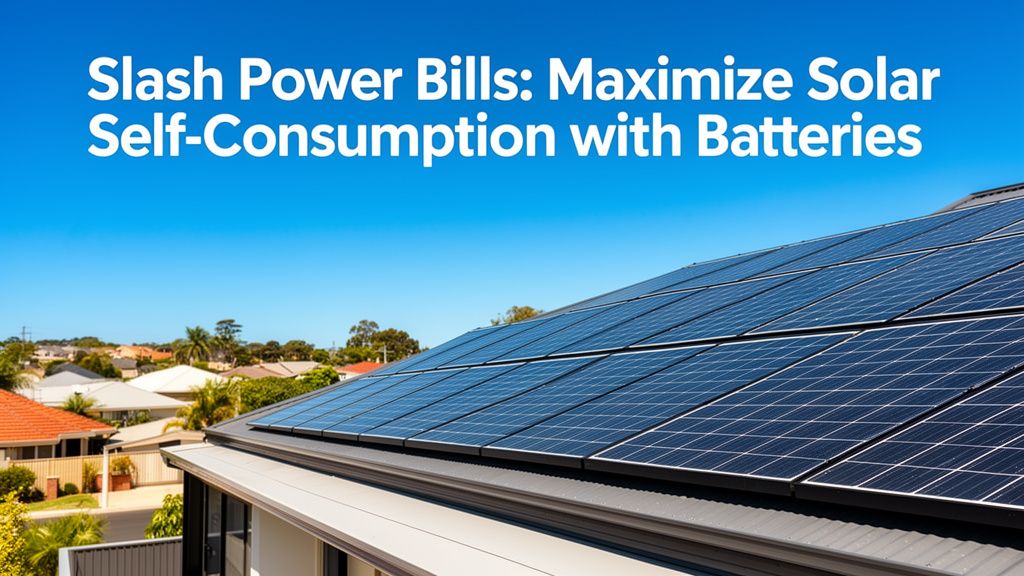
TL;DR: Solar batteries let you store excess power generated by your panels during the day, using it later when the sun isn't shining. This means you buy less expensive electricity from the grid, boosting your self-consumption and significantly reducing your power bills.
Why Are Australian Households Looking Beyond Solar Exports?
Australian households are prioritising self-consumption over exporting solar power due to dropping feed-in tariffs. For years, people installed solar to get credits for power sent back to the grid. Retailers like AGL, Origin, and EnergyAustralia typically offered decent feed-in tariffs (FiTs), sometimes up to 15-20 cents per kilowatt-hour (kWh). However, in 2024, most major retailers offer between 3-8 cents/kWh for exported solar. This makes exporting power far less financially attractive. For example, if you export power for 5 cents/kWh but buy it back from the grid for 35 cents/kWh, you lose 30 cents on every kWh not used directly.
This shift means using the power you generate yourself has become the most cost-effective strategy. Self-consumption involves consuming as much of your own generated solar electricity as possible, either directly when produced or by storing it for later use. Maximising self-consumption avoids buying expensive grid electricity. This strategy works particularly well for homes with high evening usage, which historically bought power during peak periods when solar panels were inactive.
How Do Solar Batteries Boost Your Self-Consumption?
Solar batteries boost your self-consumption by storing excess solar energy generated during the day, letting you use it at night instead of buying grid power. During daylight hours, your solar panels often produce more electricity than your home consumes. Without a battery, this excess power automatically feeds back into the grid. As current feed-in tariffs are low, this exported energy earns minimal credit on your bill. A typical 6.6kW solar system on a sunny day might generate 25-30 kWh. If your daytime usage is only 10 kWh, 15-20 kWh would normally be exported.
When you have a solar battery, it diverts that surplus electricity directly into storage rather than sending it to the grid. For instance, a common 10kWh battery can store a significant portion of that excess. When the sun sets or cloud cover reduces panel output, your home automatically draws power from the battery first. This means you power your lights, appliances, and air conditioning with your own stored solar energy, avoiding expensive electricity from your retailer during evening peak times. This simple energy flow maximises the value of every kWh your panels produce.
What Are the Financial Benefits of Maximizing Self-Consumption?
Maximising self-consumption significantly cuts electricity bills by replacing expensive grid power with your own stored solar energy, often saving hundreds of dollars quarterly. The core benefit comes from avoiding grid electricity charges. A household in regional New South Wales might pay 38 cents/kWh for electricity during peak times, plus daily supply charges. By using stored solar power instead, they directly save that 38 cents for every kWh drawn from their battery. This is far more valuable than the 6 cents/kWh they might earn by exporting that same energy to the grid.
Consider a family with a 6.6kW solar system and a 10kWh battery. They might generate 28 kWh on a good day. If they use 12 kWh during the day, the battery stores 10 kWh of the remaining 16 kWh. This stored power covers most of their evening usage, typically another 8-10 kWh. This means they only buy 6 kWh from the grid that day, instead of 18 kWh without a battery. Over a quarter, these daily savings accumulate rapidly. Many Australian households report reducing their electricity bills by 60-90% with a well-sized solar and battery system, leading to savings of $500 to $800 or more per quarter depending on their usage patterns and local electricity prices.
What Should You Consider When Choosing a Solar Battery System?
When choosing a solar battery, you need to consider its capacity, power rating, warranty, and compatibility with your existing solar setup. Understanding your energy consumption patterns is key before making a choice. Look at your past electricity bills to determine how much power you use in the evenings and mornings when solar panels aren't generating much. This helps size the battery correctly to cover those high-usage periods without being excessively large or too small.
Battery Capacity and Power Rating
Battery capacity, measured in kilowatt-hours (kWh), tells you how much energy the battery can store. A 10kWh battery can deliver 10 kilowatt-hours of energy. The power rating, measured in kilowatts (kW), indicates how quickly the battery can deliver that energy to your home. A battery with a 5kW power rating can run multiple appliances simultaneously, while a 2kW rating might struggle with heavy loads like air conditioners and ovens running together. You need enough capacity to cover your evening usage and sufficient power to run your most demanding appliances. Leading brands like Tesla Powerwall, Sonnen, and Alpha ESS offer various capacities and power ratings to suit different needs.
System Compatibility and Installation
Batteries come in different configurations: AC-coupled or DC-coupled. DC-coupled batteries connect directly to your solar inverter, making them efficient for new solar installations. AC-coupled batteries connect on the AC side of your existing system, often a good option for retrofitting to an older solar setup. Always ensure your chosen battery is compatible with your current solar inverter or budget for a new hybrid inverter. An authorised and accredited solar battery installer must complete the installation. They ensure the system meets Australian safety standards and is eligible for any state-based battery rebates, such as those available in Victoria or South Australia.
Key Takeaways
- Declining feed-in tariffs make self-consuming your solar power more financially beneficial than exporting it.
- Solar batteries store excess daytime solar energy, allowing you to use it at night and avoid expensive grid electricity.
- Maximising self-consumption can slash your quarterly electricity bills by 60-90%, saving hundreds of dollars.
- Choose a battery based on your household's actual evening energy usage (capacity) and peak power needs (power rating).
- Always use an accredited installer to ensure safety, optimal performance, and eligibility for any relevant rebates.
Read More
For a comprehensive overview, check out our master guide: Read the Full Guide Here.