TL;DR: Home solar batteries store excess electricity generated by your solar panels for later use, reducing reliance on the grid and saving money on peak tariffs. While an investment, they offer energy independence and backup power during outages, with costs starting around $8,000 to $15,000 for a typical 10-13kWh system before rebates.
Why Add a Solar Battery to Your Australian Home?
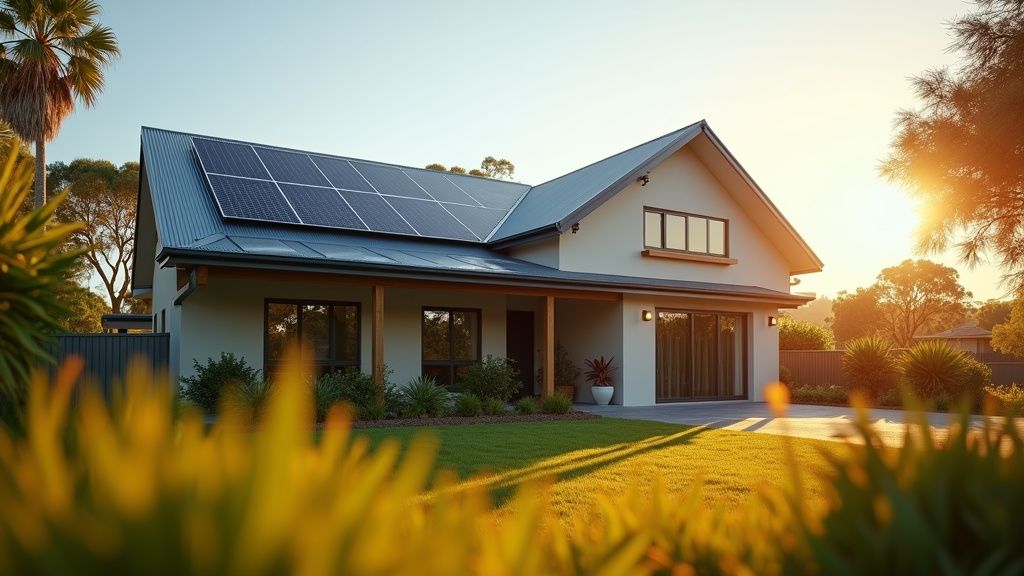
Many Australian homeowners install solar batteries to maximise their self-consumption, gain energy independence, and protect against power outages. Without a battery, any excess solar power your system generates during the day, beyond what your home immediately uses, goes back into the grid for a small feed-in tariff. This tariff has dropped significantly across most states; for example, many retailers now offer less than 5-8 cents per kilowatt-hour (kWh) in NSW and Victoria. A battery allows you to store that excess energy and use it when your solar panels are not producing, such as in the evenings when grid electricity prices are highest.
Reducing Peak-Time Electricity Bills
Electricity prices generally peak in the late afternoon and early evening, between 4 PM and 9 PM, when people return home and start using appliances. If you do not have a battery, you usually draw expensive grid power during these times. A home battery stores your free solar energy and releases it during these peak periods, dramatically cutting down the amount of grid electricity you buy. For a household paying 40-50 cents/kWh for peak power, shifting usage from the grid to stored solar makes a big difference to the monthly bill.
Blackout Protection and Energy Security
Australia experiences its share of extreme weather, and power outages, from bushfires to storms, are a regular concern for some communities. Most standard solar systems shut down during a blackout to prevent back-feeding electricity into a downed grid, protecting essential service workers. A solar battery, when configured with a blackout protection circuit, can automatically switch to island mode, providing continuous power to selected essential circuits in your home. This ensures your fridge stays cold and some lights remain on during grid failures.
How Do Home Solar Batteries Work and What Types Are Available?
Home solar batteries function as rechargeable energy storage units, integrated with your solar power system to capture and release electricity. They work by converting direct current (DC) power from your solar panels into alternating current (AC) for household use, or storing DC power directly for later inversion. When your solar panels produce more electricity than your home consumes, the surplus energy diverts to the battery. When demand exceeds solar production, or at night, the battery discharges, supplying power to your home before drawing from the grid.
The Charging and Discharging Cycle
A battery management system (BMS) intelligently controls the flow of electricity. During the day, bright sunshine means your panels often generate more power than you need. The BMS directs this extra energy to charge the battery. As the sun sets or on cloudy days, solar production drops. The BMS then instructs the battery to discharge, powering your home. This cycle optimises your self-consumption, ensuring you use as much of your free solar electricity as possible, reducing your reliance on expensive grid power, particularly during peak pricing periods.
Common Battery Chemistries for Australian Homes
Lithium-ion batteries dominate the Australian home energy storage market due to their high energy density, efficiency, and long lifespan. The most common sub-types include Lithium Iron Phosphate (LiFePO4) and Nickel Manganese Cobalt (NMC). LiFePO4 batteries are generally favoured for their safety, stability, and longer cycle life, making them a popular choice for residential installations. Brands like Tesla Powerwall, LG Chem, BYD, and AlphaESS all offer robust lithium-ion solutions, typically warrantied for 10 years or a specific number of charge cycles, usually covering 80% capacity retention over that period.

What Do Home Solar Batteries Cost in Australia, and What's the Payback?
Investing in a home solar battery in Australia requires a significant upfront cost, but various factors affect the overall price and the financial return. A typical 10-13kWh battery, suitable for most average Australian households, generally costs between $8,000 and $15,000 fully installed. This price can fluctuate based on the brand, battery capacity, inverter compatibility, and the complexity of the installation. While the payback period for batteries is usually longer than for solar panels alone, the added benefits of energy independence and blackout protection often justify the investment for many homeowners.
Typical Installation Costs
A 10kWh battery, like a Tesla Powerwall 2, might cost around $13,000 to $16,000 installed, while a slightly smaller 6-8kWh unit could be in the $8,000 to $12,000 range. These figures include the battery unit, a compatible hybrid or battery-ready inverter if not already present, installation labour, and any necessary electrical upgrades. Adding a battery to an existing solar system might involve a "retrofit" installation with a separate battery inverter, potentially adding to the cost but offering flexibility. Always get a detailed quote that outlines all components and labour charges from an authorised installer.
Financial Returns and Rebate Programs
The financial payback on a battery comes primarily from avoiding peak grid electricity purchases and, in some cases, participating in virtual power plant (VPP) programs. If you regularly pay 40-50 cents/kWh for evening power, a battery can save you hundreds of dollars annually by shifting that consumption to your free stored solar. State-based battery rebate schemes, such as the Victorian Solar Homes Program, which offers up to $1,400 off a battery, and specific post-code based initiatives, can significantly reduce the initial outlay and improve the overall return on investment. Always research current state and federal programs to see what support is available in your area.
Key Takeaways
- Home solar batteries store excess solar power, allowing you to use it during peak evening hours when grid electricity costs more.
- A typical 10-13kWh battery system costs $8,000-$15,000 installed in Australia, depending on brand and capacity.
- Batteries provide energy independence and essential backup power during grid outages, securing your home's power supply.
- Most home batteries use safe and efficient Lithium Iron Phosphate (LiFePO4) chemistry, offering long lifespans.
- Research available state-based rebates, like Victoria's Solar Homes Program, to reduce your upfront investment.