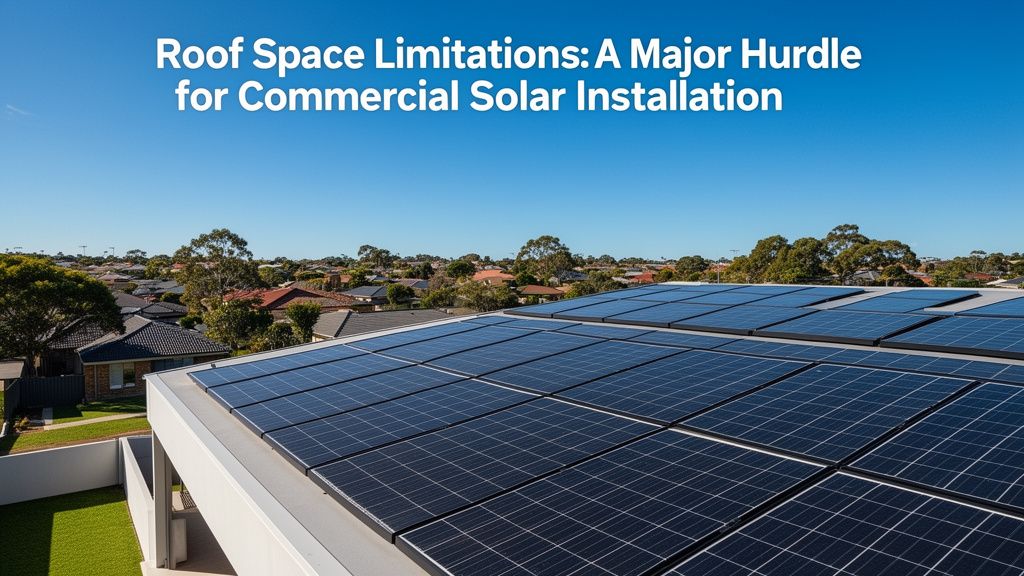
Roof Space Limitations: The Unseen Hurdle for Australian Commercial Solar
Australia, the sunburnt country, is a prime candidate for solar power. Commercial solar offers businesses a powerful way to cut operating costs, enhance sustainability, and achieve energy independence. However, for many Australian enterprises looking to embrace this clean energy future, an often-overlooked challenge looms large: the limitations of their existing roof space. It's not just about how much sun you get; it's about how much of your roof can actually harvest it effectively.
Why Commercial Solar is So Appealing
Before diving into the hurdles, it’s worth reiterating the immense appeal. Businesses across Australia are grappling with rising electricity prices. A commercial solar system can significantly reduce power bills, often by tens of thousands of dollars annually for larger installations. Beyond the financial savings, there's the undeniable benefit of reducing carbon footprints, boosting corporate social responsibility (CSR) credentials, and gaining greater control over energy costs – a true competitive advantage in today’s market.
The Major Hurdle: Roof Space Limitations
While the benefits are clear, the physical reality of a commercial roof often presents a complex puzzle. It's rarely a pristine, flat expanse waiting for panels. Instead, it's a bustling ecosystem of equipment and structural necessities. These limitations aren't just minor inconveniences; they can drastically impact the viable size of a solar system, its efficiency, and ultimately, its financial returns. Understanding these factors upfront is crucial for any business considering commercial solar.
Key Limiting Factors
-
Physical Obstructions: Think about the typical Australian commercial roof. It’s often dotted with air conditioning units (HVAC), ventilation shafts, skylights, plumbing vents, antennae, and even lightning protection systems. Each of these elements consumes valuable space that could otherwise house solar panels. Navigating around them requires careful planning, often leading to fragmented arrays and less efficient layouts.
-
Structural Integrity and Load Capacity: This is a non-negotiable factor. An aged industrial shed or an older office building might not have been designed to bear the additional weight of a significant solar array, including panels, mounting hardware, and importantly, ballast (often concrete blocks) to withstand Australia's strong winds. A structural engineering assessment is mandatory. If reinforcement is required, it adds substantial costs, potentially making the project financially unviable.
-
Shading Concerns: Even with ample roof space, external factors can cast shadows. Nearby taller buildings, telecommunications towers, large trees on adjacent properties, or even parts of the building itself (like parapet walls) can shade portions of the roof for significant parts of the day. Shading on even a few panels can drastically reduce the output of an entire string of panels in a traditional setup, severely impacting overall system efficiency.
-
Roof Age and Condition: An ageing or dilapidated roof will need repairs or replacement before solar panels can be installed. This upfront cost can be significant. Furthermore, warranties on new roofing might dictate specific installation methods, adding complexity and potentially restricting panel placement.


-
Safety Clearances and Maintenance Pathways: Australian safety regulations (OHS) mandate clear access pathways for maintenance workers and emergency services. Setbacks from roof edges, around skylights, and between panel rows are essential. These non-negotiable spaces reduce the available area for solar panels. Fire safety regulations also play a role, often requiring specific clear zones.
-
Optimal Orientation and Pitch: While flat roofs offer flexibility, sloping roofs generally have an optimal pitch and orientation (ideally north-facing in the southern hemisphere) for maximum sun exposure. If the available roof sections deviate significantly from this ideal, the energy generation per square metre will be lower, requiring more space for the same output.
Consequences of These Limitations
The combined effect of these limitations is a smaller solar system than initially desired, leading to less energy generation and lower bill savings. This can push up the 'cost per kilowatt' of the installed system, as the fixed costs of site assessment, design, and project management are spread over fewer panels. A reduced system size directly impacts the return on investment (ROI), making the project less attractive financially and potentially delaying or even cancelling solar adoption.
Strategies to Overcome the Hurdles
Despite these challenges, innovative solutions exist:
-
Thorough Site Assessment: Engaging experienced Australian commercial solar providers for a detailed engineering and structural assessment is paramount. They can identify limitations early and design around them.
-
Optimised Design & Technology: Utilising higher-efficiency panels can generate more power from a smaller footprint, albeit at a higher initial cost. Micro-inverters or power optimisers can mitigate the impact of partial shading on individual panels, preventing it from affecting the entire array.
-
Ground-Mounted Systems: If adjacent land is available and not earmarked for future development, ground-mounted arrays can bypass roof limitations entirely. While requiring more space and specific foundations, they offer complete control over orientation and tilt.
-
Solar Carports: A popular solution for businesses with large car parks. These systems provide shade for vehicles while generating power, effectively using otherwise unproductive space.
-
Roof Reinforcement: If structural limitations are the only significant hurdle and the ROI remains attractive, reinforcing the roof structure can be an option. This is a considerable investment but might unlock a much larger solar potential.
-
Energy Efficiency First: Sometimes, the most cost-effective "solar" solution is to reduce overall energy demand. Implementing LED lighting, optimising HVAC systems, and improving insulation can significantly shrink a building's energy footprint, meaning a smaller solar system can still achieve significant energy independence.
Conclusion
While roof space limitations present a genuine hurdle for commercial solar in Australia, they are not insurmountable. With expert consultation, meticulous planning, and an understanding of the available solutions, Australian businesses can still harness the power of the sun. The key is to approach commercial solar with realistic expectations and a willingness to explore innovative, tailored approaches that maximise your property's unique potential.
Read More
For a comprehensive overview, check out our master guide: Read the Full Guide Here.