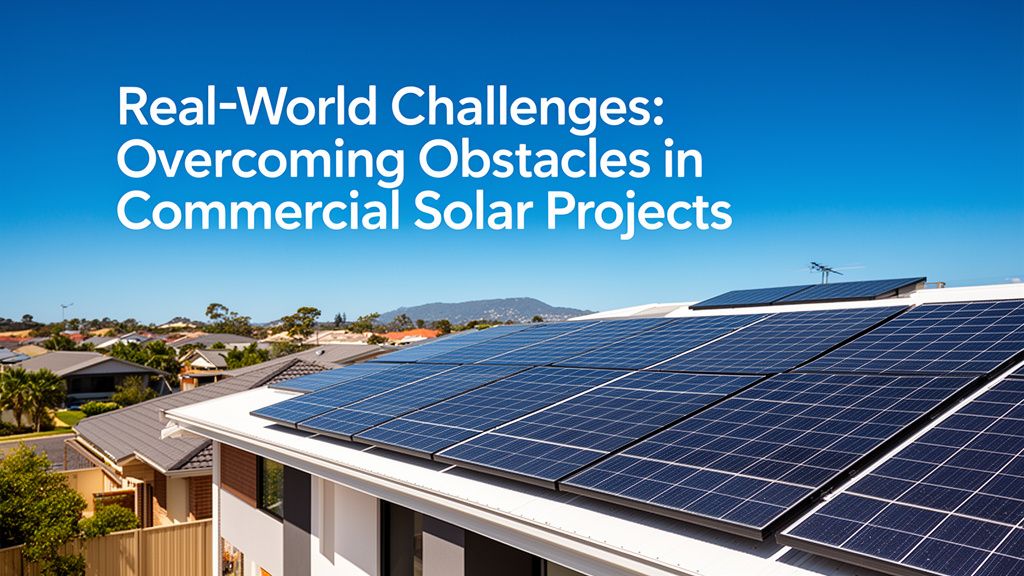
Australia, the sun-drenched continent, is perfectly positioned to harness solar power, and businesses across the country are increasingly looking to commercial solar to cut operating costs, enhance sustainability, and future-proof their energy supply. The benefits are clear: reduced electricity bills, a lower carbon footprint, and improved energy independence. However, the path to a fully operational commercial solar system isn't always a direct one. While the end result is undoubtedly rewarding, businesses often encounter a range of real-world challenges that require careful planning, expert navigation, and a robust understanding of the Australian energy landscape.
The Sunny Promise and the Hidden Hurdles
Many businesses begin their commercial solar journey with enthusiasm, envisioning immediate savings and seamless integration. Yet, unlike residential installations, commercial projects involve significantly larger scales, more complex regulations, and greater financial outlays. From intricate grid connection rules to site-specific structural considerations, what appears straightforward on paper can quickly become a multi-faceted project. Understanding these potential hurdles from the outset is crucial for successful implementation and maximising your return on investment.
Navigating Bureaucracy: Permits, Planning, and Paperwork
One of the most common initial roadblocks is the labyrinthine world of permits and local council approvals. Depending on your business location and the size of your proposed system, you might face different planning requirements across various councils in Sydney, Melbourne, Brisbane, or regional areas. These can include heritage overlays, specific building codes, height restrictions, and environmental impact assessments. Engaging with local authorities early is key. Delays in obtaining these permits can push back project timelines by weeks or even months, impacting your financial projections and energy savings schedule.
Gridlock: Connection Constraints and Export Limits
Connecting a large commercial solar system to the national grid is often more complex than anticipated. Network service providers (NSPs) like Ausgrid, Energex, and Western Power have stringent requirements to ensure grid stability and safety. Businesses frequently face challenges related to network capacity, especially in areas with a high concentration of existing solar. This can lead to lengthy and costly grid connection studies, or even necessitate expensive upgrades to local infrastructure, which can fall to the business to cover. Furthermore, many NSPs impose export limits, capping the amount of excess solar electricity you can feed back into the grid. This means you might generate more power than you can use or export, potentially limiting your system's financial viability if not carefully modelled against your consumption patterns.
The Bottom Line: Financing Large-Scale Investments
Commercial solar systems represent a significant capital investment. While a 100kW system might cost anywhere from $120,000 to $180,000 (before incentives), and much larger systems considerably more, securing suitable financing can be a hurdle. Traditional bank loans might not always be the most competitive option. Businesses often grapple with various financing models, including outright purchase, power purchase agreements (PPAs), and equipment leases. Understanding the financial implications, cash flow impacts, and long-term return on investment (ROI) for each option requires detailed analysis. While small-scale technology certificates (STCs) can provide an upfront discount for systems under 100kW, larger commercial projects often rely on other mechanisms or direct investment, making clear financial planning paramount.
Tailored Solutions: Site-Specific Design Complexities
Every commercial site is unique, presenting its own set of design challenges. Roof integrity is a primary concern – can your existing roof structure safely bear the weight of hundreds of solar panels and mounting equipment, especially considering Australia’s sometimes harsh weather conditions like cyclones in the north or strong winds down south? Shading from neighbouring buildings, trees, or existing rooftop infrastructure (like air conditioning units or ventilation systems) can significantly impact system performance and requires clever panel layout and sometimes even advanced optimisation technology. Accessibility for installation and future maintenance also plays a role, as does compliance with specific fire safety regulations and electrical standards. A generic solution rarely fits, demanding a highly customised design from experienced solar engineers.


On the Ground: Installation Logistics and Safety
The physical installation phase of a commercial solar project brings its own unique set of logistical challenges. Coordinating large teams, managing heavy equipment, ensuring site safety, and often working at height requires meticulous planning. Businesses need to consider potential disruptions to their operations during installation – can the work proceed without interrupting production, customer access, or daily activities? Weather delays, particularly during Australia's summer storm season, can also push back timelines. Moreover, adherence to strict Workplace Health and Safety (WHS) regulations is non-negotiable, adding layers of planning and execution to the project.
Sustaining Performance: Ongoing Maintenance and Monitoring
Once installed, a commercial solar system isn't a "set and forget" asset. Ongoing maintenance and diligent monitoring are essential to ensure peak performance and longevity. Dust, grime, bird droppings, and even salt spray in coastal areas can reduce panel efficiency. Regular cleaning, inverter checks, and electrical system inspections are necessary. Identifying performance anomalies quickly through sophisticated monitoring systems is vital to prevent minor issues from escalating into costly repairs or significant energy losses. Budgeting for proactive maintenance is crucial for maximising your system's lifespan and ensuring consistent energy savings.
Strategies for Success: Turning Challenges into Opportunities
Overcoming these obstacles is not about avoiding them entirely, but rather about preparing for them and having robust strategies in place.
Early and Thorough Engagement
Proactive engagement with local councils, network service providers, and financial advisors from the project's inception can pre-empt many common delays. Understanding all requirements, timelines, and potential costs upfront allows for realistic project planning and budgeting.
Partnering with Expertise
Choosing an experienced commercial solar provider with a proven track record in Australia is paramount. Look for companies that demonstrate expertise in navigating local regulations, have strong relationships with NSPs, and offer comprehensive design, installation, and maintenance services. Their experience can turn complex challenges into manageable steps.
Adaptive Design and Phased Rollouts
An adaptive design approach that considers all site-specific nuances and potential future changes ensures a resilient and high-performing system. For very large projects, a phased rollout can help manage upfront costs, reduce installation disruption, and allow for scaling up as energy demands evolve.
Proactive Performance Management
Implementing a comprehensive maintenance schedule and investing in advanced monitoring platforms will protect your investment. Regular checks, cleaning, and prompt issue resolution ensure your system operates at its maximum potential, delivering consistent savings over its 25+ year lifespan.
The Australian Advantage: Local Insights
Australia's unique blend of abundant sunshine, high electricity costs, and a progressively evolving regulatory landscape makes commercial solar an incredibly compelling proposition despite its challenges. Businesses that invest in thorough due diligence, partner with local experts, and embrace a proactive approach to project management are best positioned to unlock the full potential of their solar investment, contributing to a cleaner future and a healthier bottom line.
The Path Forward: A Bright Commercial Solar Future
While the journey to commercial solar might involve a few unexpected detours, the destination is undeniably worth it. By acknowledging the real-world challenges from the outset and equipping yourself with the right knowledge and partners, your Australian business can confidently overcome obstacles and successfully transition to a more sustainable, cost-effective energy future. The sun is waiting, and with careful planning, its power can be yours.
Read More
For a comprehensive overview, check out our master guide: Read the Full Guide Here.


