TL;DR: Both Queensland and Victoria are actively supporting the transition to electric vehicles through various initiatives, but their approaches to EV charger support differ, particularly concerning residential incentives. Queensland primarily focuses on expanding its public charging network, while Victoria has offered significant rebates for home charger installation and supports business charging infrastructure.
What is the current landscape of EV charger support in Queensland?
Queensland's current EV charger support landscape is primarily focused on building a robust public charging network and fostering fleet electrification, with less emphasis on direct residential home charger rebates compared to Victoria. The state aims to ensure EV drivers have access to reliable charging infrastructure, particularly along major highways and in regional areas, to alleviate range anxiety and encourage EV adoption. This strategic investment in public charging is seen as a crucial enabler for Queenslanders making the switch to electric transport, ensuring long-distance travel is feasible and convenient across the sunshine state. The Queensland government's commitment is underlined by its Electric Vehicle Strategy, which outlines targets for public charging and fleet uptake.
Queensland's Public Charging Network Expansion
Queensland is actively expanding the Queensland Electric Super Highway (QESH), a network of fast chargers connecting cities and regional towns from the Gold Coast to Cairns and west to Toowoomba. This initiative, funded by the state government, provides free charging at many sites for a limited time, transitioning to a paid model as the network matures. For instance, new charging stations are continuously being rolled out, with many offering 50kW DC fast charging capabilities, and newer installations often exceeding 150kW. The government also supports local councils and businesses in establishing new charging points, often through grants or partnerships, to fill gaps in the network and promote destination charging. The emphasis is on accessibility and reliability for all EV users.
Home Charger Incentives and Green Vehicle Registration
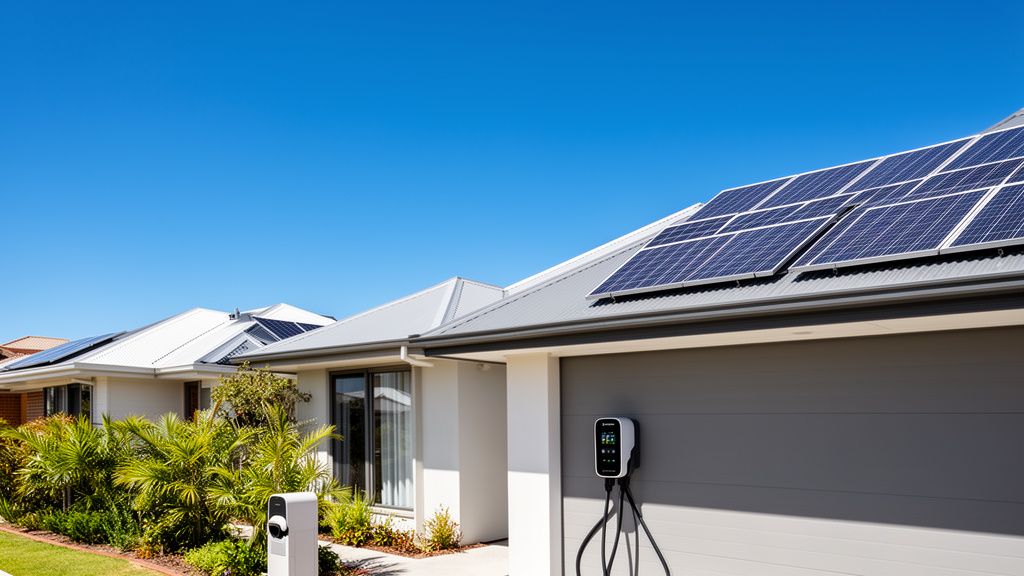
While Queensland does not currently offer direct government rebates for the purchase and installation of residential EV chargers, it does provide other incentives to encourage EV ownership. For example, eligible electric vehicles receive a reduced or zero registration fee. A new EV costing around $60,000 might save an owner several hundred dollars annually on registration alone. Additionally, local council initiatives or private energy providers occasionally offer their own incentives or discounted rates for smart charging. Homeowners typically purchase and install their own Level 2 chargers, which can cost anywhere from $1,000 to $2,500 for the unit itself, plus $500 to $1,500 for professional installation, depending on electrical work required. The focus remains on making EV ownership more affordable through reduced running costs and a reliable public infrastructure.
How is Victoria supporting EV charger rollout for residents and businesses?
Victoria has adopted a proactive and multi-faceted approach to supporting EV charger rollout, distinguished by its strong emphasis on direct financial incentives for both residential and commercial installations. The Victorian Government has consistently positioned itself as a leader in encouraging EV adoption through tangible subsidies, aiming to reduce upfront costs for consumers and accelerate the transition to electric transport. These initiatives are part of a broader strategy to meet ambitious emissions reduction targets and establish Victoria as a hub for renewable energy and sustainable transportation. The state's investment in charging infrastructure is seen as a critical component in overcoming perceived barriers to EV ownership and ensuring the grid can support the increased demand.
Victorian Government's Home Charging Subsidies
The Victorian Government has notably offered significant subsidies for home EV charger installations through programs like the Zero Emissions Vehicle (ZEV) Rebate. This initiative, while subject to funding availability and specific eligibility criteria, previously provided rebates of up to $3,000 for the purchase of new ZEVs and, importantly, specific support for charging infrastructure. Although direct home charger rebates have recently concluded, their impact was substantial, reducing the net cost of a standard 7kW Level 2 charger and its installation (typically $1,500 to $3,500) by a significant margin. This made home charging more accessible for thousands of Victorian households, directly addressing a key barrier to EV ownership and accelerating the uptake of residential charging solutions.
Support for Business and Fleet EV Charging
Victoria also provides substantial support for businesses and organisations looking to electrify their fleets and install charging infrastructure. Through various grants and funding rounds, businesses can apply for assistance to cover a portion of the costs associated with purchasing electric vehicles and installing chargers at their premises. For instance, programs have offered grants covering up to 50% of eligible costs for charging infrastructure, sometimes capped at tens of thousands of dollars per project. This encourages businesses, particularly those with high-use vehicle fleets, to transition to EVs, thereby increasing the overall number of charging points available in commercial and public spaces, and demonstrating the economic viability of electric transport to the broader community. These programs help businesses manage the capital outlay of electrification.
What are the key differences and similarities in EV charger support between QLD and VIC?
The key differences in EV charger support between Queensland and Victoria lie primarily in their approach to residential incentives, with Victoria historically offering direct financial rebates for home chargers while Queensland has focused more on public infrastructure and broader EV adoption incentives. Despite these variations, both states share a common goal of accelerating EV uptake by ensuring robust charging networks and making electric vehicles a more attractive option for their respective populations. Their strategies reflect different priorities and stages of EV market development within each state, but both are critical to Australia's overall transition to sustainable transport.
Divergent Approaches to Residential Support
Victoria's prior direct home charger rebate scheme stands as a significant point of divergence from Queensland's strategy. Victorian households could receive financial assistance that significantly lowered the out-of-pocket expense for a residential charger, potentially saving them upwards of $1,000 to $2,000 on the total cost. This direct subsidy effectively reduced a major upfront cost barrier for new EV owners. In contrast, Queensland has opted not to offer specific rebates for home charging, instead focusing on indirect incentives like reduced registration fees and a robust public charging network. This means Queenslanders typically bear the full cost of home charger purchase and installation, which can range from $1,500 to $4,000 depending on the complexity of the setup.

Shared Goals for Public Charging Infrastructure
Despite differing residential strategies, both Queensland and Victoria share a strong commitment to expanding their public EV charging infrastructure. Both states recognise that a comprehensive and reliable public network is essential for alleviating range anxiety, particularly for long-distance travel and for residents without access to off-street parking for home charging. Queensland continues to build out its Electric Super Highway, adding fast and ultra-fast chargers across the state. Similarly, Victoria has invested significantly in public charging, including through partnerships with local councils and the private sector, to ensure EV drivers have access to charging points in urban centres and regional areas. Both states aim to make public charging ubiquitous, reliable, and accessible, fostering confidence in the EV ecosystem.
What future trends are expected to shape EV charger support in Australia?
Future trends in EV charger support across Australia, including Queensland and Victoria, are expected to be shaped by advancements in smart charging technology, increased integration with renewable energy grids, and an evolving mix of government incentives. As EV adoption grows exponentially, the focus will shift from simply installing chargers to optimising their usage for grid stability and leveraging renewable energy sources. This will involve more sophisticated systems that can communicate with the grid, manage demand, and even feed power back, signifying a move towards smarter, more sustainable charging solutions. The national picture will also increasingly influence state-level policies.
The Role of Smart Charging and V2G Technology
Smart charging technology, which allows chargers to communicate with the grid and adjust charging times based on electricity demand and price signals, is set to become standard. This will enable EV owners to charge when renewable energy is abundant and prices are low, benefiting both their wallets and grid stability. Furthermore, Vehicle-to-Grid (V2G) technology, where EVs can not only draw power but also feed electricity back into the grid, is on the horizon. This transforms EVs into mobile batteries, offering potential revenue for owners and resilience for the grid. Both Queensland and Victoria are likely to see pilots and eventually widespread adoption of these technologies, supported by policy frameworks that incentivise their use, potentially through differentiated tariffs or credits.
Anticipated Evolution of Government Incentives
Government incentives for EV chargers are expected to evolve from broad subsidies to more targeted programs focused on specific needs or technologies. As EV adoption matures, direct purchase rebates for vehicles and basic chargers may diminish, replaced by incentives for smart charging infrastructure, V2G compatibility, or installations in underserved regional areas. There could also be a greater emphasis on incentivising chargers at workplaces and multi-dwelling units (MDUs), addressing common access barriers. Federal government involvement might also increase, providing a national framework or co-funding state initiatives to ensure consistency and accelerate the transition across the country. The aim will be to create a self-sustaining EV ecosystem.
Key Takeaways
- Queensland's EV charger support primarily focuses on building an extensive public charging network and providing indirect EV ownership incentives like reduced registration fees.
- Victoria has historically offered direct financial rebates for residential EV charger installations, alongside robust support for business and fleet charging infrastructure.
- While residential support approaches differ, both states share a strong commitment to expanding and maintaining reliable public EV charging networks across urban and regional areas.
- Future trends include the widespread adoption of smart charging and Vehicle-to-Grid (V2G) technologies, optimising charger use and grid integration.
- Government incentives are likely to evolve, shifting from broad subsidies to more targeted programs supporting smart infrastructure and specific access needs as EV adoption matures.
Read More
For a comprehensive overview, check out our master guide: Read the Full Guide Here.