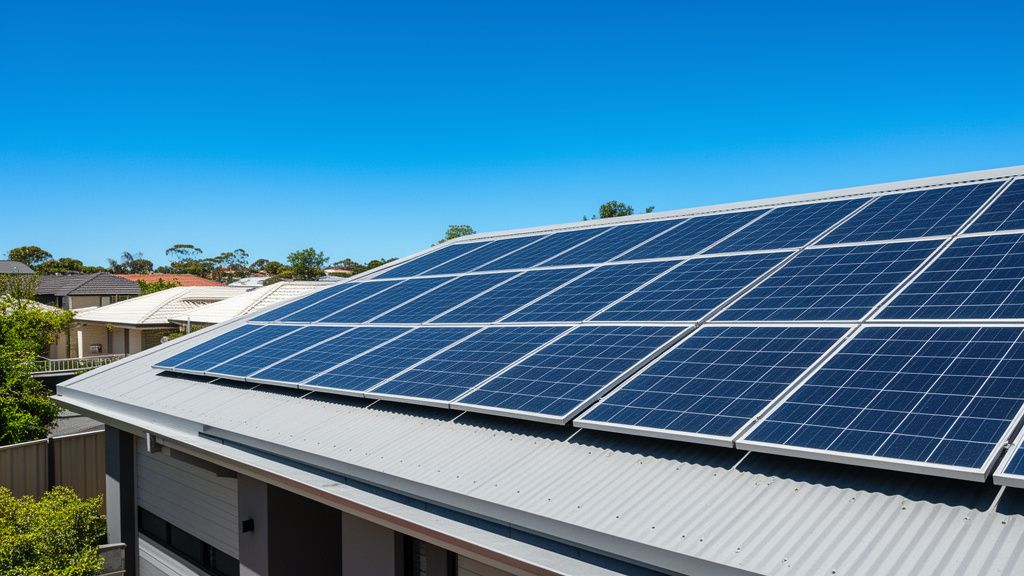
TL;DR: Network costs cover the physical infrastructure, including poles, wires, and substations, that deliver electricity to your home. These charges make up a significant portion of your power bill, separate from the wholesale cost of electricity itself, and you still pay them even if you have solar panels.
What Are Network Charges, and Why Do Australians Pay Them?
Network charges cover the operation, maintenance, and upgrade of the electricity grid's physical infrastructure. This includes the high-voltage transmission lines that move power across states and the local distribution networks of poles, wires, and transformers that bring it to your street and into your home. Australians pay these charges because without this network, electricity cannot reach our properties from power stations or be exported from rooftop solar systems. Your retailer collects these charges from you, then passes them on to the network operators, also known as Distribution Network Service Providers (DNSPs).
Who Sets These Charges?
The Australian Energy Regulator (AER) sets the rules and approves the revenue proposals for the DNSPs in most states. Each DNSP, like Ausgrid in NSW or Powercor in Victoria, submits a plan every five years detailing their proposed expenditure on maintaining and upgrading the network. The AER scrutinises these plans to ensure consumers only pay for efficient and prudent investments. This regulatory oversight aims to balance network reliability with cost-effectiveness for billpayers. State governments regulate network costs in Western Australia and the Northern Territory.
How Are Network Charges Billed?
Your electricity bill usually separates network charges into two main components: a fixed daily supply charge and a variable usage charge. The fixed daily supply charge covers the basic cost of having your property connected to the grid, regardless of how much power you use. This can range from around 80 cents to $1.20 per day in most states. The variable usage charge applies to each kilowatt-hour (kWh) of electricity you import from the grid, reflecting the cost of moving that energy through the network. These per-kWh charges vary depending on your location and the time of day, particularly for those on time-of-use tariffs.
How Do Network Costs Impact Solar Homeowners?
Even with a rooftop solar system, you remain connected to the grid, meaning you still pay network charges. The fixed daily supply charge applies whether you import one kWh or a thousand. While your solar panels significantly reduce the variable usage charge by offsetting the power you would otherwise import, the network still handles your exported solar power. This export capability comes with its own network costs for management and infrastructure use. Grid stability requires control systems to balance supply and demand, a service solar homes contribute to but also rely upon, incurring associated costs.
Can Solar Reduce All Network Costs?
No, solar panels cannot eliminate all network costs. The fixed daily supply charge remains a constant feature of your bill, regardless of how much electricity your solar system generates. This charge covers the standing connection to the grid, which provides backup power when your solar isn't generating and a pathway to export excess electricity. While self-consuming your solar power reduces your import-based variable network charges, the fundamental cost of maintaining the grid connection and managing exports persists. You receive a feed-in tariff for exported energy, but this payment doesn't fully cover the network's cost to facilitate that export.
The Export Tariff Debate
The debate around export tariffs and charges centres on who pays for the grid infrastructure that enables solar exports. Network operators argue that exporting solar puts a load on local transformers and lines, requiring upgrades, especially in areas with high solar penetration. Some retailers have introduced export charges or lower feed-in tariffs to reflect these costs. For example, some plans in South Australia and Victoria implement a nominal charge per kWh exported during peak times, or a lower feed-in tariff if you exceed a daily export limit, aiming to encourage self-consumption over mass export and manage grid capacity.
What Can You Do to Manage Your Network Costs?
Managing network costs primarily involves optimising how you use and generate electricity. Maximising your solar self-consumption directly reduces the amount of electricity you import from the grid, thereby lowering your variable network usage charges. This means running appliances during daylight hours when your solar system is generating power. Considering battery storage allows you to store excess solar energy for use during the evening peaks, further reducing reliance on grid imports and potentially avoiding higher time-of-use network charges. Understanding your bill and consumption patterns provides the first step towards smarter energy management.
Smart Energy Use and Solar Batteries
Smart energy use involves shifting your major electricity consumption to coincide with your solar production. For instance, running your washing machine, dishwasher, or pool pump during the middle of the day minimises imports from the grid. Solar batteries take this a step further by storing surplus solar generation. Instead of exporting power for a low feed-in tariff, you can store it and use it when your solar isn't generating, like in the evenings. This reduces your peak period imports and the associated variable network charges, potentially shortening your solar system's payback period.
Choosing the Right Electricity Plan
Your choice of electricity plan significantly impacts your network costs. Many retailers offer time-of-use (TOU) tariffs where the price of electricity, including network charges, varies throughout the day. Peak rates, such as 4 pm to 9 pm, are much higher than off-peak rates. A solar homeowner benefits greatly from a TOU plan if they can maximise daytime self-consumption and minimise evening imports. Regularly reviewing and comparing plans available in your area ensures you are on the tariff structure that best suits your solar generation and consumption habits, potentially saving hundreds of dollars a year.
Key Takeaways
- Network costs cover the maintenance and operation of Australia's electricity grid infrastructure, separate from the cost of the actual electricity.
- Even with solar panels, you pay a fixed daily supply charge for grid connection and variable charges for imported electricity.
- Maximising your solar self-consumption by using appliances during the day directly reduces your variable network usage charges.
- Battery storage further cuts grid imports, especially during peak times, and helps manage your exposure to time-of-use network charges.
- Choose an electricity plan with time-of-use tariffs that align with your solar production and consumption patterns for greater savings.