TL;DR: Australian families are increasingly adopting electric vehicles (EVs) driven by a combination of significant long-term financial savings, a growing commitment to environmental sustainability, and the appeal of advanced technology and convenient home charging, influencing choices across generations.
What financial benefits are driving Australian families towards electric vehicles?
Australian families are increasingly choosing electric vehicles due to significant long-term financial savings, particularly in fuel and maintenance costs, which provide compelling economic incentives across different generations. While the upfront cost of an EV can still be higher than a comparable petrol car, many families, from budget-conscious millennials to savvy retirees, are recognising the substantial savings that accrue over the vehicle's lifespan. Government incentives, such as stamp duty exemptions and rebates in states like NSW and Victoria (up to $3,000 for eligible vehicles), further sweeten the deal, bringing EV ownership within reach for more households. The prospect of 'fuelling' up at home, especially with a solar power system, transforms a major household expense into a negligible one, making EVs a smart financial move.
How do charging costs compare to traditional fuel expenses?
Charging an electric vehicle is dramatically cheaper than filling up with petrol, offering immediate and ongoing savings that resonate with families facing rising cost of living pressures. While petrol prices can fluctuate wildly, often hovering around $2.00 per litre, charging an EV at home typically costs between $0.25 to $0.35 per kilowatt-hour (kWh) if you're pulling from the grid. For a typical EV needing 60kWh for a 400km range, a full charge might cost $15-20, compared to $80-100 for a petrol car covering the same distance. For families with home solar, this cost plummets to virtually nothing during daylight hours, effectively giving them 'free' fuel and transforming their daily commute into a major saving opportunity.
What long-term maintenance savings do EV owners experience?
Electric vehicles offer substantial long-term maintenance savings compared to traditional internal combustion engine (ICE) cars, primarily due to having fewer moving parts. ICE vehicles require regular oil changes, spark plug replacements, air filter changes, and have complex transmissions and exhaust systems, all of which incur ongoing costs. EVs, on the other hand, don't need oil changes, have regenerative braking which extends the life of brake pads, and generally have simpler powertrains. This translates to significantly lower servicing bills, often reducing maintenance costs by 30-50% over the life of the vehicle. These reduced running costs appeal to families looking for a more predictable and lower overall cost of car ownership.
How does environmental consciousness influence multi-generational EV adoption?
Growing environmental awareness, often spearheaded by younger generations, is a primary motivator for Australian families to switch to electric cars, aiming to reduce their carbon footprint and contribute to a healthier planet. Climate change concerns and the desire for cleaner air in urban areas are increasingly impacting family purchasing decisions, pushing conversations about sustainable choices to the forefront. Grandparents, parents, and children are all playing a role in this shift, with younger family members often educating older ones about the benefits of greener transport. The tangible impact of choosing an EV, especially when paired with renewable energy sources at home, provides a sense of agency in addressing global environmental challenges.
How do EVs contribute to a reduced carbon footprint?
Electric vehicles significantly contribute to a reduced carbon footprint by eliminating tailpipe emissions, which are a major source of urban air pollution and greenhouse gases. While the electricity used to charge an EV might come from fossil fuels in some areas, Australia's grid is rapidly integrating more renewable energy, meaning that the emissions associated with charging are steadily decreasing. When an EV is charged using 100% renewable energy, such as from a home solar system, its operational emissions become zero, making it a truly clean mode of transport. This direct reduction in CO2 emissions appeals to environmentally conscious families looking to actively reduce their household's contribution to climate change.
What is the synergy between home solar systems and electric car charging?
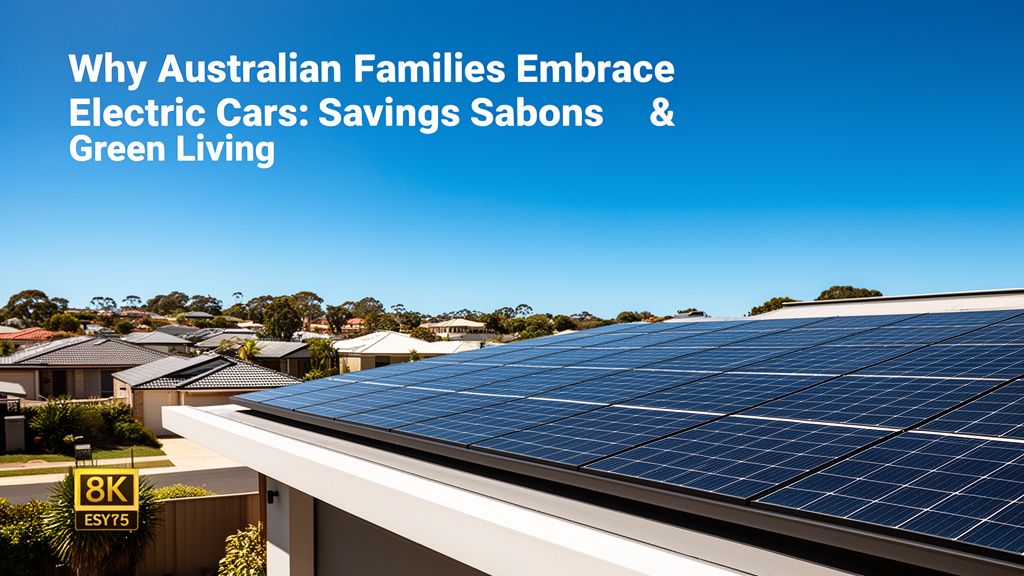
The synergy between home solar systems and electric car charging is a powerful driver for multi-generational EV adoption, offering both environmental and economic benefits. Many Australian families already have solar panels installed, and adding an EV transforms their roof into a personal "fuel station." This allows them to power their daily commutes with clean, renewable energy generated directly from their own home, significantly reducing their reliance on the grid and fossil fuels. This integration not only maximises the return on investment for their solar system but also provides a tangible example of sustainable living, inspiring younger generations to embrace similar eco-friendly technologies.


Are technology and convenience significant factors in the shift to electric vehicles?
Yes, the advanced technology, superior driving experience, and unparalleled convenience of home charging are powerful motivators for Australian families embracing electric vehicles, adding another layer of appeal beyond financial and environmental benefits. Modern EVs are packed with smart features, cutting-edge safety systems, and connectivity options that often surpass what's available in petrol cars. The smooth, quiet ride combined with instant torque provides an engaging and comfortable driving experience, making them ideal for both daily commutes and family road trips. This blend of innovation and practicality makes EVs highly attractive to tech-savvy individuals and families seeking a more refined motoring experience.
How does the driving experience of an EV appeal to families?
The driving experience of an EV appeals strongly to Australian families due to its quiet operation, smooth acceleration, and spacious interiors, creating a more pleasant journey for everyone. Unlike the noisy vibrations of a combustion engine, EVs offer a near-silent ride, allowing for easier conversation or peaceful moments. The instant torque delivery provides responsive acceleration, making merging onto highways or navigating city traffic effortless. Furthermore, without a large engine block or transmission tunnel, many EVs boast flat floors and generous interior space, offering more comfort for passengers and increased storage flexibility, which are significant advantages for families on the go.
What makes home charging so convenient for daily life?
Home charging offers unparalleled convenience for daily life, effectively eliminating the need for regular trips to a petrol station and seamlessly integrating EV ownership into family routines. Imagine simply plugging in your car overnight, just like your phone, and waking up every morning with a full "tank" ready for the day's adventures. This ritual saves time, reduces stress, and ensures that the vehicle is always topped up for school runs, commutes, or spontaneous trips. With smart charging capabilities, families can even schedule charging during off-peak electricity hours or when their home solar system is generating surplus power, optimising both cost and environmental impact without any extra effort.
Key Takeaways
- Australian families are embracing EVs for significant long-term financial savings from reduced fuel and maintenance costs.
- Environmental consciousness, especially among younger generations, is a strong driver for EV adoption to reduce carbon footprints.
- The synergy between home solar systems and EV charging offers both economic and environmental benefits, enabling 'free' green transport.
- Advanced technology, a superior driving experience, and the convenience of home charging are key factors attracting families to EVs.
- Government incentives and the evolving charging infrastructure are making EV ownership increasingly accessible and appealing for Australian households.
Read More
For a comprehensive overview, check out our master guide: Read the Full Guide Here.