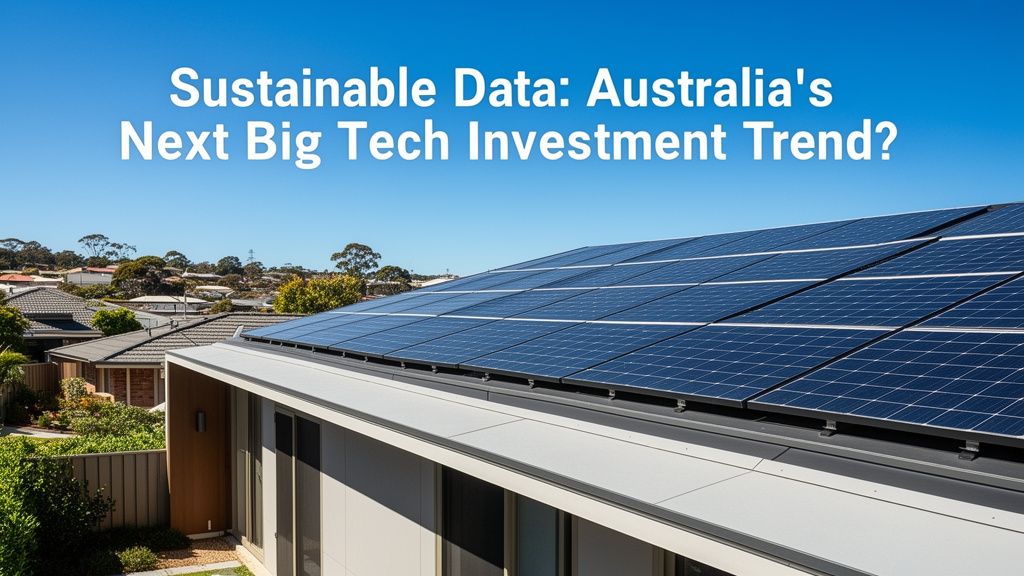
TL;DR: Yes, sustainable data is rapidly emerging as a significant tech investment trend in Australia, driven by increasing regulatory pressure, consumer demand for transparency, and the operational efficiencies it offers across sectors, including the renewable energy industry. Companies are actively investing in data centres powered by renewables and optimising data for lower environmental impact, making it a sound long-term play for the savvy investor.
What exactly is sustainable data and why does it matter?
Sustainable data refers to the practice of managing, storing, and processing digital information in an environmentally responsible manner, specifically aiming to reduce the energy consumption and carbon footprint associated with these essential operations. In our increasingly digital world, every click, stream, and transaction consumes energy, and this 'digital exhaust' is a growing concern for our planet. For an energy-rich nation like Australia, transitioning away from traditional, energy-intensive data practices towards more sustainable models isn't just a green initiative; it's an economic imperative that aligns perfectly with our booming solar industry. It matters because it directly impacts our environmental goals and can unlock efficiencies that support broader renewable energy adoption.
The Energy Footprint of Our Digital Lives
Believe it or not, the global digital infrastructure, including data centres, networks, and end-user devices, already accounts for a significant chunk of global electricity demand – some estimates put it near 3-4% and rising. Here in Australia, with our growing appetite for cloud services, AI, and big data analytics, that demand translates into a substantial draw on our national grid. Minimising this footprint means reducing greenhouse gas emissions and freeing up capacity that can be better utilised elsewhere, or even more efficiently supplied by our abundant solar and wind resources. It’s about making sure our digital growth doesn’t come at the cost of our environmental future.
Data's Role in Optimising Renewable Energy Systems
Beyond just making data centres greener, sustainable data practices are crucial for the renewable energy sector itself. Sophisticated data analytics are essential for forecasting solar output, managing grid stability with intermittent renewables, and optimising energy storage solutions. For instance, smart algorithms can predict how much solar power a household or a farm will generate on a given day, helping the grid manage demand and supply more efficiently. This isn't just about reducing data's own impact; it's about using data smarter to make our entire energy ecosystem more sustainable and resilient, leveraging every ray of Aussie sunshine.
How are Australian companies currently addressing data's environmental impact?
Australian companies are increasingly investing in greener data infrastructure, often by locating facilities closer to renewable energy sources, and implementing intelligent strategies to reduce their overall data storage and processing needs. This pivot isn't just about ticking boxes; it's a strategic move to future-proof operations and meet evolving consumer and investor expectations. From tech giants to small businesses, the focus is shifting towards 'decarbonising' digital operations, a natural extension of Australia's broader push towards a renewable energy future. Many are looking at their entire digital supply chain, from hardware procurement to data disposal, to find efficiencies.
Renewable-Powered Data Centres Down Under
We're seeing a trend emerge where new data centres, particularly larger-scale operations, are being built with direct connections to solar farms or other renewable energy sources. This reduces reliance on the fossil-fuel-dominated grid and positions these facilities as leaders in the sustainable tech space. For example, some regional projects are exploring the potential for 'edge' data centres powered by local solar and battery storage, bringing computation closer to the source of renewable energy and reducing transmission losses. This isn't just a pipe dream; it's becoming a tangible reality, with a potential for significant investment over the next decade.
Smart Data Management for Reduced Emissions
Beyond the power source, Australian businesses are also getting smarter about how they manage their data. This includes optimising data storage, deleting redundant or obsolete information, and using more energy-efficient algorithms for processing. Think about it: every terabyte of stored data consumes power, so if you're holding onto old, unnecessary files, you're needlessly burning electricity. Implementing 'data minimisation' policies and leveraging advanced analytics to identify and purge stale data is a low-cost, high-impact way for businesses to reduce their digital carbon footprint without massive infrastructure overhauls. It’s about doing more with less, a classic Aussie value.
What financial incentives and regulatory shifts are driving this trend in Australia?
Financial incentives like government grants for green technology, coupled with stricter climate reporting regulations and a growing investor preference for ESG (Environmental, Social, Governance) compliant businesses, are significantly accelerating the adoption of sustainable data practices across Australia. The writing is on the wall: businesses that ignore their environmental impact, including their digital one, risk being left behind both financially and reputationally. These drivers are creating a fertile ground for investment in sustainable data solutions, making it a genuinely attractive proposition for venture capitalists and large corporations alike.
The Lure of ESG Investments
Globally, and increasingly in Australia, investors are scrutinising a company's ESG performance before committing their capital. Businesses with strong ESG credentials, which now explicitly include transparent and sustainable data practices, are seen as less risky and more future-proof. This means that a company actively reducing its data's carbon footprint isn't just doing good; it's making itself more attractive to a growing pool of conscious investors. This translates to easier access to capital and potentially better valuations, turning sustainable data into a genuine competitive advantage. Who wouldn't want a piece of that action, eh?


Government Support for Green Data Initiatives
The Australian government, both federal and state, is beginning to recognise the critical role of sustainable technology in meeting our national emissions targets. While specific 'sustainable data' grants might still be nascent, broader green tech funding initiatives can certainly apply. Programs encouraging innovation in renewable energy, energy efficiency, and digital transformation are all potential avenues for businesses looking to invest in greener data infrastructure or practices. Furthermore, increasing pressure for mandatory climate-related financial disclosures means companies need to understand and report their digital emissions, making sustainable data a compliance necessity, not just a 'nice-to-have'.
Is investing in sustainable data a viable strategy for long-term growth?
Yes, investing in sustainable data is a highly viable strategy for long-term growth, as it offers companies enhanced brand reputation, ensures compliance with future regulations, and provides significant operational cost savings, collectively making businesses more resilient and attractive to investors. This isn't just a fleeting trend; it’s a fundamental shift in how businesses operate in an increasingly environmentally conscious world. Early adopters in Australia stand to gain a considerable first-mover advantage, solidifying their market position and appealing to a new generation of eco-aware customers and employees.
Reduced Operational Costs and Future-Proofing
One of the most compelling arguments for sustainable data is the potential for significant long-term cost savings. By optimising data storage, reducing redundant processes, and leveraging energy-efficient infrastructure powered by cheaper renewables, businesses can see a noticeable reduction in their operational expenditures. Think about the savings on electricity bills alone for a large data centre shifting from grid power to its own solar array. Furthermore, by proactively adopting sustainable practices, companies future-proof themselves against stricter environmental regulations and potential carbon taxes, avoiding costly retrofits down the track.
Attracting a Conscientious Consumer Base
Today's consumers, especially younger generations, are increasingly making purchasing decisions based on a company's environmental and social credentials. By visibly committing to sustainable data practices and reducing their overall carbon footprint, Australian businesses can significantly enhance their brand image and attract a growing segment of environmentally conscious customers. This isn't just about feel-good marketing; it translates directly into stronger customer loyalty and a more resilient brand in a competitive marketplace. It’s a win-win for the planet and the bottom line, helping businesses thrive in the long run.
Key Takeaways
- Sustainable data practices are crucial for reducing the environmental impact of digital operations and optimising renewable energy systems in Australia.
- Australian companies are actively investing in renewable-powered data centres and employing smart data management to lower their digital carbon footprint.
- ESG investor demand and emerging government regulations are strong catalysts accelerating investment in sustainable data solutions.
- Adopting sustainable data strategies offers long-term benefits including reduced operational costs, enhanced brand reputation, and future-proofing against regulatory changes.
- Consider auditing your business's current data practices and exploring green data infrastructure options to align with this growing trend.
Read More
For a comprehensive overview, check out our master guide: Read the Full Guide Here.


