TL;DR: While Australia leads in battery storage adoption, this success often overshadows significant hurdles in grid infrastructure and ensuring enough firm renewable generation. Our grid needs major upgrades and new, dispatchable capacity to handle more intermittent power, beyond just batteries smoothing output.
Are Australian Households Leading the World in Battery Storage?
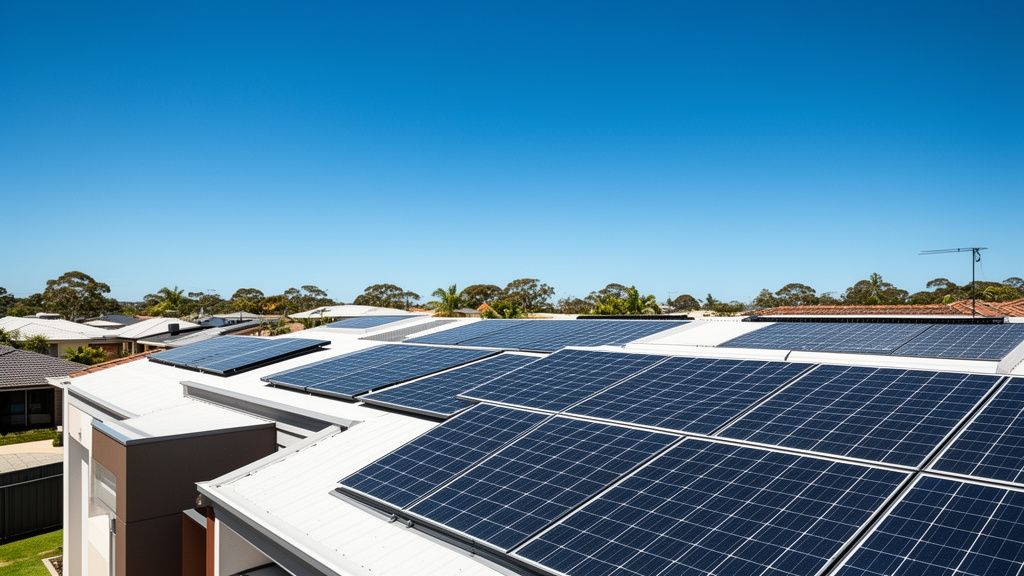
Australia certainly stands out for its rapid adoption of battery storage, particularly at the household level. More than 450,000 homes now have batteries installed, with a significant boom in recent years driven by rising electricity prices and the desire for energy independence. This figure, as reported by SunWiz in late 2023, shows a huge appetite for self-sufficiency. Large-scale battery projects also dot the landscape. We have the Hornsdale Power Reserve in South Australia, a 150MW/193.5MWh system, and the Victorian Big Battery near Geelong, a massive 300MW/450MWh unit. These grid-scale batteries play a crucial role in grid stability, offering rapid response to frequency fluctuations and absorbing excess renewable energy when demand is low. However, their primary function is often frequency regulation and short-duration energy shifting, not solving the deeper, long-term challenge of getting massive amounts of renewable generation consistently into the grid from remote locations. The current battery boom does a great job of showing what's possible, but it doesn't fix everything.
How Much Battery Capacity Does Australia Have?
Australia boasts an impressive and growing amount of battery capacity. Beyond the residential installations, the grid-scale battery market has exploded. As of late 2023, the total operational utility-scale battery storage capacity across the National Electricity Market (NEM) exceeded 1.3 GW / 2.3 GWh. Many more projects are under construction or proposed. For example, Origin Energy is building the Mortlake Power Station Battery in Victoria, a 300MW battery, and AGL plans a 500MW battery at its Torrens Island site in South Australia. These projects, often co-located with existing power stations or in areas with high renewable penetration, help stabilise the network and provide vital ancillary services. They allow more solar and wind to connect without immediate grid overload. While this growth is excellent, these batteries are mostly buffering the existing grid and don't create new transmission pathways or guarantee consistent power for days when the sun doesn't shine and the wind doesn't blow across a whole region.
What Grid Challenges Are Battery Projects Not Fully Solving?
Battery projects are excellent for short-term grid stability and soaking up midday solar peaks, but they don't fix the fundamental issues with our ageing transmission network. Australia's grid was built for a different energy landscape, designed to move power from large, centralised generators to demand centres. Renewables, by contrast, are often spread out across regional areas with strong wind or sun resources. Getting this power to cities requires massive new transmission lines, which are expensive, face planning hurdles, and take years to build. Energy market operator AEMO frequently highlights congestion in parts of the NEM. In South Australia and parts of regional Victoria, for example, high solar and wind penetration sometimes exceeds the capacity of local transmission lines. This forces some renewable generators to "curtail" their output, meaning they get switched off even when they could produce clean power. Batteries can mitigate some curtailment by storing energy, but they cannot create a superhighway for electricity where only a country road exists.
Why Is Our Grid Getting Congested?
Grid congestion happens when the amount of electricity wanting to flow through a specific part of the network exceeds its physical capacity. Our existing transmission lines weren't built with large-scale renewable energy zones in mind. For instance, the sheer volume of solar power coming online in regional Queensland or the strong winds in western Victoria creates bottlenecks. Without new, larger transmission lines, the grid simply cannot move all the power generated. This leads to inefficient outcomes where clean, cheap power gets wasted. TransGrid and AusNet Services, major transmission network owners, are working on projects like Project EnergyConnect and HumeLink, but these are multi-billion-dollar undertakings with long lead times. Until these projects are finished, batteries will remain a local fix, not a systemic solution for a national grid challenge.
What Happens When Renewables Get Switched Off?
When renewables get switched off, or "curtailed," it means clean energy is being wasted because the grid cannot handle it. This happens more often than many people realise. In 2023, some wind and solar farms in parts of the NEM experienced significant curtailment, sometimes up to 10-15% of their potential output in specific regions during certain periods. This wasted energy costs generators revenue and means consumers miss out on cheaper, cleaner power. While batteries can help by storing some of this excess energy, they offer only temporary relief for a system-wide problem. The solution isn't just more batteries; it's a grid capable of moving that energy efficiently to where it's needed, along with enough "firming" capacity that can deliver power reliably for extended periods, even when the wind drops and the sun sets across an entire state.


What Deeper Investments Are Needed Beyond Batteries?
Beyond battery storage, Australia needs substantial investment in long-duration storage, new transmission infrastructure, and genuinely firm, dispatchable renewable generation. Large-scale pumped hydro projects, like Snowy 2.0 or Kidston, offer multi-day storage capability, a crucial difference from the few hours most grid batteries provide. These projects are expensive and take a long time to build, but they offer the foundational stability the grid requires for a high-renewable future. Similarly, new transmission lines, like those proposed under AEMO's Integrated System Plan, are essential. These upgrades create dedicated renewable energy zones and unlock areas rich in wind and solar resources that are currently stranded due to lack of network capacity. Without these investments, our reliance on batteries alone means we are patching over cracks rather than building a robust, future-ready energy system.
How Can We Future-Proof the Energy Market?
To future-proof the energy market, we need a coordinated strategy that looks beyond the next five years. This involves accelerating the construction of new transmission, streamlining planning approvals for major energy projects, and implementing market mechanisms that properly reward "firm" capacity – power that can be delivered on demand, regardless of weather. The Capacity Investment Scheme, for example, aims to bring on 32GW of new clean energy capacity and 9GW of dispatchable capacity by 2030, which includes long-duration storage and gas peakers that might eventually be converted to hydrogen. We also need to consider the role of demand-side response, encouraging consumers to shift their energy use to periods of high renewable generation. A truly resilient grid uses every tool available, not just one.
Key Takeaways
- Australia leads globally in household battery uptake, with significant grid-scale battery projects supporting network stability.
- Batteries primarily offer short-term grid support and frequency regulation; they don't solve long-term transmission constraints or provide multi-day firming.
- Grid congestion regularly forces renewable generators to curtail output, wasting clean energy due to inadequate transmission infrastructure.
- Major investments in new, large-scale transmission lines are essential to connect remote renewable energy zones to demand centres.
- Long-duration storage solutions like pumped hydro, alongside dispatchable generation, are crucial for a stable, high-renewable grid.
Read More
For a comprehensive overview, check out our master guide: Read the Full Guide Here.