TL;DR: Australia's energy system is rapidly shifting from fossil fuels to renewables. Battery storage lets solar homeowners use more of their generated electricity, lowering bills and reducing grid reliance. Government incentives make home batteries more affordable, speeding up this transition for many families.
Australia's Electricity Grid Is Undergoing a Rapid Transformation
Australia is quickly moving its electricity generation from coal to renewables, driven by new large-scale solar and wind farms connecting to the grid. Over the past decade, several major coal-fired power stations have closed or announced closure dates, including Liddell in NSW in April 2023. This change means more variable renewable energy now powers our homes and businesses. The Australian Energy Market Operator (AEMO) forecasts that 60% of coal-fired generation will leave the grid by 2030, replaced by over 50GW of new wind and solar, alongside significant battery and pumped hydro storage. This transition is not just about environmental goals; it also relates to the increasing cost-effectiveness of renewables compared to ageing fossil fuel infrastructure. New large-scale batteries, like the 300MW/450MWh Victorian Big Battery, now stabilise the grid and support peak demand, showing how distributed energy resources at home will play a similar role.
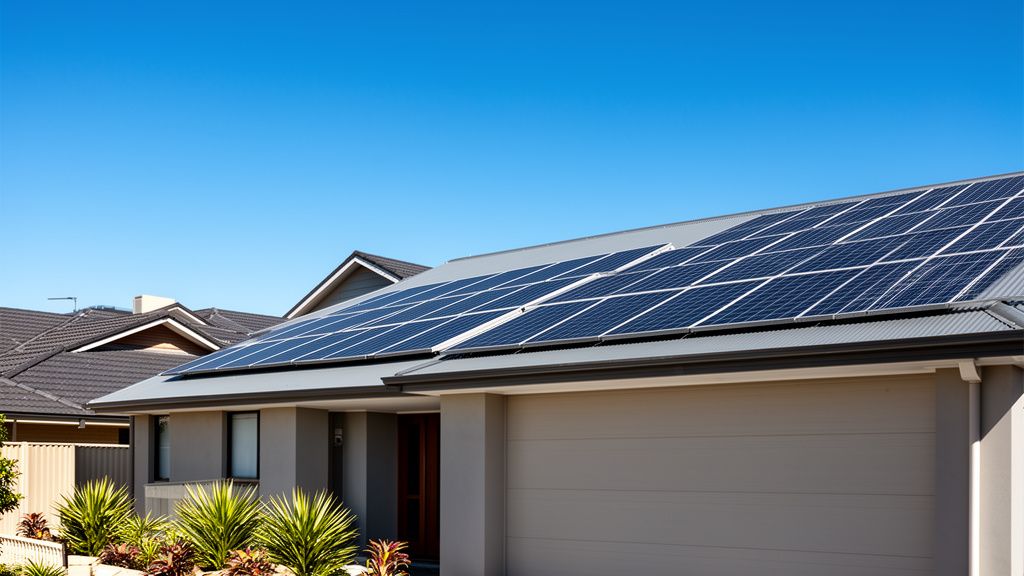
The shift towards decentralised energy also puts more control in the hands of households. With over 3.8 million rooftop solar systems installed nationwide, Australians already generate a substantial amount of clean energy. However, without storage, much of this clean power exports to the grid at low feed-in tariff rates. Integrating home battery storage becomes a logical next step. It lets households become more energy independent, managing their own power supply and demand. This reduces strain on the centralised grid during peak times and makes the overall energy system more resilient.
How Does Battery Storage Change Solar System Value for Homeowners?
Battery storage significantly increases the value of a residential solar system by allowing homeowners to use more of their self-generated electricity. Without a battery, most solar households export excess daytime power to the grid for a low credit, then buy expensive grid power back at night. A battery lets you store that excess power and use it when the sun is down, directly offsetting your power bill. This shift maximises the financial benefit of your solar panels, particularly as electricity prices continue to rise.
Why Feed-in Tariffs Make Batteries More Attractive
Feed-in tariffs (FiTs) across Australia rarely match the cost of buying electricity from the grid. Most retailers offer between 4 cents and 8 cents per kilowatt-hour (c/kWh) for exported solar power in 2024. In contrast, residential electricity prices commonly sit between 25 cents and 40 cents per kWh. This large difference means that every kWh you can self-consume from your solar and battery is worth far more than the same kWh exported to the grid. A 10kWh home battery system, for example, can save a household using 20kWh per day around $2.50 to $3.50 daily by avoiding grid purchases, quickly adding up over a year.


Average Battery System Costs and Payback Periods
The upfront cost for a typical 10-14kWh home battery system generally ranges from $10,000 to $18,000, installed, before any rebates. Brands like Tesla Powerwall, Sungrow, and AlphaESS are popular choices. While this represents a significant investment, the payback period has shortened considerably. With current electricity prices and available state-based incentives, many households see a payback period of 7 to 12 years, depending on their energy usage patterns, solar generation, and eligibility for specific schemes. As battery technology improves and manufacturing scales up, costs are expected to decline further, making them an even more compelling proposition for Australian homes.
Government Initiatives Are Accelerating Battery Adoption Nationally
State and federal government programs are directly reducing the upfront cost of battery storage for many Australian households. These incentives recognise the public benefit of home batteries, including reducing peak grid demand and increasing overall grid stability. Without these schemes, the initial investment in a battery might deter many families.
In South Australia, the Home Battery Scheme provides subsidies of up to $6,000 for eligible households, depending on the battery size and energy concession status. This scheme, delivered with interest-free loans from the SA Government, has made battery ownership a reality for thousands of residents. Victoria's Solar Homes Battery Rebate offers a discount of up to $2,916 for eligible systems, significantly lowering the barrier to entry for homeowners in that state. Queensland has also introduced a Battery Booster Rebate, providing up to $4,000 for new battery installations. New South Wales offers the Empowering Homes Program, providing interest-free loans of up to $14,000 for solar-battery systems. These targeted financial supports clearly demonstrate a national commitment to accelerating the clean energy transition at the residential level. They help ensure the benefits of battery storage reach a broader range of Australians.
Key Takeaways
- Australia's energy grid is rapidly transitioning from coal to renewables, requiring more decentralised storage solutions.
- Home battery storage significantly increases the financial value of rooftop solar by enabling self-consumption and reducing reliance on expensive grid power.
- Current low feed-in tariffs make storing solar energy for night-time use more cost-effective than exporting it.
- Government rebates and loans, such as those in SA, Victoria, and NSW, substantially reduce the upfront cost and improve the payback period for home battery systems.
- Investing in a home battery system contributes to a more resilient national energy grid and offers long-term savings on electricity bills.


