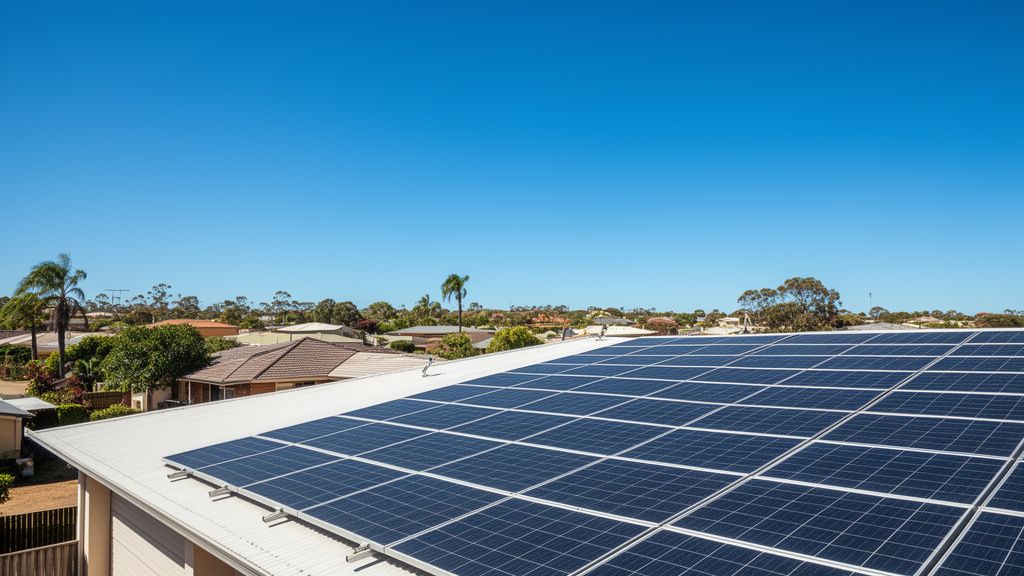
TL;DR: Australia's electricity grid struggles to integrate the large volume of new solar and wind projects. Our aging network, designed for one-way power flow from large fossil fuel plants, lacks the transmission capacity and advanced controls needed for modern renewable generation. This bottleneck causes delays, increases costs, and hinders Australia's progress towards cleaner energy targets.
Why isn't our grid ready for more solar and wind?
Our national electricity grid, the National Electricity Market (NEM), primarily distributes power generated by large, centralised coal and gas plants. It wasn't built to handle vast amounts of variable power flowing in from many decentralised solar farms, wind farms, and even rooftop solar. This fundamental design constraint now creates major choke points. We often see grid infrastructure in areas with excellent renewable resources, like parts of Queensland or regional Victoria, simply unable to transmit all the generated power to demand centres such as Sydney or Melbourne. Developers might build a 100MW solar farm, but due to grid congestion, it can only export 50MW on a sunny day. This limits the project's output and impacts its financial viability, which then discourages future investment in new renewable capacity.
What are the main physical limitations of the network?
The existing network suffers from a few key physical limitations. Many transmission lines are decades old and have limited thermal capacity, meaning they overheat if too much current flows through them. There are also insufficient interconnections between states and regions, which prevents surplus renewable power from one area being easily shared with another. Furthermore, the grid lacks the "system strength" provided by synchronous generators (like coal plants) that helps stabilise frequency and voltage. Renewables, being inverter-based, don't inherently provide this in the same way, requiring additional technologies or grid upgrades to maintain stability. This isn't a minor issue; it is a fundamental mismatch between 20th-century infrastructure and 21st-century energy needs.
How does a lack of transmission capacity affect project approval?
A lack of transmission capacity directly impacts the approval and operational limits of new renewable projects. Developers proposing large-scale solar or wind farms often face extended grid connection studies and significant costs for network upgrades just to get their projects connected. The Australian Energy Market Operator (AEMO) regularly issues notices regarding transmission limitations, which can lead to "curtailment" - forcing operating renewable generators to reduce their output even when there is demand for their power. This effectively wastes clean energy and reduces revenue for project owners. For example, some large-scale solar farms in NSW have reported curtailment rates as high as 15-20% during peak generation times, directly due to insufficient local transmission capacity.
How does current planning fall short for renewable projects?
Current planning for the grid and new renewable projects often falls short because it struggles to keep pace with the rapid energy transition. The NEM's regulatory framework, established decades ago, moves too slowly to address today's challenges. Planning for major transmission upgrades can take over a decade, involving detailed studies, multiple regulatory hurdles, and extensive community consultations. In contrast, a large-scale solar farm can be built in two to three years. This mismatch means that by the time new transmission lines are planned and built, the renewable energy landscape has already shifted, potentially creating new bottlenecks elsewhere. There is a clear disconnect between the speed of renewable development and the slow, methodical process of grid expansion.
Are current market rules suitable for intermittent generation?
The current market rules, designed for a dispatchable fossil fuel fleet, struggle with intermittent generation from solar and wind. AEMO's rules around system strength and network access often impose significant costs or operational restrictions on new renewable projects. While the NEM has introduced mechanisms like the Integrated System Plan (ISP) to guide future grid development, the implementation of these plans is complex and slow. The market also lacks adequate incentives for distributed energy resources like household batteries and Virtual Power Plants (VPPs) to actively participate in grid stability, which could ease some pressure on transmission. This means the full potential of Australia's solar and wind resources is not being realised or fairly valued within the current structure.
What delays do new transmission projects face?
New transmission projects face substantial delays due to complex land acquisition processes, environmental approvals, and local community opposition. Projects like Project EnergyConnect, linking NSW and South Australia, or VNI West, connecting Victoria and NSW, are important for unlocking Renewable Energy Zones (REZs) but have faced years of planning and consultation before construction even begins. Securing easements from hundreds of landowners can take years, and environmental impact assessments are rigorous. The lack of a streamlined, nationally coordinated approach means each state's planning processes can add layers of complexity and time. This slow pace is the biggest barrier to getting the necessary wires in the ground to support our renewable future.
What are the economic impacts of these grid challenges?
Grid challenges carry significant economic impacts, affecting everyone from large-scale project developers to average Australian households. When renewable projects face delays or curtailment, their profitability suffers. This directly increases the financial risk for investors, potentially making future clean energy projects harder to fund. It also means we are paying for infrastructure that is not always operating at its full capacity, which is an inefficient use of capital. Ultimately, these inefficiencies translate into higher costs for electricity consumers, as the grid struggles to deliver the cheapest form of power available - solar and wind - effectively.
How do connection delays increase project costs?
Connection delays substantially increase project costs for renewable developers. Every additional month a project sits idle waiting for grid connection means ongoing financing costs, site lease payments, and operational expenses without any revenue. Developers might spend hundreds of thousands, or even millions, of dollars on detailed grid studies, modelling, and equipment upgrades mandated by network service providers. These unexpected costs can erode project margins, making otherwise viable projects unfeasible. Some developers report connection approval timelines stretching beyond two years, adding considerable financial strain before a single kilowatt-hour is exported to the grid.
What is the cost of grid upgrades for taxpayers and consumers?
The cost of essential grid upgrades for taxpayers and consumers is substantial. AEMO's 2024 Integrated System Plan estimates the total capital expenditure for the NEM's optimal development pathway to be around $120 billion by 2050, with a significant portion allocated to transmission. While these upgrades are important for unlocking cheaper renewable energy and ultimately lowering overall power prices, the upfront investment is passed on through network charges on electricity bills. Consumers are already seeing incremental increases on their bills to fund projects like HumeLink in NSW or various REZ connections. Managing these costs fairly while ensuring the rapid build-out of new infrastructure is a complex balancing act for regulators and governments.
What steps can Australia take to accelerate grid upgrades?
Australia needs a diverse approach to accelerate grid upgrades. This involves building new transmission lines faster, adopting advanced technology, and reforming regulatory processes. We need to streamline approval pathways for critical infrastructure, potentially through nationally coordinated planning rather than state-by-state negotiations. Investing in better grid technologies can also boost capacity on existing lines and integrate more renewables without always needing entirely new poles and wires. Ultimately, a proactive and collaborative strategy between governments, industry, and communities is essential to overcome these hurdles and fully embrace our renewable energy potential.
How can new technologies help manage grid constraints?
New technologies offer promising solutions to manage grid constraints more effectively. Large-scale battery storage, for example, can absorb excess renewable power during periods of high generation and release it when the grid needs it, effectively firming up intermittent supply and reducing curtailment. Advanced inverters in solar farms and even rooftop solar systems can provide grid services like voltage support. Technologies such as Flexible AC Transmission Systems (FACTS) or dynamic line ratings can increase the capacity of existing transmission lines, allowing them to carry more power without physical upgrades. These smart solutions can complement new transmission builds, offering quicker and often cheaper ways to improve grid performance.
What policy changes are needed to streamline grid development?
Significant policy changes are needed to streamline grid development. First, simplifying and accelerating planning and environmental approvals for nationally significant transmission projects is necessary. This might involve a single-window federal approval process for critical infrastructure. Second, better coordination between state and federal governments is required to align REZ development with transmission build-outs. Third, market reforms that properly value and reward grid services from new technologies, like batteries and VPPs, would encourage investment in these solutions. Finally, exploring innovative financing models and community benefit sharing schemes can help mitigate local opposition and ensure the economic benefits of renewable energy are spread more widely.
Key Takeaways
- Australia's grid infrastructure, designed for fossil fuels, struggles to integrate high volumes of intermittent solar and wind power.
- Slow planning, complex approvals, and community opposition delay critical transmission upgrades, causing renewable project curtailment and increased costs.
- These grid bottlenecks increase financial risks for developers and ultimately contribute to higher electricity costs for consumers.
- Accelerating grid upgrades requires streamlined approvals, greater national coordination, and advanced technologies like battery storage and smart inverters.
- Reforming market rules to better value grid services from renewables and distributed energy is essential for a smoother energy transition.