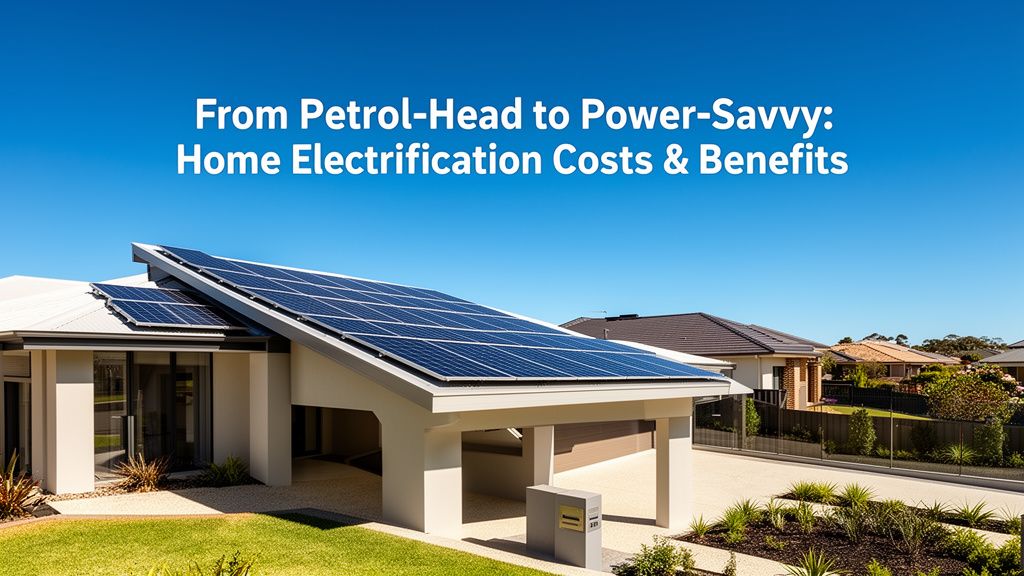
TL;DR: Mick, a self-confessed petrol-head tradie from Western Sydney, transformed his home from a gas-guzzling, high-bill hotspot into an energy-efficient, electrified haven. Driven by skyrocketing electricity costs, he strategically implemented solar power and switched out gas appliances, significantly reducing his carbon footprint and saving thousands annually.
What prompted Mick's initial shift towards home electrification?
Mick, a bloke who loved the rumble of his V8 ute as much as the next Aussie tradie, initially scoffed at the idea of "going green," but the relentless rise in quarterly electricity bills quickly changed his tune. For years, his three-bedroom brick veneer in Penrith was a typical Australian household, running on a mix of grid electricity and natural gas, with a gas heater blazing in winter and air-con churning in summer. The turning point came with an eye-watering power bill exceeding $900 for a single quarter, a figure that finally made him question the status quo and look for practical, tangible solutions to slash his household expenses.
The Shock of the Quarterly Bill
Like many Aussies, Mick had become accustomed to steadily increasing energy prices, but that particular bill felt like a punch to the gut. The bulk of the expense was due to high electricity usage, particularly in the peak evening hours, exacerbated by an old, inefficient gas hot water system that struggled to keep up. This financial squeeze, combined with hearing his mates at the pub boast about their own solar savings, pushed Mick to investigate what seemed like a "tree-hugger" concept but promised real-world financial relief. He realised that being power-savvy wasn't just for environmentalists; it was smart money management for any hard-working tradie.
A Tradie's Practical Approach to Savings
Mick approached the problem with the same no-nonsense practicality he applied to his plumbing business. He wasn't interested in grand environmental statements; he wanted to cut costs. He started by researching solar panels, not as a green initiative, but as a long-term investment that could pay for itself. His primary motivation was financial independence from the major energy retailers, seeing solar as a way to turn his roof into an income generator, or at least a major bill reducer. This pragmatic view was the foundation of his entire electrification journey, focusing on return on investment and tangible savings over ideology.
How did Mick implement solar power as the first step in his energy transformation?
Mick's initial dive into home electrification started with a robust 6.6kW solar system, a popular choice for average Australian homes due to its balance of cost and output. After getting a few quotes, he settled on a local installer known for quality components and reliable service, opting for a system priced around $6,500 after factoring in the federal STC rebate. The installation process itself was surprisingly smooth, with panels up and running within a day, immediately transforming his home into a mini power station. This foundational step was crucial, providing a clean energy source to fuel his subsequent electrification efforts.
Choosing the Right Solar Setup
Mick learned that selecting a solar system wasn't just about the cheapest price; it was about matching the system size to his family's daily energy consumption patterns and future plans. He opted for a system with good quality Chinese-made panels and a reputable inverter, balancing cost-effectiveness with performance. The 6.6kW capacity was chosen because it offered ample generation to offset most of his daytime energy usage and allowed for significant export back to the grid, even with plans for future electric appliances. This foresight meant his solar investment would remain effective as his household's energy demands evolved.
The Impact of Feed-in Tariffs
Upon activation, Mick quickly understood the power of feed-in tariffs (FiTs). These credits, paid by his energy retailer for every kilowatt-hour (kWh) of surplus electricity his solar system exported to the grid, became a small but steady income stream. While FiT rates in NSW vary, typically ranging from 5-15c per kWh, they significantly reduced his overall bill. In sunny months, he often saw his electricity bill drop to near zero, sometimes even going into credit. This tangible benefit solidified his belief in solar, demonstrating a clear financial return that continued to fuel his enthusiasm for further home electrification.
What were the subsequent steps Mick took to fully electrify his home?
After experiencing the immediate financial benefits of solar, Mick was convinced to take the next leap, systematically replacing his gas-powered appliances with efficient electric alternatives. This move wasn't just about reducing his reliance on gas; it was about optimising his solar investment, ensuring that the clean energy generated on his roof was being fully utilised within his home. His focus shifted to the biggest energy guzzlers, starting with hot water and then moving to cooking, aiming for a fully integrated electric ecosystem that maximised his self-consumption of solar power.
Ditching Gas for Electric Appliances
Mick first targeted his old, inefficient gas hot water system, replacing it with a modern heat pump electric hot water system. While the initial outlay was around $3,000 (after a potential state rebate, like the NSW Energy Savings Scheme), the running costs plummeted. A heat pump uses ambient air to heat water, making it far more efficient than traditional electric resistance or gas systems, especially when powered by solar during the day. Next, he swapped his gas cooktop for an induction hob, costing about $1,500. Not only was it faster and safer, but it also eliminated gas connection fees and the associated greenhouse gas emissions, further reducing his home's environmental footprint.


Embracing the Electric Vehicle Lifestyle
While Mick initially hesitated about an electric vehicle (EV), the financial and environmental logic of home electrification eventually won him over. He installed a dedicated EV charging point in his garage for about $1,200, future-proofing his home even before he purchased his first electric ute. The plan was clear: when his current petrol ute eventually reached the end of its life, he would transition to an EV, charging it predominantly with his excess solar energy. This final step would close the loop on his journey, making his daily commute virtually free from fuel costs and entirely powered by the sun.
What lasting benefits has Mick realised from his complete home electrification?
Mick's comprehensive home electrification journey has delivered a multitude of lasting benefits, fundamentally changing his household's financial outlook and environmental impact. The most immediate and significant change has been a dramatic reduction in his annual energy expenditure, freeing up thousands of dollars that previously went to utility companies. Beyond the financial gains, he's also enjoying a more comfortable, safer home environment and the quiet satisfaction of knowing his family's footprint on the planet is considerably smaller.
Significant Reductions in Energy Costs
Before his electrification journey, Mick's combined electricity and gas bills often topped $4,000 annually. Now, his quarterly electricity bills frequently show credits, and his gas bill is non-existent. He estimates his total energy costs have plummeted to under $500 a year, primarily for grid usage during low solar generation periods or for minor standing charges. This saving of over $3,500 annually means his solar system and appliance upgrades are on track to pay for themselves well within their expected lifespan, offering substantial long-term financial security and peace of mind.
A Greener Footprint and Greater Comfort
Beyond the dollar savings, Mick appreciates the tangible environmental benefits. His home now operates almost entirely on renewable energy, significantly reducing his family's carbon emissions. The air quality inside his home has improved without gas combustion, and his induction cooktop offers precise temperature control and a safer kitchen. He also finds a quiet satisfaction in demonstrating to his mates that smart, practical choices can lead to both financial freedom and a more sustainable lifestyle, proving that even a "petrol-head" can become a genuine power-savvy advocate.
Key Takeaways
- Home electrification, starting with solar, can drastically reduce your annual energy bills by thousands of dollars.
- Prioritise replacing inefficient gas appliances like hot water systems and cooktops with electric alternatives to maximise solar self-consumption.
- Investing in a good quality solar system (e.g., 6.6kW for around $6,500 after rebates) offers a strong return on investment through bill savings and feed-in tariffs.
- Future-proof your home by installing an EV charging point, allowing you to eventually power your transport with rooftop solar.
- Electrification isn't just for environmental reasons; it's a practical and financially astute decision for Australian homeowners.
Read More
For a comprehensive overview, check out our master guide: Read the Full Guide Here.


