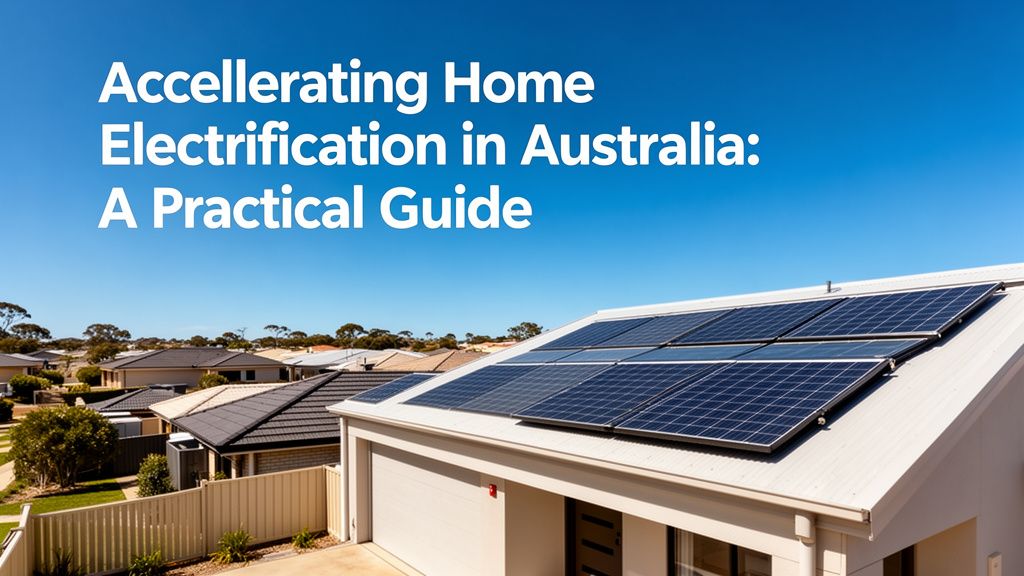
TL;DR: Accelerating home electrification in Australia is vital for cutting energy bills, reducing carbon emissions, and boosting energy independence. By replacing fossil fuel appliances with electric alternatives like solar, batteries, and heat pumps, homeowners can achieve significant savings and contribute to a cleaner, more resilient energy system. Government incentives and a phased approach can make this transition accessible for many households.
Why is Home Electrification Becoming Crucial for Australian Households?
Home electrification is becoming increasingly crucial for Australian households because it offers a triple win: significant financial savings, a substantial reduction in carbon emissions, and enhanced energy security. As electricity grids progressively decarbonise through renewable energy sources, switching away from gas and other fossil fuels means directly lowering your household's carbon footprint. Furthermore, volatile global energy markets underscore the importance of self-sufficiency, which electrification, especially with rooftop solar and battery storage, provides. Australians are actively seeking ways to lower their cost of living while contributing positively to the environment, making electrification an attractive and practical pathway.
The Economic Advantage of Going All-Electric
The economic advantages of an all-electric home are compelling, particularly given Australia's abundant sunshine and increasingly competitive solar market. For many years, gas was considered a cheaper option for cooking and heating, but rising gas prices and the falling cost of electricity (especially when generated from rooftop solar) have shifted this paradigm. An average household could save hundreds, if not thousands, of dollars annually by replacing gas hot water with an efficient electric heat pump, installing solar panels, and switching to induction cooking. These savings accumulate over the lifespan of the appliances, often offsetting the initial investment much faster than many realise, especially with current rebates. For example, replacing an old electric resistance hot water system or a gas system with a heat pump can typically reduce hot water running costs by 60-80%, amounting to hundreds of dollars in annual savings.
Reducing Your Carbon Footprint and Boosting Resilience
Beyond the hip pocket, electrifying your home dramatically reduces your carbon footprint. Australia's electricity grid is rapidly transitioning to renewables, meaning every kilowatt-hour (kWh) of electricity you consume is becoming greener. By disconnecting from gas – a fossil fuel – and using efficient electric appliances powered by either grid renewables or your own rooftop solar, you directly contribute to a cleaner environment. Moreover, an electrified home, particularly when paired with battery storage, offers enhanced energy resilience. During grid outages or periods of high demand, a solar and battery system can keep essential appliances running, providing peace of mind and greater independence from external energy shocks. This self-sufficiency is a powerful incentive for many Australian families living in areas prone to weather events or simply seeking greater control over their energy supply.
What Are the Key Technologies Driving Australian Home Electrification?
The acceleration of home electrification in Australia is being driven by several mature and increasingly affordable technologies that directly replace fossil fuel appliances with efficient electric alternatives. These technologies range from power generation on your rooftop to efficient heating, cooling, and transport solutions, all working in concert to create an integrated electric home. Understanding these key components is the first step towards planning your own electrification journey, as each plays a vital role in reducing energy consumption and transitioning to renewable power.
Harnessing Solar PV and Battery Power
At the heart of Australian home electrification is rooftop solar photovoltaic (PV) and battery storage. A typical Australian home can install a 6.6kW solar system for around $5,000-$8,000 after rebates, which can generate most, if not all, of its daytime electricity needs. When paired with a home battery system, costing typically between $8,000-$15,000 installed, this stored energy can then power your home during the evening peak, further reducing reliance on grid electricity and maximising your solar investment. This combination provides significant bill savings and energy independence, often allowing households to dramatically reduce or even eliminate their electricity bills, especially when utilising smart energy management systems that optimise energy flow.
Efficient Heating, Cooling, and Cooking Solutions
Beyond electricity generation, efficient electric appliances are crucial for eliminating fossil fuel use. Heat pump hot water systems, for instance, are vastly more energy-efficient than traditional electric resistance or gas systems, consuming only about a quarter of the energy. These systems typically range from $3,000-$6,000 installed, with various government rebates available to offset the cost. For heating and cooling, reverse-cycle air conditioners are already widespread but represent a highly efficient electric option compared to gas heaters. In the kitchen, induction cooktops offer faster, safer, and more precise cooking than gas, with models starting from just a few hundred dollars for portable units up to several thousand for integrated stovetops. Finally, electric vehicle (EV) chargers for home use, costing around $1,000-$2,500 installed, integrate personal transport into the home's electric ecosystem, allowing homeowners to "fuel" their cars with cheap, clean rooftop solar power.


How Can Australian Homeowners Overcome Barriers to Electrification?
Australian homeowners can overcome common barriers to electrification, such as upfront costs, perceived complexity, and a shortage of skilled trades, by strategically leveraging government incentives, adopting a phased implementation approach, and seeking expert advice. While the initial investment can seem substantial, a long-term perspective reveals significant financial and environmental returns, which can be made more accessible through various support mechanisms designed to accelerate the transition.
Navigating Government Rebates and Financing Options
The upfront cost is often the biggest hurdle for homeowners considering electrification. Thankfully, a range of federal and state government rebates and incentives are available across Australia to ease this burden. For example, federal STCs (Small-scale Technology Certificates) significantly reduce the cost of solar panel installations, often accounting for thousands of dollars in upfront savings. States like Victoria offer heat pump hot water rebates (e.g., up to $1,000), while NSW provides various energy-saving appliance offers. Beyond direct rebates, green loans from banks offer lower interest rates for energy-efficient home upgrades, and some providers even offer lease-to-own models for solar and batteries, making the transition more financially accessible without a large initial outlay. Investigating these options thoroughly can substantially reduce the effective cost of electrification.
Planning for a Staged Electrification Approach
For many households, a full home electrification overhaul in one go might be impractical or too expensive. A more realistic and manageable strategy is a phased approach, replacing appliances as they reach their end of life or when budgets allow. For instance, start with solar panels to generate clean energy and reduce daytime bills. When your old hot water system fails, replace it with a heat pump. Later, consider upgrading your cooktop to induction, or adding a battery when a good deal comes along. This staged approach allows homeowners to spread the costs over several years, adapt to new technologies as they emerge, and benefit from savings at each step of the journey, making the goal of a fully electrified home achievable without overwhelming financial strain. This incremental strategy also provides time to ensure your electrical switchboard and wiring are adequate for increased demand, or to budget for any necessary upgrades.
Key Takeaways
- Electrifying your home reduces energy bills, lowers carbon emissions, and increases energy independence.
- Key technologies include rooftop solar, battery storage, heat pump hot water, induction cooktops, and EV chargers.
- Government rebates (e.g., federal STCs, state-specific heat pump incentives) and green financing options significantly reduce upfront costs.
- A phased approach to electrification, replacing appliances as they age, makes the transition financially manageable and less daunting.
- Consulting with reputable local solar and electrification specialists can help tailor the best strategy for your home and budget.


