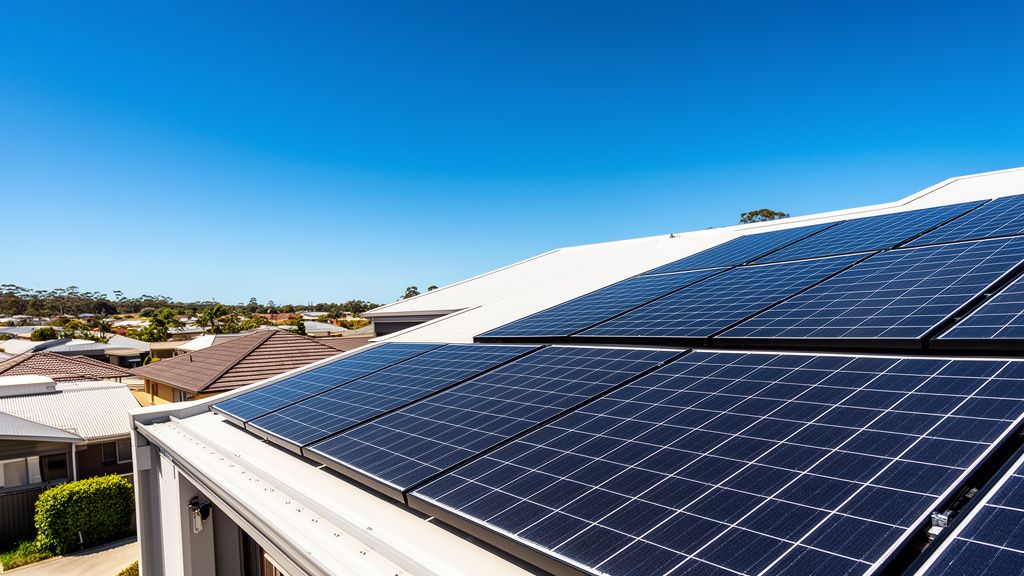
TL;DR: Australia is rapidly building large-scale battery energy storage systems (BESS) to replace retiring coal generators like Liddell. These batteries provide essential grid stability and firming capacity for our growing renewable energy sector, as seen with AGL's Liddell BESS and the massive Melbourne Renewable Energy Hub.
Why is Australia Investing Heavily in Utility-Scale Battery Storage?
Australia is rapidly adding utility-scale battery storage to its National Electricity Market (NEM) for clear reasons: it needs stable power as coal-fired generators retire, and it must integrate a lot more solar and wind power. The closure of ageing coal plants, such as AGL's Liddell Power Station in April 2023, creates a gap in our firm power supply. These facilities provided inertia and frequency control services which renewables alone cannot offer in the same way. Batteries step in to fill that void, offering quick response times for grid stabilisation and balancing supply and demand fluctuations. They charge when renewable generation is abundant and cheap, then discharge during peak demand or when renewable output drops, ensuring a reliable power flow.
The Retirement of Coal-Fired Power
The operational life of Australia's coal power stations is ending. Liddell, a major plant in the Hunter Valley for over 50 years, is a prime example. Its closure removed 2,000 megawatts of dispatchable capacity from the grid. Other plants like Eraring and Yallourn are also slated for retirement in the coming years. This shift away from fossil fuels reduces carbon emissions, but it introduces grid reliability challenges without adequate replacement capacity. New battery projects located on or near former coal sites, like the Liddell Battery, directly address this by using existing transmission infrastructure and providing a modern, flexible power source. This transition prevents blackouts and helps maintain a steady electricity supply.
The Role of Firming Capacity
"Firming capacity" describes the ability to provide reliable power on demand, regardless of weather conditions. Solar and wind farms are intermittent; clouds or calm days reduce their output. Batteries supply this firming capacity, ensuring power is always available when needed. They do this by participating in Frequency Control Ancillary Services (FCAS) markets, where they quickly inject or absorb power to maintain the grid's frequency within safe limits. This prevents cascading outages. Large batteries can also shift vast amounts of renewable energy from when it's generated to when it's most valuable, helping to smooth out wholesale electricity price volatility for consumers and industrial users.
How Does the Liddell Battery Energy Storage System Support the NEM?
The Liddell Battery Energy Storage System (BESS), located at the site of the former Liddell coal power station near Muswellbrook, New South Wales, directly replaces a portion of the capacity lost with the coal plant's closure. AGL, the project owner, invested approximately $120 million in the BESS, which began operating in mid-2023. It has a capacity of 50 megawatts (MW) and stores 100 megawatt-hours (MWh) of energy. This means it can deliver 50 MW of power for two continuous hours. Its strategic placement on a brownfield site leverages existing high-voltage transmission lines, allowing it to seamlessly integrate into the grid and contribute immediately to energy security in NSW.
Liddell's Technical Specifications and Output
The Liddell BESS employs advanced lithium-ion battery technology. Its 50 MW / 100 MWh specification means it can provide substantial power to the grid within milliseconds. This rapid response is crucial for stabilising grid frequency. For context, 100 MWh could power roughly 20,000 average Australian homes for an hour during peak demand. The battery primarily participates in the FCAS market, offering both contingency and regulation services. It quickly responds to deviations in grid frequency caused by sudden generation drops or demand spikes. This capability enhances grid resilience and supports the reliable operation of nearby solar and wind farms by absorbing excess generation or discharging during shortfalls.


Integrating Renewables in the Hunter Valley
The Hunter Valley is becoming a hub for renewable energy projects, particularly large-scale solar farms. The Liddell BESS plays a critical role in integrating this new generation. By providing a stable backbone, it enables more solar and wind energy to connect to the grid without risking instability. When the sun shines strongly or winds blow, the battery can charge, storing cheap renewable power. Later, when solar generation drops off in the evening, the battery discharges, supplying power to households and businesses and reducing reliance on fossil fuel "peaker" plants. This process not only makes the grid greener but also helps to keep electricity prices down by optimising the use of low-cost renewable energy.
What Does the Melbourne Renewable Energy Hub (MREH) Add to Victoria's Grid?
The Melbourne Renewable Energy Hub (MREH), located in Plumpton, west of Melbourne, is a truly massive battery project set to become one of the largest in the world. Owned by Equis Australia, the project secured planning approval for its first stage in 2023. It will significantly boost Victoria's grid stability and renewable energy integration. When fully built, MREH is planned for up to 1.2 gigawatts (GW) of capacity and 2.4 gigawatt-hours (GWh) of storage. This scale provides a huge amount of flexible power to Australia's second-most populous state, which has ambitious renewable energy targets of 65% by 2030 and 95% by 2035.
MREH's Phased Development and Scale
MREH is being developed in multiple phases. The first stage, now approved, involves a 600 MW / 1600 MWh battery system. To put 1.6 GWh into perspective, this amount of energy could power approximately 320,000 typical homes for one hour or provide peak demand support for a significant portion of Melbourne for several hours. This phased approach allows the developers to adapt to market conditions and technological advancements. The sheer size of MREH means it can provide long-duration storage, addressing not just frequency regulation but also energy security over longer periods, smoothing out several hours of low renewable output. It represents a significant commitment to large-scale energy storage in Victoria.
Supporting Victoria's Renewable Targets
Victoria's renewable energy targets are among the most ambitious in Australia. The MREH is a foundational piece of infrastructure to meet these goals. Its massive storage capacity will enable the state to absorb substantial amounts of intermittent solar and wind power generated from projects in western Victoria and beyond. By firming up renewable supply, MREH reduces the need for gas-fired power generation, lowering carbon emissions and helping Victoria transition to a cleaner energy system. This project will make a real difference to the reliability of Victoria's grid as the state moves further into renewable energy.
Key Takeaways
- Utility-scale batteries like Liddell BESS and MREH are replacing retiring coal plants, providing crucial grid stability.
- These batteries offer rapid response for frequency control and firm up intermittent solar and wind generation.
- The Liddell BESS (50MW/100MWh) directly addresses capacity shortfalls in NSW, leveraging existing transmission infrastructure.
- The Melbourne Renewable Energy Hub (up to 1.2GW/2.4GWh) is a world-leading project supporting Victoria's ambitious renewable energy targets.
- Big batteries are essential for Australia to maintain a reliable and affordable electricity supply during the energy transition.
Read More
For a comprehensive overview, check out our master guide: Read the Full Guide Here.


