TL;DR: Australian consumers are increasingly viewing electric vehicles as a practical and financially astute choice due to falling purchase prices, significant running cost savings, an expanding charging network, and strong environmental benefits. Integrating EVs with home solar systems further amplifies these advantages, offering free, clean transport.
Have Upfront Costs and Running Expenses Made EVs More Appealing to Australians?
Yes, falling upfront purchase prices and substantial reductions in running expenses are profoundly shifting how Australians perceive electric vehicles as a more sensible investment. Historically, the sticker price was a significant barrier, often positioning EVs as a luxury item. However, the market has matured rapidly, with numerous new models now available for under $40,000 to $50,000 drive-away, putting them in direct competition with popular petrol cars like the Toyota Corolla or Hyundai i30. Beyond the initial investment, the daily operational costs present a compelling argument. With petrol prices frequently hovering around $2.00 per litre, a weekly fuel bill for a mid-sized car can easily reach $80-$100. In stark contrast, charging an EV at home, particularly with a residential solar system, can reduce this cost to pennies, or even zero, per charge. Even using grid electricity at an average of 28 cents per kWh, the cost is typically a quarter to a third of petrol, translating into thousands of dollars in annual savings.
Government Incentives Reducing the Entry Barrier
Government incentives at both federal and state levels are playing a crucial role in making EVs more attainable for Australian consumers. For instance, Queensland offers a $6,000 rebate for eligible new EVs under $68,000, while other states have offered stamp duty exemptions or registration discounts, significantly lowering the total cost of ownership. The federal Electric Car Discount policy, which exempts eligible employer-provided EVs from Fringe Benefits Tax (FBT), provides substantial savings for novated leaseholders. These financial stimulants, while subject to change, undeniably bolster the economic case for switching to an electric vehicle now, accelerating their mainstream adoption across the country.
Is Australia's EV Charging Network Adequate to Address Range Anxiety?
Australia's rapidly expanding public charging infrastructure and the prevalence of convenient home charging are effectively overcoming range anxiety for most EV buyers. A few years ago, public charging options were sparse, particularly outside major urban centres, leading to legitimate concerns about long-distance travel. Today, however, major charging networks like Evie, Chargefox, and NRMA are rapidly deploying fast and ultra-fast chargers along key highways and in regional towns, significantly improving connectivity. While the network is still evolving, it's crucial to note that the vast majority of EV owners conduct over 80% of their charging at home overnight, effortlessly integrating it into their routine. With modern EVs offering practical ranges between 300 km and 600 km on a single charge, most Australians find their daily driving needs easily met, rendering "range anxiety" a diminishing concern for most.
The Undeniable Convenience of Home Charging
The primary method of 'refuelling' an electric vehicle for most Australian owners is at home, offering unparalleled convenience that far surpasses the traditional petrol station experience. Imagine waking up every morning with a "full tank" without ever needing to deviate from your route to a service station. A standard 7kW home wall charger can fully recharge most EVs overnight, transforming downtime into charging time. For solar system owners, this convenience is amplified, allowing them to charge their vehicle using clean, self-generated electricity during daylight hours or overnight with a home battery. This integration transforms the daily commute into an environmentally friendly and economically smart choice.
Why are Environmental Benefits and Solar Synergy Driving EV Adoption in Australia?
Heightened climate change awareness and the compelling synergy with home solar systems are increasingly influencing Australian consumers to choose electric vehicles for their profound environmental and financial advantages. As extreme weather events become more frequent and public discourse around emissions intensifies, individuals are seeking tangible ways to reduce their personal impact. Switching from a petrol car to an EV eliminates tailpipe emissions entirely, directly contributing to cleaner urban air and a healthier environment. While the electricity grid still has a mix of energy sources, Australia's rapid transition to renewable energy means that every year, an EV charged from the grid becomes progressively cleaner. Crucially, for those with home solar, this means charging their EV for virtually free, maximising self-consumption and turning low feed-in tariff exports into valuable "fuel."


Powering Your EV with Your Own Sunshine
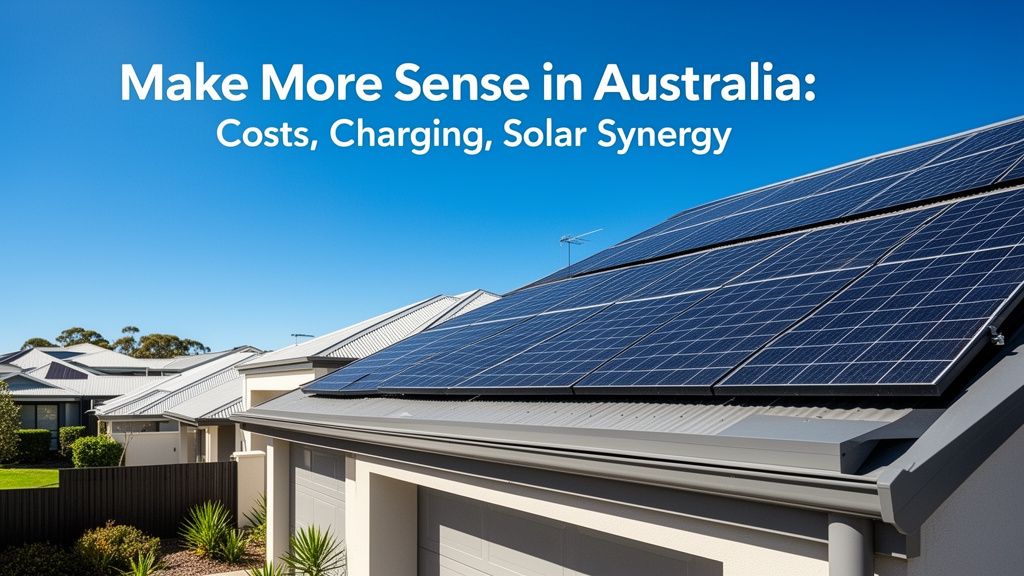
Pairing an electric vehicle with a home solar power system represents the pinnacle of sustainable personal transport, significantly enhancing both its environmental and financial appeal. By directing your surplus solar electricity, which might otherwise be exported to the grid for a modest 5-10 cents per kWh feed-in tariff, directly into your EV's battery, you are effectively securing free "fuel." This strategic use of self-generated power avoids purchasing grid electricity at 25-30 cents per kWh or petrol at $2.00/L, turning what was a minor credit into a substantial saving on transport costs. This not only amplifies your green credentials but also accelerates the payback period for both your solar system and your EV, creating a powerful economic incentive.
Key Takeaways
- Upfront Costs are Decreasing: New EV models are now available in Australia for under $40,000-$50,000, making them competitive with popular petrol vehicles.
- Running Costs are Significantly Lower: Charging an EV at home is dramatically cheaper than buying petrol, especially for solar homeowners, saving thousands annually.
- Charging Infrastructure is Expanding: Public fast-charging networks are growing rapidly across Australia, complementing convenient home charging to ease range anxiety.
- Environmental Benefits Resonate: EVs eliminate tailpipe emissions, contributing to cleaner air and aligning with Australia's grid decarbonisation and climate change goals.
- Solar Synergy Offers Maximum Value: Charging an EV with home solar provides free, clean transport, maximises self-consumption, and enhances the overall financial and environmental benefits of both investments.
Read More
For a comprehensive overview, check out our master guide: Read the Full Guide Here.