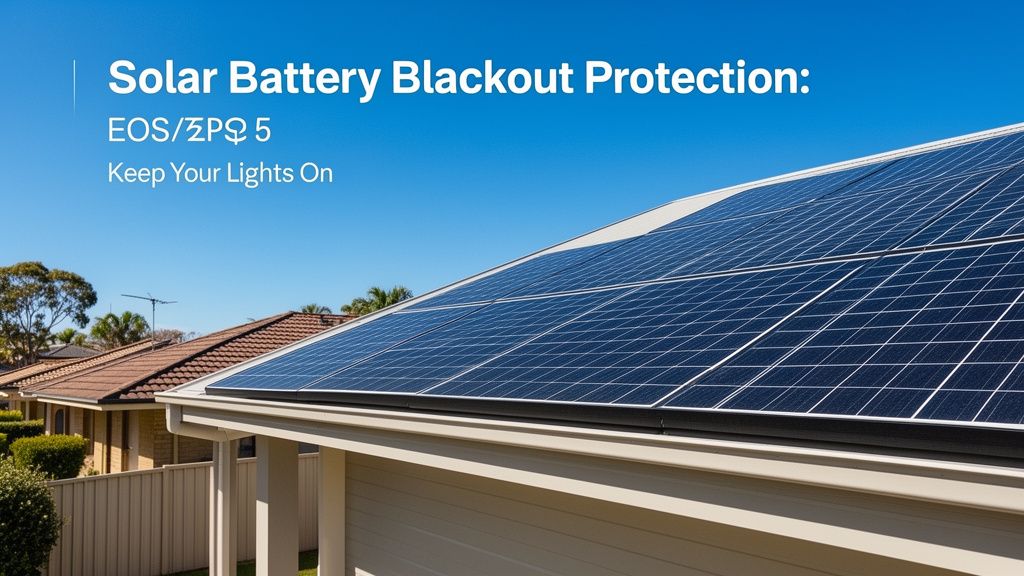
TL;DR: A home solar battery system provides reliable backup power during grid blackouts, automatically switching over to supply electricity to your essential appliances. This ensures your lights, fridge, and critical devices remain operational even when the neighbourhood power goes out.
How Does a Solar Battery Provide Blackout Protection?
A solar battery protects against blackouts by automatically switching to a backup power mode, supplying electricity to designated circuits in your home when the grid fails. Standard solar systems, without a battery, shut down when the grid goes offline. This safety measure, called anti-islanding, prevents your panels from sending power back into a potentially damaged grid and harming line workers. A battery system with blackout protection bypasses this limitation. When a power outage occurs, the system disconnects your house from the grid, creating a microgrid. Your solar panels continue to charge the battery, and the battery then powers your home’s selected circuits. This transition usually happens within milliseconds, so you often won't even notice a flicker in the lights. Your home becomes energy independent during the outage, drawing power directly from the battery and any solar generation at that time.
The Role of a Hybrid Inverter and Critical Loads Panel
The heart of a blackout protection system is a hybrid inverter. This unit manages power flow from your solar panels, battery, and the grid. It detects grid outages and automatically switches to "islanding mode". For blackout protection, installers typically wire a separate "critical loads panel" or "essential loads circuit". Only appliances connected to this specific panel receive power during an outage. This setup ensures that the battery’s energy is directed to your most important devices, maximising their runtime. Without a critical loads panel, the battery would attempt to power your entire house, quickly draining its reserves. Deciding which appliances go onto this critical circuit forms a key part of the system design process.
What Can Your Solar Battery Keep Running During a Blackout?
During a blackout, a home solar battery typically powers your essential appliances connected to a dedicated backup circuit, ensuring critical services like refrigeration, lighting, and communication stay active. The amount of electricity your battery can supply, and for how long, depends on its capacity and your power consumption. A common residential battery in Australia, like a 10kWh to 14kWh unit, can run critical appliances for 12 to 24 hours, sometimes longer if the sun is shining and recharging occurs. Homeowners usually prioritise devices such as the fridge, freezer, a few lights, internet router, phone chargers, and any essential medical equipment (like a CPAP machine). High-draw appliances such as air conditioners, electric ovens, or hot water systems are generally not included on the backup circuit due to their high power demands, which would quickly deplete the battery.
Sizing Your Battery for Specific Backup Needs
Sizing your battery correctly involves assessing your household's critical energy needs during an outage. An electrician or solar designer will help you identify the specific appliances you want to keep running and their average power consumption. For example, a modern fridge uses about 1-2 kWh per day, while an internet router and some LED lights might draw less than 0.5 kWh over several hours. Summing these up gives you your essential daily load. If you require 5 kWh of backup power each day for critical items, a 10 kWh usable capacity battery provides two days of backup without solar input. With ongoing solar generation during the day, the battery can recharge, extending the blackout protection indefinitely for your critical circuits. This careful planning ensures your investment delivers the peace of mind you expect during an outage.
What's the Investment for Blackout Protection with Solar?
Investing in a solar battery for blackout protection in Australia usually involves an outlay of $10,000 to $18,000 for a 10-14kWh system, plus installation, though state rebates can reduce this cost significantly. This figure typically includes the battery unit itself, the necessary hybrid inverter, and the labour for installation, including wiring a critical loads panel. Prices vary based on battery brand, capacity, and the complexity of your existing electrical setup. For instance, a quality 10kWh battery might cost around $12,000 to $15,000 installed in metropolitan areas like Sydney or Melbourne. Upgrading an existing solar system to include battery backup can sometimes incur additional costs if the current inverter needs replacing with a hybrid model.


Australian Government Incentives and Payback
Several Australian states offer incentives that lower the upfront cost of solar battery systems. Victoria's Solar Homes Program, for example, offers rebates up to $1,400 for eligible batteries, with options for interest-free loans. South Australia also has a home battery scheme providing subsidies. These programs make battery storage more accessible and improve the financial payback period. While the primary driver for blackout protection is reliability, pairing a battery with solar also allows you to store excess daytime solar energy and use it at night, reducing your reliance on grid electricity and saving money on your power bills. The payback period for a battery, solely based on bill savings, typically ranges from 7 to 12 years, but the value of continuous power during an outage provides a significant, unquantifiable benefit.
Read More
For a comprehensive overview, check out our master guide: Read the Full Guide Here.


