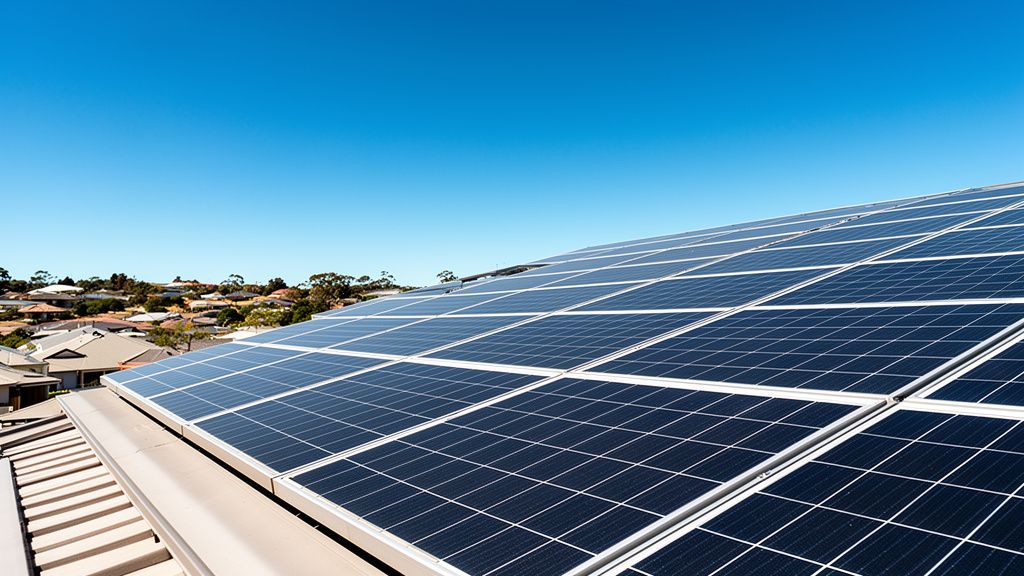
TL;DR: Australia faces a significant challenge with end-of-life solar panels, as millions are expected to become waste in the coming decades, overwhelming current landfill options and limited recycling infrastructure. Addressing this requires a national approach to fund and scale up specialist recycling, alongside policy reforms and consumer awareness to divert valuable materials from landfill.
How Big Is Australia's Looming Solar Panel Waste Challenge?
Australia is facing a significant challenge regarding solar panel waste, with millions of panels expected to reach end-of-life in the coming decades. With over 3.6 million Australian homes now boasting solar panels, and the average lifespan being 20-25 years, a tidal wave of decommissioned panels is on the horizon. Projections suggest that by 2030, Australia could accumulate over 100,000 tonnes of solar panel waste, escalating to more than one million tonnes by 2050. This rapid increase in waste volume, driven by the phenomenal success of rooftop solar, presents an urgent environmental and economic problem that current waste management systems are ill-equipped to handle, risking valuable resources ending up in general rubbish tips.
Why Are Current Landfill Practices Unsustainable?
Current landfill practices for solar panels are unsustainable because they treat complex electronic devices as general waste, leading to the loss of valuable resources and potential environmental harm. Solar panels contain materials like aluminium, glass, copper, silicon, and even small amounts of silver, all of which are finite and energy-intensive to produce. Landfilling these panels not only squanders these resources but also occupies vast amounts of space, and there's a risk, albeit small, of heavy metals leaching into soil and groundwater over time if not managed properly. This linear 'take-make-dispose' model contradicts the circular economy principles essential for a sustainable future.
What Valuable Materials Are We Losing to Waste?
We are losing a considerable array of valuable materials to waste when solar panels are landfilled, representing a missed economic opportunity. Each panel is typically 70% glass, 10% aluminium, 5% silicon, and smaller percentages of copper, silver, and plastics. The aluminium frames and mounting systems are readily recyclable, as is the glass, though it needs specific processing to remove contaminants. Silicon, while less valuable than its virgin counterpart, can be reused in some applications, and the precious metals like silver and copper are highly sought after. Recovering these materials could significantly reduce the need for new mining and associated environmental impacts, transforming waste into a valuable resource stream.
Australia's Solar Panel Recycling Infrastructure Is Still in Its Nascent Stages
Despite the growing need, Australia's dedicated solar panel recycling infrastructure remains limited, with only a handful of specialist facilities operating nationwide. The majority of end-of-life panels still find their way into general waste streams or are exported overseas with uncertain environmental outcomes. While some general e-waste recyclers can handle parts of a solar panel, full cradle-to-cradle recycling – where all valuable components are recovered and reused – requires specific, capital-intensive technology. This lack of comprehensive local capacity means high transport costs for panels to reach the few specialised sites, making recycling an expensive proposition compared to the cheaper alternative of landfill.
What Are the Primary Barriers to Establishing More Recycling Facilities?
The primary barriers to establishing more solar panel recycling facilities in Australia include high upfront investment costs, the complexity of the recycling process, and an inconsistent supply of panels. Building a state-of-the-art facility capable of separating the diverse materials in a panel requires significant capital expenditure, often in the millions of dollars. The process itself is labour-intensive and demands specialised machinery for dismantling, shredding, and material separation. Furthermore, the supply of end-of-life panels is geographically dispersed and currently not at a consistent, high-volume scale across all regions, making it challenging for new facilities to achieve the economies of scale needed for profitability.
How Does Interstate Variation in Regulations Affect Recycling Efforts?
Interstate variation in regulations significantly complicates and hinders national solar panel recycling efforts in Australia. Each state and territory currently has its own approach to waste management, with differing landfill levies and e-waste recycling schemes. For instance, Victoria has a ban on e-waste to landfill, which indirectly encourages solar panel recycling, but other states do not have such comprehensive mandates. This patchwork of regulations means that recycling solutions developed in one state may not be economically or legally viable in another. It creates logistical headaches and prevents a unified, efficient national strategy, leading to inefficiencies and continued reliance on cheaper, less sustainable disposal methods elsewhere.
Why Is Solar Panel Recycling in Australia So Expensive?
The high cost associated with disassembling, transporting, and processing solar panels makes widespread recycling economically challenging in Australia compared to landfilling. Unlike simpler e-waste, solar panels are robustly built for outdoor longevity, making them difficult and labour-intensive to break down. Specialised equipment is needed to separate the glass, aluminium, silicon cells, and other composite materials, each of which must then be further refined. Adding to this is the cost of collecting and transporting bulky panels from often remote residential areas to the few existing recycling centres, sometimes hundreds of kilometres away, which can easily outweigh the current market value of the recovered materials.
What Are the High Costs Involved in Recovering Valuable Materials?
Recovering valuable materials from solar panels involves several high-cost stages. First, the panels need to be collected and transported, often manually loaded, which is a significant logistical expense. Once at a facility, the aluminium frames are typically removed and recycled separately. The remaining panel then undergoes thermal or mechanical processes to separate the glass from the silicon cells, wiring, and backsheet. Each step requires specific machinery and energy. Recovering high-purity silicon or precious metals like silver often involves chemical processes, adding further to the complexity and cost. The output yields of these processes also dictate the economic viability, as current methods don't always fully maximise material recovery efficiently.


How Do Current Landfill Fees Undermine Recycling's Economic Viability?
Current landfill fees in many parts of Australia inadvertently undermine the economic viability of solar panel recycling by making disposal a much cheaper option. While some states like Victoria have implemented higher landfill levies or e-waste bans, in other areas, the cost to simply dump a solar panel in a general rubbish tip can be as low as a few dollars per panel, or included in general waste contracts. This low barrier to disposal creates little financial incentive for installers, homeowners, or businesses to opt for the more expensive, but environmentally responsible, recycling path. Without a level playing field or a 'polluter pays' principle via product stewardship, the economics will always favour landfilling.
Australia Is Exploring Both Policy and Technological Solutions for Solar Panel Recycling
A range of solutions, from national policy frameworks to innovative processing technologies, are being investigated and slowly implemented to address Australia's solar panel waste challenge. Industry groups, government bodies, and research institutions are collaborating to develop strategies that encourage a circular economy approach for solar PV. This includes advocating for mandatory product stewardship schemes that place responsibility on manufacturers and importers for the entire lifecycle of their products, as well as investing in research and development to improve the efficiency and cost-effectiveness of recycling processes. The goal is to move beyond mere disposal to a system where materials are continually reused.
What Role Could a National Product Stewardship Scheme Play?
A national product stewardship scheme could play a pivotal role in establishing a sustainable solar panel recycling industry in Australia. Such a scheme would mandate that manufacturers and importers contribute financially to the collection and recycling of their products at the end of their life. This "producer responsibility" model would help internalise the cost of recycling, making it a standard practice rather than an optional expense. By providing a consistent funding stream, a national scheme could support the establishment of more recycling facilities, incentivise design for recyclability, and ensure that all panels, regardless of where they are installed, have a viable end-of-life pathway.
Are There Emerging Technologies Making Recycling More Efficient?
Yes, there are emerging technologies and processes aimed at making solar panel recycling more efficient and economically viable. Innovations include automated dismantling robots that can quickly separate frames and junction boxes, and advanced thermal treatments that more effectively delaminate and recover silicon and precious metals from the glass and polymer layers. Chemical methods are also being refined to extract high-purity materials with less energy consumption. Furthermore, research into 'upcycling' components, like reusing silicon cells in lower-grade applications or processing the glass for construction materials, is gaining traction. These advancements are crucial for bringing down costs and increasing the value of recovered materials.
Key Takeaways
- Prepare for End-of-Life Costs: Australian homeowners should factor in potential recycling costs for solar panels (currently around $10-$30 per panel) when planning system upgrades or replacements.
- Support Product Stewardship: Advocate for or support initiatives that promote a national product stewardship scheme, which would help fund and formalise solar panel recycling across Australia.
- Choose Responsible Installers: Enquire with your solar installer about their plan for your existing panels if you're upgrading, ensuring they partner with reputable recycling facilities rather than sending panels to landfill.
- Stay Informed on Local Options: Research local council e-waste programs or specialised recyclers in your state, as options for solar panel disposal are slowly expanding.
- Consider Panel Longevity: Prioritise high-quality, durable solar panels from manufacturers committed to sustainable practices, potentially reducing replacement frequency and future waste.
Read More
For a comprehensive overview, check out our master guide: Read the Full Guide Here.


