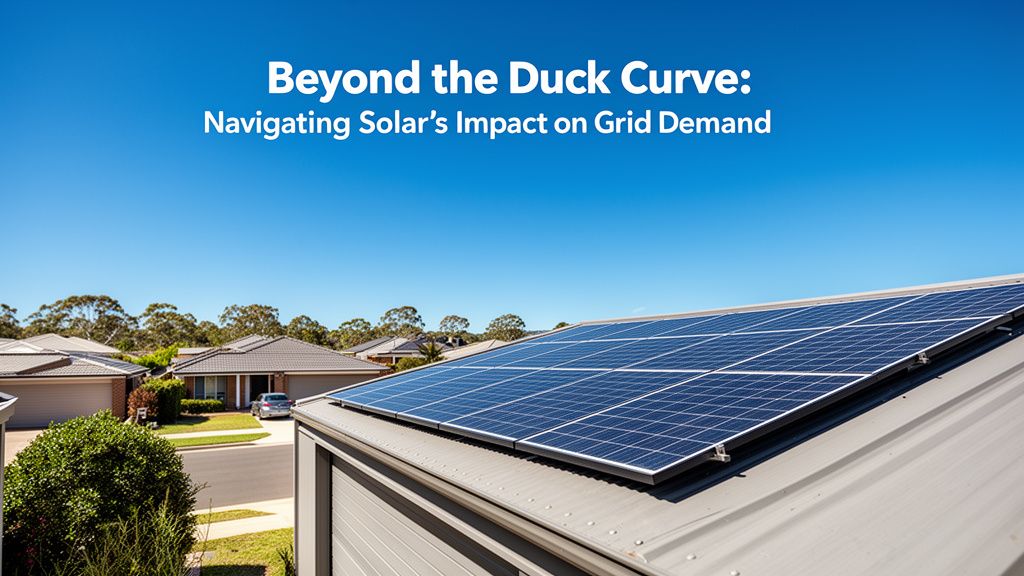
Australia, the sunniest continent, has embraced solar power with incredible enthusiasm. Millions of rooftops across our suburbs gleam with solar panels, transforming our energy landscape. This solar revolution is undeniably fantastic for the environment and our hip pockets, but it's also brought a fascinating challenge for our electricity grid: the "duck curve." While we've spoken about the duck curve for years, the conversation is evolving. We're now moving "beyond the duck curve" to understand a more complex, dynamic future for our energy network.
Understanding the Duck Curve
For those unfamiliar, the duck curve illustrates the typical net electricity demand profile over a 24-hour period, particularly in grids with high solar penetration. Imagine a duck:
- Morning Peak: As the sun rises and homes and businesses power up, demand is high before solar generation really kicks in. This forms the duck's head or neck.
- Midday Trough: As solar generation ramps up, it significantly reduces the amount of electricity needed from the traditional grid. This creates a deep dip in net demand, the duck's belly. On very sunny days, this can even push net demand towards zero or negative in some areas.
- Evening Peak: As the sun sets, solar generation drops off rapidly, just as everyone gets home, turns on lights, air conditioners (in summer!), and cooks dinner. This causes a very steep ramp-up in demand, creating a sharp, often challenging, peak for the grid to meet from traditional sources, forming the duck's back or tail.
In Australia, particularly in states like South Australia and Queensland with high residential solar uptake, this phenomenon is pronounced. It means that while we have an abundance of cheap, clean solar energy during the day, we still rely heavily on conventional generation (like gas or coal) to manage those crucial morning and evening peaks.
Beyond the Duck Curve: Evolving Challenges
The duck curve was a good initial visualisation, but our grid is evolving. We're seeing new challenges emerge as solar penetration deepens and other technologies come online:
The Evening Ramp and "Net Evening Peak"
The evening peak remains our most significant challenge. As more solar comes online, the net demand in the middle of the day continues to drop, making the evening ramp even steeper. This "net evening peak" requires substantial dispatchable generation to quickly come online, putting pressure on grid stability and wholesale electricity prices during these critical hours.
Minimum Demand Management
While we often focus on peaks, minimum demand is becoming an equally pressing issue. On mild, sunny weekends with low industrial load and high rooftop solar, the grid can experience periods of exceptionally low net demand. Managing this can be tricky, as traditional generators prefer to operate at a stable baseline. Too much generation with too little demand can lead to grid instability and even necessitate curtailment (turning off) of some solar PV or other generators to maintain system balance.
Grid Stability and Inertia
Large-scale traditional generators provide "inertia" – a resistance to changes in frequency – that helps stabilise the grid. As they are replaced by inverter-based renewables like solar and wind, the grid's inherent inertia decreases. This means system operators like AEMO (Australian Energy Market Operator) need new tools and technologies, such as synchronous condensers or advanced inverter functions, to maintain frequency and voltage stability.
Australian Solutions and Innovations
Australia is at the forefront of tackling these challenges with a suite of innovative solutions:


Battery Storage: The Duck's Best Friend
Batteries are key to smoothing out the duck curve.
- Residential Batteries: Homeowners are increasingly installing batteries (e.g., Tesla Powerwall, LG Chem RESU, Enphase) to store their excess daytime solar and discharge it during the evening peak. A typical 10-13 kWh home battery system might cost anywhere from $10,000 to $18,000 fully installed, though government rebates can significantly reduce this upfront cost in some states.
- Community Batteries: Shared battery storage systems are emerging in neighbourhoods, allowing multiple homes to benefit from stored solar without individual installations.
- Utility-Scale Batteries: Large-scale battery projects, like the Hornsdale Power Reserve or the Victorian Big Battery, provide crucial grid services, responding in milliseconds to frequency fluctuations and dispatching power during peak demand.
Smart Grids and Demand Response
- Virtual Power Plants (VPPs): Aggregating thousands of residential batteries and other distributed energy resources (DERs) into VPPs allows energy retailers to virtually dispatch this stored power to the grid when needed, acting like a giant, flexible power station.
- Demand Response Programs: Encouraging consumers to shift energy-intensive activities (like charging EVs or running washing machines) to times of high solar availability or low grid demand, often through dynamic pricing signals or direct load control with smart appliances.
Diversification and Large-Scale Renewables
Australia is investing heavily in utility-scale solar farms and wind farms, often complemented by hydro storage (like Snowy 2.0). A diversified mix of renewables helps ensure a more consistent supply, reducing reliance on any single generation source.
Policy and Regulatory Frameworks
AEMO and state governments are actively developing new market mechanisms and regulatory frameworks to incentivise flexible resources and grid services. This includes capacity markets, fast frequency response markets, and network upgrades to accommodate higher renewable penetration.
The Consumer's Crucial Role
As an Aussie homeowner, you're not just a passive observer; you're an active participant in this energy transition.
- Consider a Battery: If you have solar, adding a battery helps you maximise self-consumption and reduces your reliance on grid power during peak times.
- Shift Your Usage: Use your major appliances (dishwasher, washing machine, EV charging) during the middle of the day when solar generation is abundant and electricity is cheapest. Many smart appliances can be programmed to do this automatically.
- Join a VPP: Explore options to enrol your home battery or smart inverter into a Virtual Power Plant program, earning you revenue for helping stabilise the grid.
A Brighter, More Resilient Future
Moving beyond the duck curve means embracing complexity, innovation, and collaboration. It's about building a smarter, more resilient grid that can harness the immense power of our sunshine while maintaining stability and affordability. By integrating batteries, smart technology, diverse renewables, and active consumer participation, Australia is well on its way to creating an energy future that is not just sustainable, but truly world-leading. The sun is indeed setting on the traditional duck curve, paving the way for a more dynamic and exciting energy landscape.
Read More
For a comprehensive overview, check out our master guide: Read the Full Guide Here.


