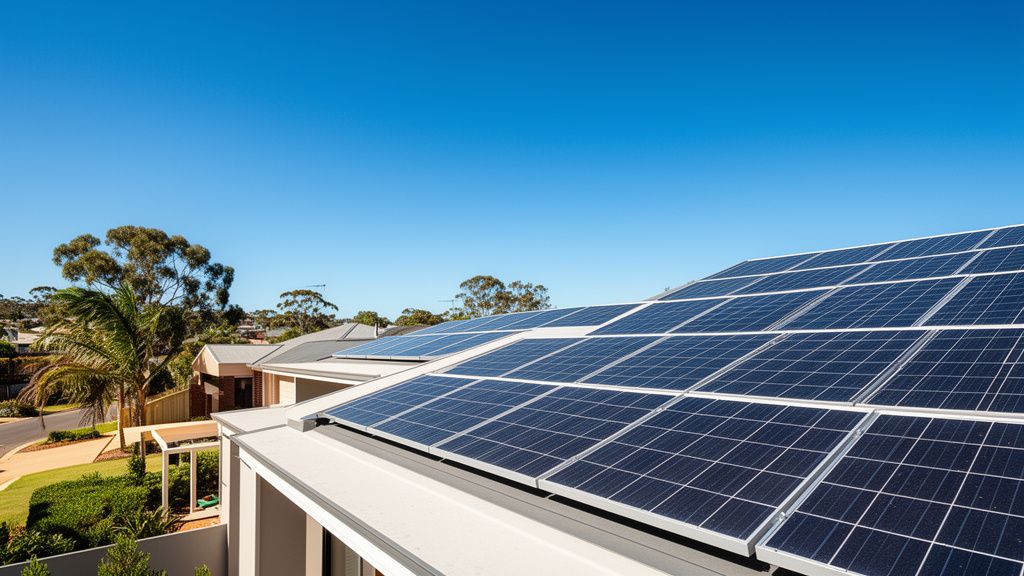
Australia, the sunburnt country, has truly embraced solar power. From suburban rooftops sparkling under our intense sun to massive solar farms stretching across the outback, we're world leaders in solar uptake. It's fantastic for reducing carbon emissions and our power bills. But here's the rub: the sun doesn't shine 24/7, and clouds love to play hide-and-seek. This variability, known as intermittency, poses a significant challenge for maintaining a stable and reliable electricity grid. Imagine the grid as a finely tuned orchestra; if the lead violinist (solar) suddenly pauses, chaos can ensue. This is where solar forecasting steps in – it's the conductor ensuring our solar symphony plays smoothly, keeping the lights on and our energy future bright.
What is Solar Forecasting, Mate?
In simple terms, solar forecasting is the art and science of predicting how much electricity solar panels will generate at a given time in the future. It's not just a rough guess; it involves sophisticated models to estimate power output from both large-scale solar farms and thousands of individual rooftop solar systems across the country. Think of it as a super-powered weather forecast, but specifically tailored to how sunlight translates into watts and kilowatts. This prediction can span from minutes ahead to days, weeks, or even months, each horizon serving a different purpose for grid operators.
Why is it Crucial for Grid Stability?
Our electricity grid needs a constant balance between supply and demand. If generation suddenly drops or surges unexpectedly, it can lead to frequency instability, potentially triggering automatic shutdowns (hello, blackouts!).
- Balancing Act: Grid operators use forecasts to anticipate dips (e.g., a massive cloud bank rolling in) or surges (e.g., a clear, sunny morning after several cloudy days). This allows them to fire up or dial down other power sources, like gas plants or hydro, or dispatch power from batteries, preventing imbalances.
- Managing Intermittency: Solar's variable nature is its main challenge. Accurate forecasts help smooth out these fluctuations, making solar power as reliable as traditional baseload generation.
- Preventing Blackouts: By giving operators a heads-up, forecasting minimises the risk of system collapse and ensures a continuous, reliable supply of electricity to homes and businesses across our vast continent.
- Integrating More Renewables: Ultimately, better forecasting means we can safely integrate more solar and other renewables into the grid without compromising reliability, accelerating our transition to a cleaner energy future.
How Do They Do It? The Tech Behind the Sunshine
Solar forecasting isn't pulling predictions out of thin air. It relies on a blend of cutting-edge technology and vast amounts of data:


- Weather Models: Global and regional weather models provide crucial information on cloud cover, temperature, humidity, and wind speeds – all factors impacting solar output.
- Satellite Imagery: High-resolution satellite data tracks cloud movements in real-time, offering immediate insights into impending changes in sunlight.
- Ground-Based Sensors: Pyranometers and other sensors at solar farms and strategic locations measure actual solar irradiance, providing ground truth data to refine models.
- Machine Learning and AI: Sophisticated algorithms analyse historical generation data, weather patterns, and real-time inputs. These AI models learn to identify complex relationships and predict future solar output with increasing accuracy.
- Distributed Energy Resource (DER) Aggregation: For rooftop solar, the challenge is immense. Forecasters use statistical models and real-time data from smart meters and inverters to estimate the combined output of thousands of smaller systems.
The Australian Context: Our Unique Solar Challenge
Australia's energy landscape is distinctive. We have:
- Record Rooftop Solar: More than one in three Australian homes now have solar panels, creating a massive, decentralised power source that's harder to monitor and predict than large farms.
- Vast Grid: Our grid spans thousands of kilometres, making it susceptible to localised weather events impacting generation in one region but not another.
- Extreme Weather: From intense heatwaves reducing panel efficiency to widespread bushfire smoke blocking sunlight, and sudden thunderstorms, our weather patterns present unique forecasting challenges.
- AEMO's Role: The Australian Energy Market Operator (AEMO) is at the forefront, utilising advanced forecasting tools to manage our complex grid, anticipate solar duck curves, and ensure our energy system remains resilient. They are continuously investing in improving these capabilities, crucial for integrating our booming solar capacity.
Benefits for Our Pockets and Planet
Accurate solar forecasting isn't just a technical marvel; it delivers tangible benefits for every Australian:
- Lower Electricity Bills: By optimising the use of abundant, cheap solar power and reducing reliance on more expensive, quick-start fossil fuel plants, forecasting helps keep wholesale electricity prices down. This ultimately flows through to your quarterly bill.
- Enhanced Reliability: Fewer blackouts and brownouts mean a more stable power supply for homes, businesses, and essential services.
- Faster Renewable Transition: Knowing exactly how much solar will be available empowers us to confidently build more renewable energy infrastructure, accelerating our journey to net-zero emissions.
- Grid Modernisation: Investment in forecasting drives innovation in smart grid technologies, preparing Australia for a future powered primarily by clean energy.
The Future is Bright (and Predictable!)
The evolution of solar forecasting is relentless. We're seeing continuous improvements in model accuracy, aided by more sophisticated AI, denser sensor networks, and even real-time data from individual smart inverters. The integration of advanced forecasting with battery storage is particularly exciting. When forecasters predict a dip in solar generation, batteries can be charged in advance, ready to discharge power and smooth out the fluctuations. This synergy will create an even more resilient and reliable grid. Australia is uniquely positioned to lead in this space, leveraging our abundant sunshine and innovative spirit to build a world-class renewable energy system that’s not just clean, but incredibly stable too.