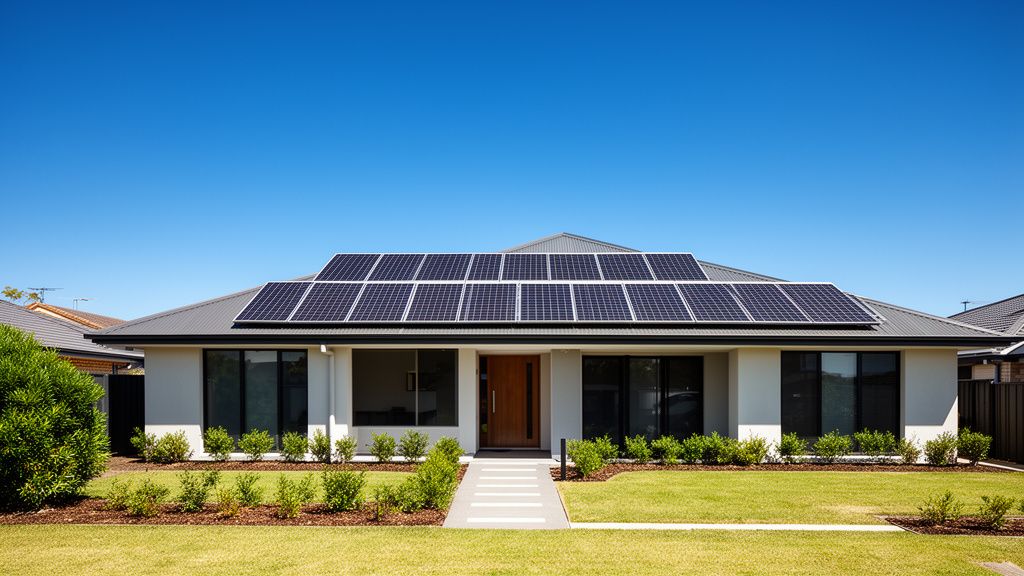
TL;DR: Australia's home battery boom does more than cut individual electricity bills. It stabilises the grid, reduces stress during peak demand, and integrates more renewable energy. Home batteries support a more resilient, decentralised national energy system.
How Do Home Batteries Improve Grid Stability?
Home batteries significantly improve grid stability by managing demand and supply fluctuations locally. When thousands of households store their own solar energy instead of exporting it all at once, or draw from their batteries during evening peak demand, it lessens the burden on the centralised grid. This reduces the need for expensive, carbon-intensive peaking power plants, which typically run on gas or coal to meet short, intense periods of high electricity use. For instance, during a summer heatwave in Queensland, a network of home batteries can absorb surplus solar power mid-day and then discharge it from 5 PM to 9 PM, precisely when air conditioners are working hardest and grid demand skyrockets. This local balancing prevents grid strain and helps maintain consistent voltage and frequency, which are critical for a stable electricity supply. Without this distributed storage, the grid must constantly adjust generation from large power stations, a slower and less efficient process.
Reducing Peak Demand Charges for All Consumers
Reducing peak demand is a direct benefit that extends beyond battery owners. When the overall system's peak demand lessens, the need for new transmission infrastructure and upgrades to existing poles and wires also decreases. Network operators pass on these infrastructure costs to all consumers through their electricity bills. If home batteries contribute to a flatter demand curve across the network, it can potentially slow the rate of network charge increases. For example, in regions with high battery uptake like South Australia, the wholesale electricity price during evening peaks can see less volatility because there is less reliance on expensive generators. This benefits everyone, even those without solar or batteries, by keeping wholesale prices more predictable and potentially lower over time.
Are Home Batteries Accelerating Renewable Energy Integration?
Home batteries are indeed accelerating renewable energy integration by making solar power more valuable and manageable for the grid. Historically, the challenge with large-scale solar deployment has been its intermittent nature – generation peaks during the day but drops to zero at night. This 'duck curve' phenomenon creates a surplus of power mid-day, sometimes leading to solar curtailment where solar farms are forced to switch off. Home batteries act as distributed energy sponges, absorbing excess rooftop solar generation during sunny hours. This stored energy then becomes available when the sun sets, smoothing out the supply curve and allowing more solar to be effectively used. Without storage, the grid would struggle to handle the sheer volume of daytime solar, limiting how much renewable capacity can be brought online.
Enabling Higher Renewable Penetration Targets
The ability of home batteries to shift solar energy from times of oversupply to times of high demand directly enables higher renewable energy penetration targets for states and the Commonwealth. If households can self-consume a larger portion of their solar generation, or dispatch it later, it reduces the need for fossil fuel baseload generation to fill the evening gap. The Australian Energy Market Operator (AEMO) regularly highlights the need for dispatchable capacity to complement variable renewables. Home batteries provide this dispatchability at a granular, residential level. This distributed storage makes the grid more flexible and resilient to renewable energy fluctuations, moving Australia closer to its renewable energy goals without compromising reliability.
What Role Do Virtual Power Plants (VPPs) Play in the Future Grid?
Virtual Power Plants (VPPs) play a crucial role in the future grid by aggregating thousands of individual home batteries into a single, coordinated resource. These networks allow electricity retailers or third-party aggregators to remotely control participating batteries, discharging or charging them in response to grid needs. For instance, during a sudden grid event or a rapid spike in demand, the VPP can instruct all connected batteries to inject power back into the grid simultaneously, acting like a fast-response power station. Homeowners typically receive a payment or credit for participating, turning their battery into a revenue-generating asset that benefits both them and the wider energy system. This creates a flexible, decentralised source of power and grid services.
Monetising Stored Energy and Providing Grid Services
VPPs offer a pathway for homeowners to monetise their stored energy beyond simple bill savings. Instead of just avoiding buying electricity at peak rates, VPP participants can sell their stored power back to the grid during critical times. Origin Energy's VPP in South Australia, for example, pays participants for making their battery capacity available to support the grid during periods of high demand. These batteries contribute to ancillary services, like frequency control and network support, which are essential for grid stability. This collective capacity helps avoid blackouts, reduces reliance on expensive fossil fuel generators, and provides a new layer of resilience for the entire electricity network.


What Are the Financial Implications for Non-Battery Owners and the Broader Energy Market?
The rise of home batteries presents both opportunities and challenges for non-battery owners and the broader energy market. On the positive side, the reduced reliance on peaking plants and the smoothing of demand can contribute to lower wholesale electricity prices, particularly during evening peaks. This can flow through to lower retail prices for everyone, including those without batteries. Additionally, if network investments are deferred due to less peak demand, everyone benefits from stable or slower-growing network charges on their bills. The overall system becomes more robust and less susceptible to price shocks from volatile fossil fuel markets.
However, there is a potential for some costs to be shifted. If battery owners export less power to the grid, the remaining network users (including non-battery owners) might bear a slightly larger proportion of fixed network costs. This is an area of active debate and regulatory focus within the Australian Energy Market Commission (AEMC). The goal is to design tariff structures that fairly distribute network costs while still incentivising beneficial technologies like home batteries. Ultimately, a well-managed transition, where the benefits of reduced peak demand and grid services outweigh any cost redistribution, will ensure a net positive outcome for all Australians on the energy grid.
Key Takeaways
- Home batteries stabilise the grid by reducing peak demand and smoothing out solar generation.
- They directly accelerate Australia's transition to higher renewable energy penetration.
- Virtual Power Plants (VPPs) unlock collective battery power for grid support and offer financial incentives to owners.
- Reduced wholesale electricity prices and deferred network upgrades can benefit all consumers, including those without batteries.
- The broader energy market needs fair tariff structures to ensure an equitable transition for all grid users.
Read More
For a comprehensive overview, check out our master guide: Read the Full Guide Here.


