TL;DR: Batteries within Australia's National Electricity Market (NEM) increasingly store excess renewable energy from solar and wind, then release it during periods of high demand. This action stabilises the grid, reduces reliance on expensive gas generators, and actively smooths out volatile wholesale electricity prices by injecting supply when it is most needed.
How Do Grid-Scale Batteries Stabilise Australia's National Electricity Market?
Grid-scale batteries have rapidly become essential players in Australia's National Electricity Market (NEM), fundamentally changing how the network operates. These large battery systems, like the massive 300MW/450MWh Victorian Big Battery near Geelong, absorb surplus electricity during times of low demand and high renewable generation, typically midday when solar output peaks. They then discharge this stored energy back into the grid when demand surges, often during the evening peak between 4 pm and 9 pm, or when sudden supply shortfalls occur. This strategic charging and discharging helps balance the grid in real-time. The Australian Energy Market Operator (AEMO) depends on this rapid response capability to maintain grid frequency and voltage within safe operating limits, preventing blackouts and brownouts. Batteries provide essential Frequency Control Ancillary Services (FCAS), reacting in milliseconds to keep the grid stable, a task traditionally performed by synchronous generators like coal and gas plants. Without batteries, the NEM's increasing share of intermittent renewables would make grid management significantly more difficult and expensive.
Providing Essential Grid Services
Batteries offer flexibility the NEM desperately needs as coal generators retire. They react much faster than traditional power plants, making them ideal for managing sudden changes in supply or demand. When a large generator unexpectedly trips offline, or a cloud passes over a major solar farm, the grid frequency can drop rapidly. Batteries instantly inject power to stabilise the system, preventing wider disruptions. For example, the Hornsdale Power Reserve in South Australia demonstrated this capability repeatedly, responding to events faster and more effectively than any other plant in the market. This ability translates into lower costs for FCAS services, which ultimately benefits electricity users by reducing system security charges. As more large-scale batteries come online across Queensland, New South Wales, and Victoria, their collective impact on grid stability will grow, paving the way for even higher penetrations of renewable energy.
Are Batteries Driving Down Wholesale Electricity Prices in the NEM?
Batteries directly influence wholesale electricity prices in the NEM through arbitrage and peak shaving. Wholesale prices in Australia can be incredibly volatile, swinging from negative values during periods of oversupply to thousands of dollars per megawatt-hour (MWh) during peak demand or scarcity. Batteries exploit this volatility. They charge when wholesale prices are low - often near zero or even negative during daylight hours due to abundant solar - and discharge when prices are high, selling stored electricity back into the market. This 'buy low, sell high' strategy injects supply precisely when it is most valuable, flattening extreme price spikes. AEMO data and market reports from organisations like Cornwall Insight Australia confirm that battery deployment has led to a noticeable reduction in price volatility, particularly during periods of high demand. By providing readily dispatchable power, batteries reduce the market's reliance on expensive, fast-start gas generators, which traditionally set the price during peak periods.
Reducing Reliance on Gas Peakers
Gas-fired power stations often act as "peaker plants," firing up only when electricity demand and prices are highest. These plants are expensive to run, consuming costly gas and passing those costs directly into wholesale electricity prices. Batteries compete directly with these peakers. When a battery discharges during the evening peak, it reduces the need for gas generators to operate, or reduces the amount of power they need to supply. This drives down the overall price because the marginal cost of electricity from a discharging battery, once charged, is very low compared to burning gas. As more battery capacity enters the NEM, we expect to see sustained downward pressure on peak wholesale prices, making the entire system more efficient and less susceptible to global gas price shocks. This shift has significant implications for how Australia powers its future, moving towards a more resilient and cost-effective energy mix.
What Does Battery Expansion Mean for Australian Energy Consumers?
The expansion of grid-scale batteries in Australia carries direct benefits for energy consumers, both households and businesses. Firstly, greater grid stability means a more reliable power supply, reducing the likelihood of outages and ensuring that power is available when needed. For homes with solar panels, this means a more stable grid to connect to. Secondly, the downward pressure batteries exert on wholesale electricity prices can eventually translate into lower retail electricity bills. While retail prices involve many factors beyond wholesale costs, a more stable and lower-cost wholesale market provides a solid foundation. Modelling by the CSIRO and AEMO suggests that a high penetration of renewables supported by storage will result in lower overall system costs than a reliance on fossil fuels. This translates to more affordable energy for everyone.
Supporting Residential and Commercial Storage
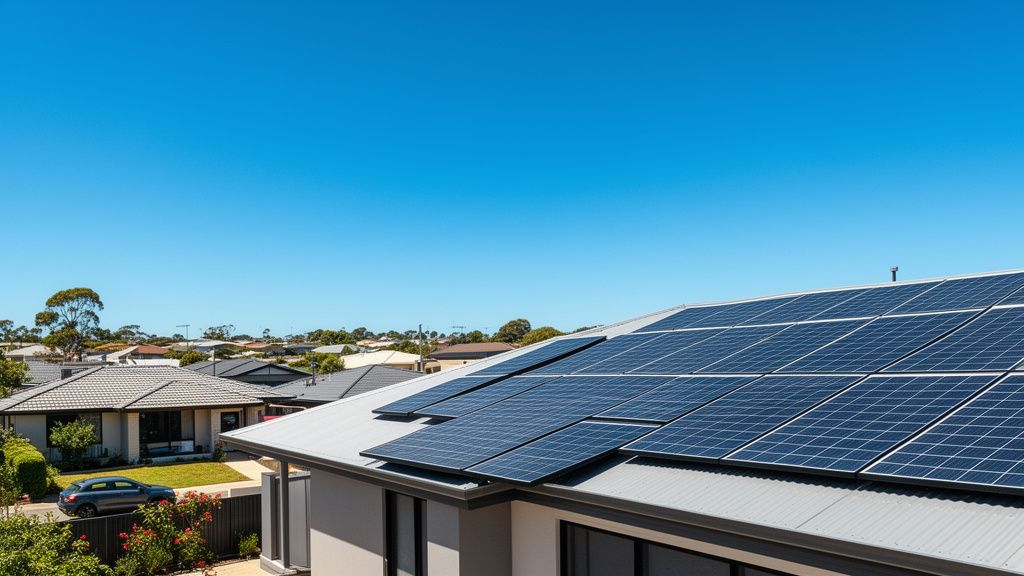
The success of large-scale batteries also helps drive down the cost and improve the technology for smaller, residential and commercial battery systems. As the market matures and manufacturing scales up, the price of home batteries like a Tesla Powerwall or a Fronius battery system becomes more accessible. Australian households already heavily invest in rooftop solar, with over 3.8 million systems installed by early 2024. Adding a battery allows these homes to store their excess solar generation instead of exporting it for a low feed-in tariff (which currently averages around 3-7c/kWh). They can then use this stored energy during the evening peak, avoiding purchasing grid power when it is most expensive, often 30-50c/kWh or more on time-of-use tariffs. This maximises their self-consumption and significantly improves the financial payback of their solar investment, offering greater energy independence and hedging against future electricity price rises.
Key Takeaways
- Grid-scale batteries stabilise the NEM by absorbing excess renewable energy and discharging during peak demand, providing essential frequency control services.
- Batteries reduce wholesale electricity price volatility by performing arbitrage, charging when prices are low and selling when prices are high.
- Increased battery deployment lessens the NEM's reliance on expensive gas peaker plants, contributing to lower overall system operating costs.
- Consumer benefits include enhanced grid reliability and a foundation for more affordable retail electricity prices in the long term.
- The growth of grid-scale batteries indirectly supports the uptake and cost-effectiveness of residential and commercial battery storage for solar homeowners.