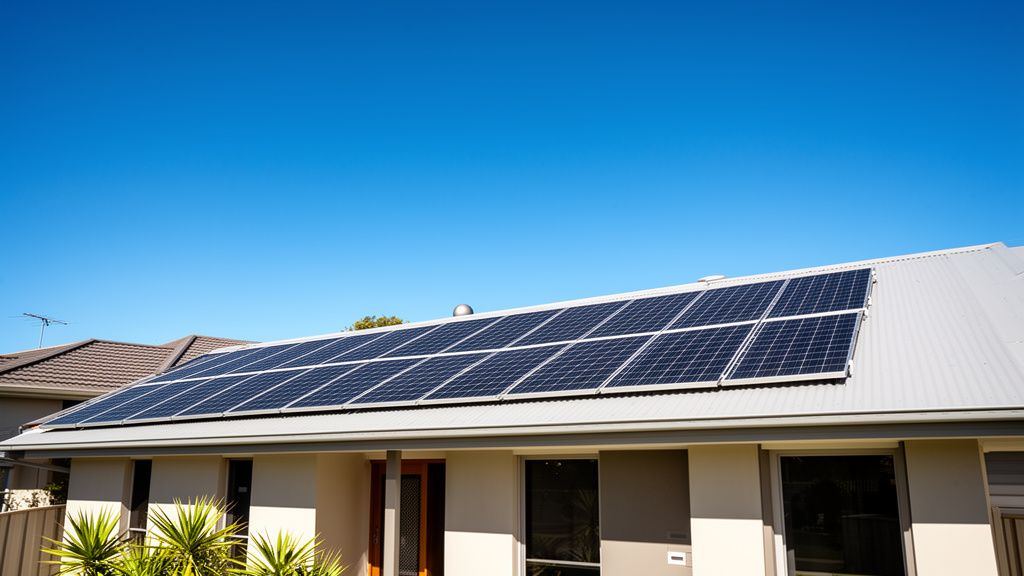
TL;DR: Pairing a large solar battery with an undersized inverter creates a bottleneck, limiting how much power your battery can deliver or accept. This means you cannot fully use your stored energy for high-demand appliances or rapidly recharge your battery from your solar panels. For optimal system performance and energy independence, select an inverter that matches or exceeds your battery's maximum continuous discharge and charge rates.
What Role Does an Inverter Play in a Solar Battery Setup?
An inverter converts the direct current (DC) power generated by your solar panels and stored in your battery into alternating current (AC) power, which is what your home's appliances use. In a battery system, you typically have a hybrid inverter. This single unit manages the flow of power: taking DC from panels, converting it for home use, sending excess DC to the battery for storage, or converting DC from the battery to AC for your home when the sun isn't shining. It also handles grid connection, deciding whether to draw from or export to the grid. The inverter's power rating, measured in kilowatts (kW), determines how much electricity it can process and deliver at any given moment. A 5kW inverter can deliver up to 5kW of power to your home, regardless of how much energy your battery holds. Without an appropriately sized inverter, even a massive battery cannot power your entire home during peak demand periods.
How a Hybrid Inverter Manages Power Flow
A hybrid inverter intelligently directs power based on your home's consumption, solar production, and battery state of charge. When your solar panels generate electricity, the inverter first prioritises powering your home's active loads. If there's surplus, it directs that DC power to charge your battery. Once the battery is full, any remaining excess AC power is usually exported to the grid, earning you a feed-in tariff, often around 4-8 cents per kilowatt-hour in most Australian states. When solar production is low or absent, like at night, the hybrid inverter draws DC power from your battery, converts it to AC, and supplies it to your home. This seamless management means you rely less on grid electricity, especially during expensive peak usage times.
Why Does an Undersized Inverter Bottleneck a Large Battery?
An undersized inverter acts like a narrow pipe connected to a large water tank; it restricts the flow, no matter how much water the tank holds. For a solar battery, this means the inverter limits how much power your battery can discharge to your home at any single moment. If you have a 14kWh battery capable of outputting 7kW continuously, but only pair it with a 5kW inverter, your home can only ever draw 5kW from that battery. This becomes a major problem when you run several high-demand appliances simultaneously, such as an air conditioner (3-5kW), an electric oven (2-3kW), and a washing machine (1-2kW). Your total demand could easily exceed 5kW, forcing your home to pull the additional power from the grid even though your battery is full.
Impact on Peak Power Demands
Australian homes often experience significant power spikes, particularly in the mornings and evenings. Running an air conditioner, electric hot water system, or oven means your household's instantaneous power demand can jump well above 5kW, sometimes reaching 8kW or more. If your large battery is paired with a 5kW inverter, any demand above that threshold will immediately draw power from the grid, not your battery. This defeats the purpose of investing in a substantial battery, as you still pay peak rates for grid electricity when you should be self-sufficient. An inverter should meet or exceed your typical peak household demand to genuinely maximise your battery's potential and cut your electricity bills.
What Are the Real-World Consequences of an Inverter Mismatch?
An inverter mismatch means you pay for battery capacity you cannot fully utilise, directly impacting your return on investment and energy independence. You might have bought a top-tier 10kWh or 14kWh battery, costing upwards of $10,000-$15,000, believing it would cover most of your usage. However, if your inverter can only deliver 5kW, but your home frequently demands 7kW, you will still import 2kW from the grid during those times. This leads to higher electricity bills than expected, as you're not displacing all your peak grid consumption with your stored solar energy. It also creates a less resilient system, as the battery cannot fully support your home during a blackout if your essential loads exceed the inverter's capacity.
Reduced Savings and Grid Reliance
One of the main motivations for a battery system is to store cheap solar power for use when grid electricity is expensive, typically in the evenings. If your inverter limits your ability to draw sufficient power from your battery, you'll continue to rely on the grid for those higher demands. For instance, if your grid electricity costs 35 cents per kWh, but your inverter forces you to draw 2kWh from the grid for an hour instead of your battery, that's 70 cents you could have saved. Over weeks and months, these small missed savings accumulate, extending your system's payback period significantly. Your large battery essentially becomes a 'smaller' battery in terms of instantaneous power delivery, reducing its effectiveness and your overall energy independence.


How Do You Size an Inverter Correctly for a Big Battery?
Correctly sizing an inverter for a large battery involves matching its continuous power output to both your household's peak power demand and the battery's maximum charge and discharge rates. First, review your electricity bills or smart meter data to understand your home's typical peak instantaneous power usage. Look for the highest kW spikes, often recorded hourly or half-hourly. If your home regularly hits 7kW or 8kW, your inverter should at least match that figure. Second, check your chosen battery's specifications for its maximum continuous discharge power (e.g., 7kW) and its maximum continuous charge power (e.g., 5kW). Your inverter's power rating needs to accommodate both, ensuring it can extract and replenish power efficiently.
Consulting an Accredited Solar Installer
The best way to ensure an accurate inverter-to-battery match is to consult an accredited solar installer. They possess the expertise to analyse your specific energy consumption patterns, consider your future energy needs (like adding an EV charger), and assess the technical specifications of various inverters and batteries. An experienced installer will factor in variables like cable lengths, voltage drops, and potential system expansion, providing a detailed system design. They can recommend an inverter model that not only handles your current demands but also offers headroom for future increases, preventing costly retrofits or underperformance down the track. Always obtain quotes from multiple Clean Energy Council (CEC) accredited installers to find the right solution for your home.
Key Takeaways
- An undersized inverter limits the power your large battery can deliver to your home, creating a bottleneck.
- Match your inverter's continuous power output to your household's peak demand (e.g., 7kW-8kW for high usage).
- Ensure your inverter can handle your battery's maximum continuous discharge and charge rates.
- An inverter mismatch increases reliance on grid power during peak times, reducing expected savings and extending payback periods.
- Always consult an accredited solar installer for professional system design to avoid costly errors.
Read More
For a comprehensive overview, check out our master guide: Read the Full Guide Here.


