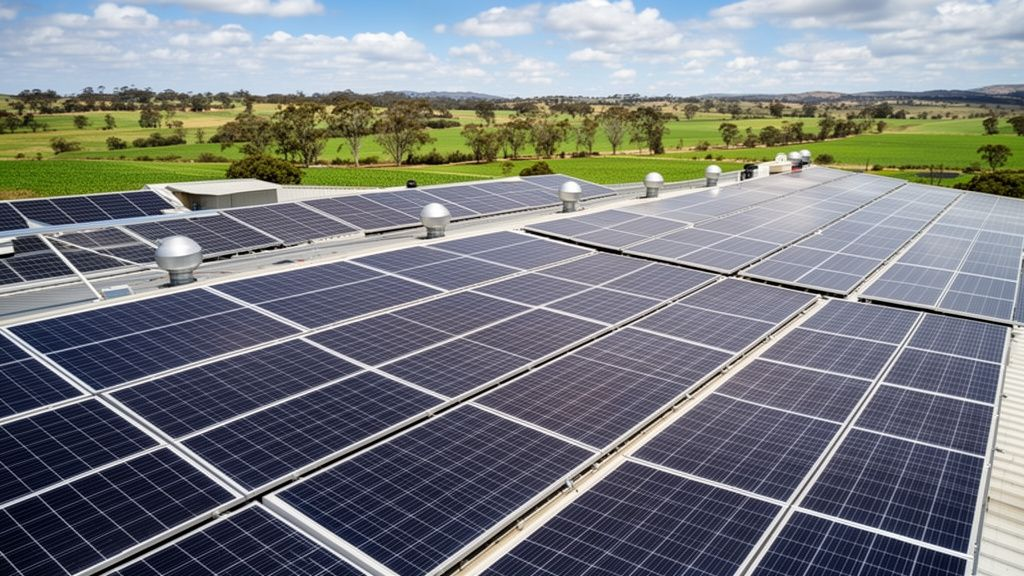
TL;DR: The Clean Energy Council's Australian Guide to Agrisolar highlights the vast benefits of combining farming activities with large-scale solar projects. From solar grazing with sheep to horticultural trials protecting pear orchards, agrisolar practices are proving to be a mutually beneficial solution for landholders and solar developers alike.
What is Agrisolar?
As Australia continues to transition toward renewable energy, the spatial relationship between agricultural land and solar infrastructure has become an increasingly important focus. To assist landholders, farmers, and utility-scale solar developers in maximizing land productivity, the Clean Energy Council produced the 'Australian Guide to Agrisolar for Large-scale Solar'.
Launched by Anna Freeman, the Clean Energy Council's Policy Director for Energy Generation, the guide defines agrisolar as the co-use of land for both agricultural production and solar power generation. While solar grazing with sheep is currently the most prominent form of agrisolar in Australia and internationally, other innovative co-use practices are emerging. These include integrating solar infrastructure with horticulture, viticulture, aquaculture, and even cropping activities.
Internationally, agrisolar has developed rapidly, especially in densely populated nations undergoing clean energy transitions. These regions have pioneered innovations such as elevated PV panels, specialized PV greenhouses, and rooftop installations designed to easily accommodate various farming practices underneath and around the solar arrays.
Solar Grazing: A Proven Success Story
Solar grazing is the most established form of agrisolar in Australia, with active practices in place at more than a dozen solar farms across the country. In these projects, sheep are introduced to graze on the vegetation surrounding solar panels. This arrangement provides significant mutual benefits for both the solar farm operators and the agricultural graziers.
For solar developers, grazing sheep provide a natural, low-cost weed control and grass management solution, which significantly lowers ongoing site maintenance and mechanical mowing costs. For graziers, the solar panels provide sheep with shade and shelter from extreme weather, which improves overall animal well-being.
Furthermore, solar panels help retain soil moisture by reducing direct sun exposure, which can encourage healthier pasture growth. A notable example occurred in Parkes, New South Wales, where the local Show Society trialled merino wethers at the Parkes Solar Farm during a severe drought in 2019. According to Councillor Ken Keith, the Mayor of Parkes and Show Society member, the trial produced excellent results, maintaining both high wool quality and excellent sheep health despite the harsh environmental conditions. 'It's a win-win for the community and the solar farm. It helps the Show Society stay afloat while reducing the maintenance costs for the solar farm,' Keith observed.


Innovations in Horticulture and Biodiversity
Beyond sheep grazing, Australian researchers are actively investigating how solar infrastructure can support crop production and biodiversity. Recent international studies suggest that some crops can grow at equal or even improved rates under solar PV arrays. The physical panels protect delicate crops from extreme heat, direct sun damage, and severe weather events, while simultaneously lowering soil temperatures on hot days and reducing moisture loss.
In Australia, a practical horticultural solar project has commenced at Agriculture Victoria's SmartFarm Tatura site. Funded under the Victorian Agriculture Energy Investment Plan, researchers are studying the integration of solar panels within a pear orchard. The study aims to determine whether solar panels can improve fruit quality by shielding pear trees from extreme heat waves and sunburn.
Additionally, solar farms can serve as excellent habitats for honeybees. The secure fencing surrounding solar installations protects the hives, while the proximity to native vegetation and flowering plants provides bees with an ideal environment. These managed bee populations support local biodiversity and provide crucial pollination services to surrounding agricultural properties.
Key Takeaways
- Agrisolar Definition: Agrisolar is the co-use of land to support both agricultural production and solar energy generation.
- Solar Grazing: This is the most common form of agrisolar in Australia, operating successfully on more than a dozen solar farms.
- Operational Savings: Grazing sheep reduce mechanical mowing and maintenance costs for solar operators while gaining shelter and pasture protection.
- Parkes NSW Case Study: A 2019 drought trial using merino wethers at Parkes Solar Farm maintained excellent sheep health and high wool quality.
- Horticultural Shielding: The Victorian Agriculture Energy Investment Plan is trialling solar panels in a Tatura pear orchard to protect crops from sunburn.
- Biodiversity Support: Fenced solar farms create safe environments for beehives, supporting local wild plant and crop pollination.