TL;DR: Frankston homeowners are increasingly opting for N-Type solar panels in 2026 due to their superior efficiency, lower degradation rates, and enhanced performance, which are particularly beneficial for urban environments with smaller roof spaces and potential shading. This advanced technology offers a quicker return on investment and greater long-term savings, aligning with Frankston's shift towards sustainable energy.
What Are N-Type Solar Panels and How Do They Differ from P-Type?
N-Type solar panels represent the next generation of photovoltaic technology, offering significant advancements over traditional P-Type panels that have dominated the market for years. The fundamental difference lies in the doping of the silicon wafer; P-Type panels use boron as a doping agent, creating a positive charge, while N-Type panels use phosphorus, creating a negative charge. This seemingly minor change results in major performance benefits, including higher efficiency ratings and improved resistance to degradation mechanisms. For Frankston residents, this means more power generated from the same roof area, a crucial factor in a metro area where space can be at a premium. These panels are engineered to capture more sunlight and convert it into electricity more effectively, making them a savvy choice for future-proofing your home's energy supply.
Superior Efficiency and Performance
N-Type solar panels generally boast higher efficiency ratings, often exceeding 22%, compared to typical P-Type panels which usually range from 18-21%. This enhanced efficiency allows for greater energy production from each panel, meaning homeowners in Frankston can install a smaller system to achieve the same output, or a standard-sized system for even greater savings. This is particularly advantageous for homes near the Frankston CBD or those with constrained roof space, common in a developed urban environment. Their ability to perform better in low-light conditions, such as cloudy days or early mornings and late afternoons, further contributes to their superior annual energy yield, maximising the return on investment for Frankston households.
Reduced Degradation Rates and LID/LEID Resistance
One of the most compelling advantages of N-Type technology is its significantly lower degradation rate over time. P-Type panels typically degrade by about 0.5% per year, while N-Type panels often degrade by only 0.3-0.4% annually. This means N-Type systems maintain a higher output for longer, extending their effective lifespan and overall energy generation. Furthermore, N-Type panels are largely immune to Light Induced Degradation (LID) and LeTID (Light and elevated Temperature Induced Degradation), common issues that can reduce the initial power output of P-Type modules by up to 2-3% in the first year. For a long-term investment like solar, this robust performance ensures Frankston homeowners receive consistent energy benefits for decades.
Why Is Frankston's Urban Environment Ideal for N-Type Technology?
Frankston's characteristics as a bustling bayside metropolitan hub make it particularly well-suited for the adoption of N-Type solar panels. With its mix of established homes, some with smaller or more complex rooflines, and the general urban density that can lead to shading, the advanced capabilities of N-Type technology offer distinct advantages over traditional P-Type options. The push for sustainability within the Frankston City Council area also aligns perfectly with a technology that maximises clean energy generation from limited resources, contributing to a greener community. Frankston homeowners are looking for solutions that perform consistently despite common urban challenges, and N-Type panels deliver on this promise.
Optimising Smaller Roof Spaces in Metro Frankston
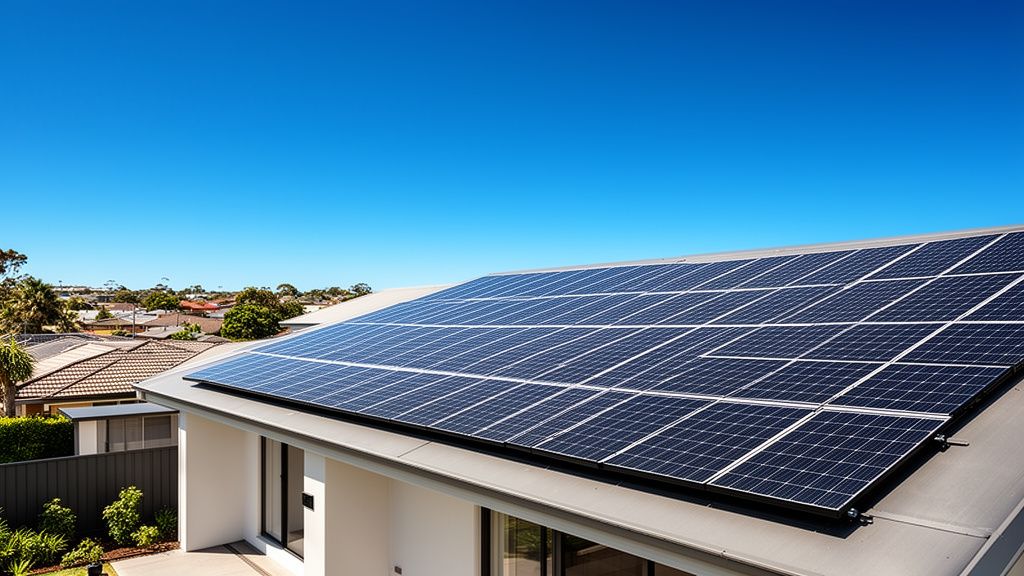
Frankston, much like other developed areas surrounding the Melbourne CBD, features a significant number of homes with smaller or irregularly shaped roofs. Traditional P-Type panels, with their lower efficiency, might struggle to generate enough power on such limited surfaces to meet a household's energy demands. N-Type panels, however, can produce more electricity per square metre. This means Frankston residents can install a more powerful system within a smaller footprint, achieving optimal energy production without needing extensive roof space. This efficiency ensures that even compact homes can significantly reduce their reliance on mains power, leading to substantial savings on electricity bills.
Mitigating Shading Challenges from Urban Density
The urban landscape of Frankston often means houses are closer together, and trees or neighbouring buildings can cast shadows at various times of the day. Unlike P-Type panels, N-Type technology, particularly when combined with advanced inverter optimisers, demonstrates superior performance under partial shading conditions. The inherent design of N-Type cells allows them to maintain a higher output even when a portion of the panel is shaded, thanks to better current flow characteristics. This resilience is a game-changer for Frankston homeowners, ensuring that their solar investment performs optimally throughout the day, irrespective of minor environmental obstructions common in a metro setting.
How Do N-Type Panels Affect Solar System Payback Periods for Frankston Homeowners?
N-Type solar panels significantly influence the payback period for Frankston homeowners by enhancing overall energy generation and reducing long-term performance degradation. While their upfront cost might be marginally higher than P-Type alternatives, the increased efficiency and extended lifespan translate directly into greater electricity savings and higher earnings from Victoria's feed-in tariffs. This accelerated return on investment makes N-Type systems a more financially attractive option over the system's 25-30 year lifespan, providing greater certainty for homeowners keen to see their solar investment pay off sooner and continue delivering value for decades.
Maximising Feed-in Tariff Earnings in Victoria
Victoria's feed-in tariffs (FiT) directly reward solar homeowners for the excess electricity they export back to the grid. Because N-Type panels generate more power per square metre and maintain higher output over their lifespan, Frankston households with N-Type systems will inherently have more surplus energy to export. This translates into greater credits on their electricity bills, effectively increasing the financial benefits from their solar installation. With a typical Victorian FiT currently around 4.9 cents per kWh, every additional kilowatt-hour exported thanks to N-Type's superior performance contributes directly to a faster payback and greater long-term savings, bolstering the financial appeal for local residents.
Long-Term Savings and Return on Investment
The combination of higher efficiency, lower degradation, and superior performance under various conditions means N-Type panels deliver greater cumulative energy output over their warranty period. For a typical 6.6kW system installed in Frankston in 2026, the additional energy produced by N-Type panels could amount to thousands of extra kilowatt-hours over a decade compared to a P-Type equivalent. Factoring in current electricity prices (around 30-35 cents per kWh) and the Victorian Solar Panel Rebate (currently up to $1,400), this increased generation directly translates into significantly higher long-term savings and a quicker return on the initial investment, often reducing the payback period by 6-12 months for a system costing between $5,000 to $8,000 after rebates.
What Are the Cost Implications of Installing N-Type Solar in Frankston in 2026?
While N-Type solar panels are a more advanced technology, their cost premium over P-Type has become increasingly negligible as manufacturing processes improve. In 2026, Frankston homeowners can expect N-Type systems to be only marginally more expensive, if at all, for a given system size. The real cost implication lies in the lifetime value and the significantly greater return on investment offered by N-Type technology. Considering current Victorian solar rebates and the long-term energy savings, the slightly higher upfront cost is quickly offset by superior performance and reduced degradation, making them a more economically sound choice for the discerning homeowner.
Upfront Investment vs. Lifetime Value
Frankston residents considering solar in 2026 will find that a 6.6kW N-Type solar system might cost approximately $5,500 - $8,500 after Victorian rebates and STCs, compared to $5,000 - $8,000 for a comparable P-Type system. This marginal difference in initial outlay is quickly eclipsed by the superior lifetime energy production of N-Type panels. Over 25 years, the higher efficiency and lower degradation rates mean N-Type systems can generate up to 5-10% more electricity than P-Type. This translates into thousands of dollars in additional savings on electricity bills, far outweighing the small upfront cost difference and solidifying N-Type as the superior long-term investment for Frankston homes.
Victorian Solar Rebates and Incentives
Frankston homeowners are fortunate to be in Victoria, a state offering some of Australia's most generous solar incentives. The Solar Homes Program currently provides eligible residents with a rebate of up to $1,400 on solar panel installations. Additionally, interest-free loans are available for the remaining cost of the system, further reducing the financial barrier to entry. While these rebates apply to both P-Type and N-Type systems, they make the slightly higher initial investment in N-Type panels even more accessible. The combination of state-backed financial support and N-Type's enhanced performance ensures Frankston residents can maximise their savings and enjoy a faster path to energy independence. For specific eligibility and application details, Frankston residents should visit the Solar Victoria website or consult the Frankston City Council's sustainability initiatives page at https://www.frankston.vic.gov.au.
Key Takeaways
- N-Type solar panels offer higher efficiency (22%+) and lower degradation rates (0.3-0.4% annually) compared to P-Type, leading to greater energy production.
- Frankston's urban environment, with its smaller roof spaces and potential for shading, benefits significantly from N-Type's superior performance in limited space and low-light conditions.
- The increased energy generation from N-Type panels accelerates solar system payback periods by maximising feed-in tariff earnings and reducing long-term electricity bills.
- Despite a potentially marginal upfront cost increase, the lifetime value of N-Type panels, combined with Victorian solar rebates, makes them a more cost-effective investment for Frankston homeowners.
- Frankston residents should research the Solar Homes Program and consult Frankston City Council's sustainability resources at https://www.frankston.vic.gov.au for up-to-date rebate information.