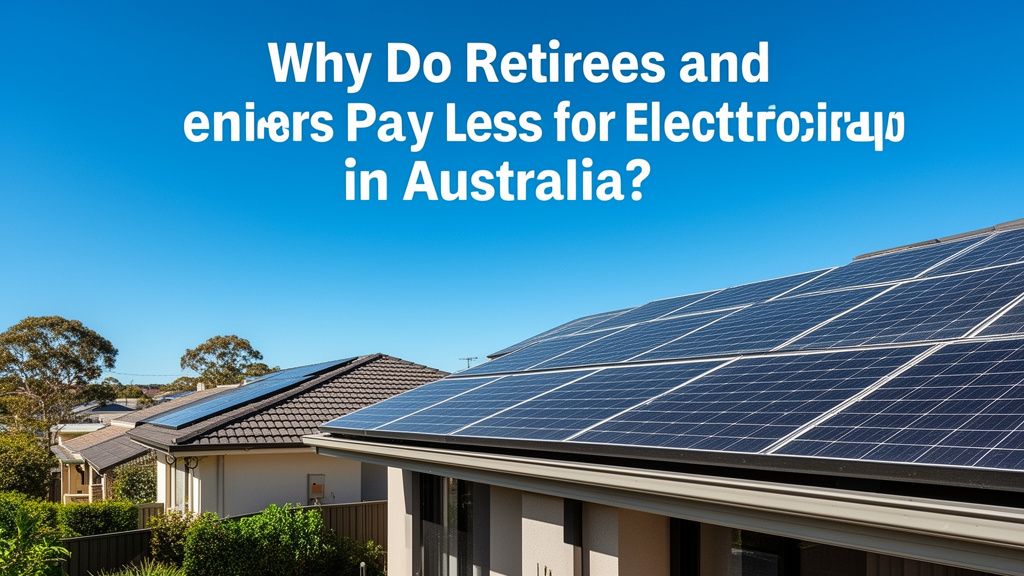
Why Do Retirees and Seniors Pay Less for Electricity in Australia?
It's a common observation in Australia: many retirees and seniors seem to manage their household budgets with remarkable efficiency, often benefiting from lower utility bills, especially when it comes to electricity. While some might assume it's simply due to lower consumption, the reality is a combination of targeted government support, smart energy choices, and diligent management. As an Australian solar blog, we’re keen to explore all the facets that contribute to this financial advantage, particularly highlighting the role of renewable energy.
Government Concessions and Rebates: The Big Difference
The primary reason many Australian seniors and retirees pay less for their electricity is direct financial assistance from federal and state governments. Recognising that many older Australians live on fixed incomes, a range of concessions and rebates have been implemented to alleviate cost-of-living pressures.
To be eligible for most of these concessions, individuals typically need to hold a valid concession card such as a Pensioner Concession Card (PCC) or a Department of Veterans' Affairs (DVA) Gold Card. In some instances, the Commonwealth Seniors Health Card (CSHC) may also qualify recipients for certain state-based benefits.
These rebates are not insignificant. For example, in New South Wales, eligible cardholders can receive the Low Income Household Rebate, which provides an annual credit on their electricity bill. Victoria offers the Annual Electricity Concession, a percentage-based discount on electricity usage and service charges for eligible cardholders, ensuring that the benefit scales with consumption. Queensland provides an Electricity Rebate to ease the burden on pensioners and seniors. Similar schemes exist across all states and territories, each designed to directly reduce the cost of grid electricity for those who need it most. These concessions often get applied directly to the power bill, making electricity significantly cheaper per kilowatt-hour for eligible households.
Embracing Solar Power: A Smart Investment for Seniors
Beyond direct government subsidies, a significant and growing factor in reducing electricity costs for seniors is the adoption of solar power. Australia’s abundant sunshine and falling solar installation costs have made rooftop solar an increasingly attractive investment. For retirees, who are often in their homes for extended periods during the day, generating their own electricity means substantial savings.
By installing solar panels, seniors can dramatically reduce the amount of electricity they need to purchase from the grid, sometimes even eliminating their daytime electricity bills entirely. Any excess electricity generated can often be sold back to the grid via a 'feed-in tariff', further offsetting their overall power costs. The initial investment in solar is supported by federal incentives like Small-scale Technology Certificates (STCs), which provide an upfront discount on installation costs, making it more accessible. State-based programs also exist, like the former Victorian Solar Homes program which provided rebates on solar PV systems, making the transition even more affordable.
Once a solar system is paid off, the "fuel" (sunlight) is free, offering decades of virtually free electricity. This long-term financial security and energy independence are particularly appealing to those on fixed incomes, allowing them to better budget and avoid the volatility of rising electricity prices. It’s not just about paying less per unit from the grid, but paying less overall because they’re producing their own.
Smart Energy Habits and Efficiency
Many retirees and seniors are also masters of energy efficiency. Having lived through various economic cycles, they often adopt mindful consumption habits out of necessity or habit. This includes:
- Mindful Usage: Turning off lights and appliances when not in use, unplugging chargers, and only running dishwashers or washing machines when full.
- Optimised Heating and Cooling: Setting thermostats to comfortable yet energy-efficient temperatures, using fans instead of air conditioning when possible, and dressing appropriately for the weather.
- Investing in Efficiency: Many seniors, having owned their homes for decades, have often invested in insulation, draft sealing, and energy-efficient appliances over time. These upgrades significantly reduce the overall energy demand of the home.
- Off-Peak Utilisation: Many are also adept at scheduling high-energy tasks during off-peak electricity times when rates are lower, especially those on time-of-use tariffs.
These habits, combined with potentially smaller household sizes, lead to lower overall electricity consumption compared to larger, busier family homes.
The Power of Comparison and Negotiation
Finally, many seniors have the time and diligence to actively manage their utility accounts. They are often more likely to:
- Compare Retailers: Utilise government comparison websites like EnergyMadeEasy or Victorian Energy Compare to ensure they are on the best possible electricity plan.
- Negotiate Deals: Not shy away from contacting their current electricity retailer to inquire about better rates or discounts, particularly loyalty discounts.
- Understand Tariffs: Take the time to understand different tariff structures (e.g., single rate, time-of-use, controlled load) and choose the one that best suits their consumption patterns.
This proactive approach ensures they are not only benefiting from concessions but also securing the most competitive rates available in the market.
Conclusion: A Holistic Approach to Lower Bills
In summary, the reason retirees and seniors often pay less for electricity in Australia is a multifaceted one. It’s not just about a single factor, but a powerful combination of direct financial support through government concessions and rebates, the forward-thinking adoption of solar energy systems that provide long-term savings, smart and efficient energy consumption habits, and a diligent approach to finding the best deals from electricity retailers.
For those nearing retirement or already enjoying their golden years, understanding these avenues can unlock significant savings on power bills, allowing for greater financial security and peace of mind. Investing in solar, alongside leveraging available government support, stands out as a particularly effective strategy for managing electricity costs for decades to come, proving that a little sunshine can go a very long way.
Read More
For a comprehensive overview, check out our master guide: Read the Full Guide Here.