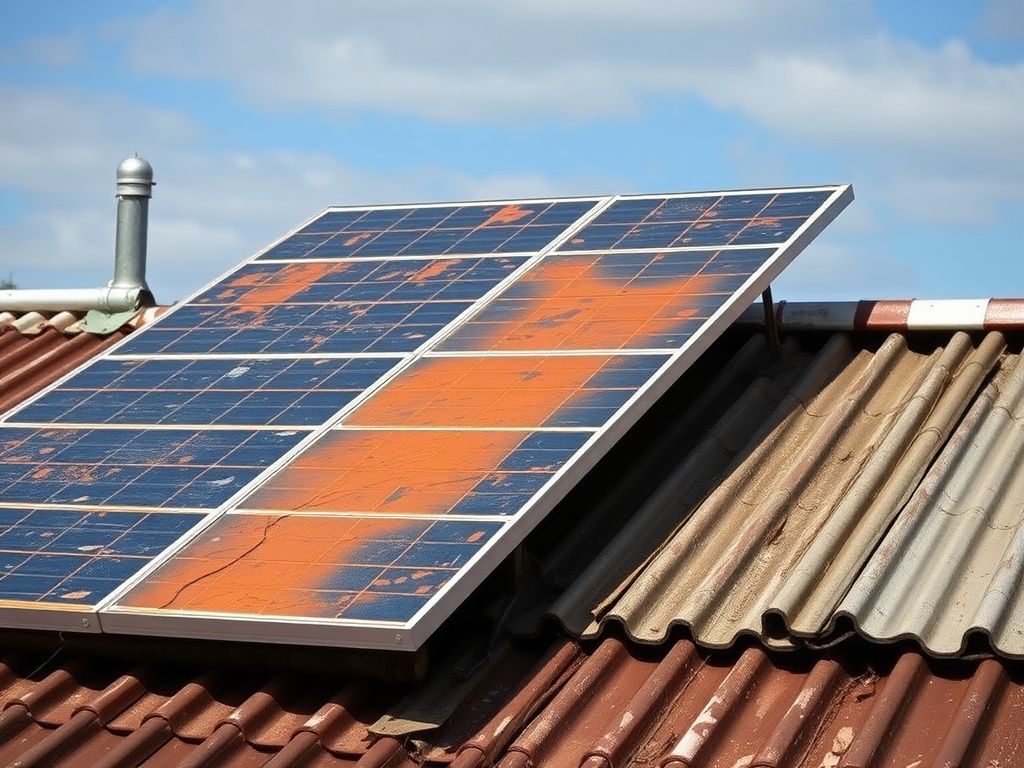
What Happens to Solar Panels at End of Life?
You've had your solar panels on the roof for 15, 20, maybe even 25 years. They've faithfully converted sunshine into savings on your electricity bill. But all good things come to an end — or at least, a transition. So what actually happens when a solar panel reaches end of life in Australia?
It's a question more and more Aussie homeowners are asking as the first generation of residential solar systems starts to age out. And the answer is more nuanced than you might expect.
For a complete overview of the recycling landscape, see our Complete 2026 Guide to Solar Panel Recycling in Australia.
When Is a Solar Panel "End of Life"?
Most solar panels are warranted for 25 years and rated to produce at least 80% of their original output at that point. In practice, many panels continue working well beyond 25 years, just at gradually reduced efficiency.
A panel is typically considered end-of-life when:
- Output has degraded significantly — below 80% of rated capacity, making it uneconomical to keep on a grid-connected system.
- Physical damage — hail, storms, fallen branches, or micro-cracking have compromised the panel.
- System upgrade — the homeowner replaces older, lower-wattage panels with newer, more efficient models.
- Roof work — panels are removed for re-roofing and the homeowner decides not to reinstall old units.
The Four Pathways for Decommissioned Panels
Once a panel comes off a roof, it enters one of four pathways:
1. Specialist Recycling
This is the gold standard. The panel is transported to a dedicated recycling facility where it undergoes a multi-step process:
- Deframing — the aluminium frame is removed mechanically. This is the easiest step and recovers high-quality aluminium that's immediately recyclable.
- Junction box removal — the plastic junction box and copper wiring are separated.
- Glass-silicon separation — this is the technically challenging step. The laminated sandwich of glass, EVA encapsulant, and silicon cells must be separated, typically using mechanical crushing, thermal treatment, or a combination.
- Material recovery — glass is cleaned and graded for reuse (or downcycled into aggregate). Silicon is recovered for reprocessing. Trace metals (silver, copper, tin) are extracted.
Australian facilities like PV Industries, Sircel, and Elecsome are now processing panels at commercial scale, recovering up to 95% of materials by weight.
2. Reuse and Second Life
Not every decommissioned panel is truly "dead." Many panels removed during upgrades still produce 70–85% of their original output — more than enough for less demanding applications.
Second-life options include:
- Off-grid setups — powering sheds, water pumps, caravans, or remote monitoring equipment.
- Community projects — donated to schools, community gardens, or Indigenous communities.
- Export — some panels are exported to developing nations where even reduced-output panels are valuable.
The "Second-Life Solar" movement is gaining real traction in Australia, with organisations testing and grading used panels for redeployment.


3. Landfill
Despite growing awareness and regulation, a significant proportion of end-of-life panels in Australia still end up in landfill. The reasons are straightforward:
- Cost — landfilling a panel costs $3–5 compared to $25–35 for recycling.
- Convenience — in many areas, especially regional, there's no nearby recycling facility.
- Awareness — some homeowners and even tradespeople don't realise recycling is an option.
Victoria and Western Australia have banned solar panels from landfill, and South Australia introduced restrictions in 2025. Other states are expected to follow, but enforcement remains patchy.
4. Illegal Dumping
The least desirable outcome. Panels are sometimes abandoned in skips, on roadsides, or at unlicensed waste sites. This is more common in regional areas and among fly-by-night installers who include "disposal" in their quote but cut corners.
Illegal dumping poses environmental risks because panels contain small amounts of lead and other heavy metals that can leach into soil and waterways over time.
The Environmental Stakes
Why does the pathway matter? Because solar panels contain both valuable and potentially hazardous materials:
- Valuable: aluminium, glass, silicon, silver, copper — all recoverable and reusable.
- Hazardous: lead solder (in older panels), cadmium (in some thin-film panels), and plastic polymers that don't biodegrade.
When panels are recycled properly, the environmental impact is overwhelmingly positive — materials re-enter the supply chain, reducing the need for virgin mining. When they're landfilled, those materials are lost, and there's a slow-release contamination risk.
What Should You Do With Your Old Panels?
If you're facing a panel replacement or decommissioning:
- Ask your installer — reputable installers will either handle recycling directly or connect you with an accredited recycler.
- Check the national pilot program — the new government-backed pilot offers subsidised drop-off in many areas. Learn more: Australia's New Solar Panel Recycling Pilot Program Explained
- Contact your local council — many councils now accept solar panels at e-waste collection days.
- Consider reuse — if your panels still produce reasonable output, they may have a second life. Ask your recycler if they operate a reuse program.
The Bottom Line
End-of-life doesn't have to mean end-of-value. With Australia's recycling infrastructure growing rapidly and regulations tightening, the responsible disposal of solar panels is becoming easier and more affordable every year. The key is awareness — knowing your options and choosing the right pathway for your old panels.
Your solar panels served you well. Make sure their final chapter is a good one.


