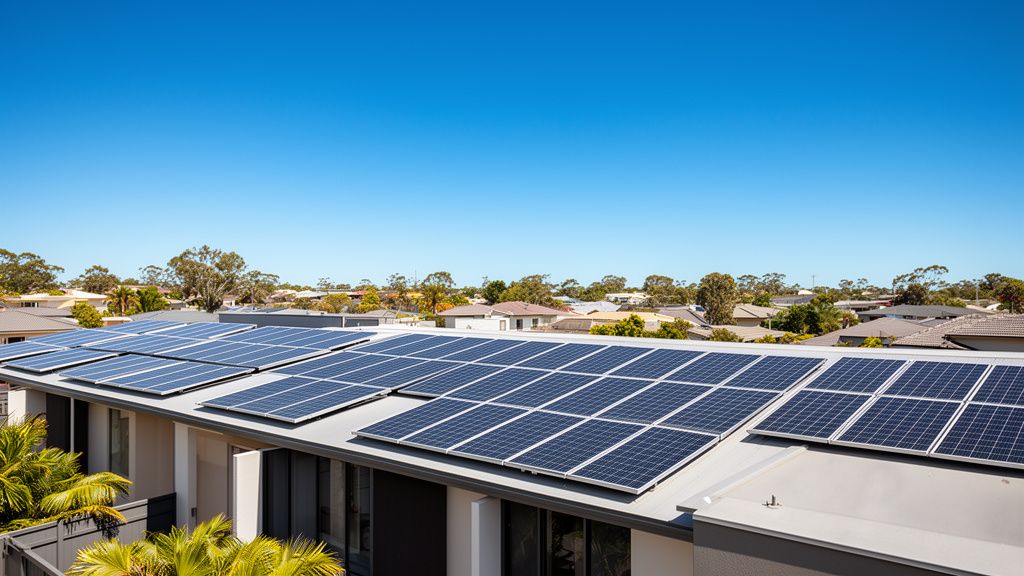
TL;DR: Western Australia's unique energy market means residential customers cannot choose their electricity retailer. Synergy services the SWIS region, while Horizon Power covers regional areas, meaning they set the available tariffs and solar feed-in rates. Solar owners need to understand these specific plans and how to maximise self-consumption given declining feed-in tariff trends.
What makes Western Australia's electricity market unique for solar owners?
Western Australia operates a unique electricity market, distinct from Australia's National Electricity Market (NEM), which means residential customers do not have a choice of electricity retailers. Instead, two state-owned corporations, Synergy and Horizon Power, act as the sole electricity suppliers for residential users depending on their location. Synergy supplies power to customers within the South West Interconnected System (SWIS), which covers areas from Albany to Kalgoorlie, including Perth. Horizon Power is the sole electricity retailer for all residential and business customers located outside the SWIS network, serving regional and remote parts of the state. This setup directly affects solar owners, as these two providers determine the available electricity tariffs, including crucial feed-in tariffs (FiTs) for exported solar energy. Understanding these provider-specific structures is essential for anyone installing or optimising a solar power system in WA.
Synergy's Monopoly in the South West Interconnected System
Within the SWIS, Synergy sets the energy agenda for homes and many businesses. This means any residential customer in Perth, Bunbury, Geraldton, or other SWIS-connected areas will receive their electricity bills and feed-in tariff credits directly from Synergy. While there is no competition for electricity supply, Synergy offers a choice between a few tariff types, allowing customers to align their solar usage with a suitable plan. Businesses using over 50 megawatt-hours (MWh) annually become "contestable customers" and can negotiate with various suppliers, but this option does not extend to typical residential solar setups. This regulated environment makes researching Synergy's specific current and upcoming solar policies vital for maximising solar investment.
How do Synergy's current electricity tariffs affect solar in the SWIS?
Synergy's current residential electricity tariffs significantly influence how solar owners in the SWIS region can best utilise their systems. Synergy offers two main plans for residential customers: the Home Plan (a single-rate tariff) and the Midday Saver (a time-of-use tariff). Under the Home Plan, electricity costs a consistent rate per kilowatt-hour (kWh) regardless of the time of day, making solar export less about timing and more about overall production. The Midday Saver plan, however, introduces varying rates for peak, shoulder, and off-peak periods. Electricity costs in WA generally range from 32-35 cents per kWh, depending on the specific plan chosen. For solar households, this means strategic energy use becomes crucial on a Midday Saver plan, as exporting energy during peak times might earn a higher feed-in credit (though current FiTs are low), while consuming self-generated power during peak times avoids paying the higher retail rate.
Understanding Synergy's Midday Saver for solar optimisation
The Midday Saver plan provides a clear incentive for solar households to shift their energy consumption to coincide with their solar production or during the cheaper off-peak and shoulder periods. For example, running dishwashers, washing machines, or pool pumps during the day when solar panels are generating, or late at night during off-peak hours, can substantially reduce reliance on grid electricity. While specific 2026 feed-in tariffs are not yet published, historical trends show FiTs in WA, like the rest of Australia, have generally fallen to a few cents per kWh. This reinforces the strategy of maximising self-consumption, as every kWh used from your own panels saves you the full retail price of 32-35 cents, which is significantly more valuable than the low export credit.
What are Horizon Power's electricity plans and their impact on regional WA solar?
Horizon Power is the sole electricity retailer for residential and business customers in regional and remote Western Australia, operating outside the SWIS. This includes towns like Broome, Port Hedland, and Esperance. Horizon Power offers a few distinct electricity plans for residential use, including a standard Residential tariff, which is typically a single-rate option. They also offer a K2 Combined Use tariff, which bundles business and residential energy usage onto a single bill, catering to mixed-use properties common in regional areas. For solar owners in these regions, the implications are similar to Synergy's customers: the lack of retail choice means Horizon Power dictates the available tariffs and any applicable solar feed-in tariffs. The average cost of electricity from Horizon Power also sits within the 32-35 cents per kWh range.
Regional solar owners often face unique considerations, such as variations in grid stability and different network infrastructure, which can sometimes influence system design or export limits. Horizon Power's specific feed-in tariff rates can differ from Synergy's, and these rates are subject to change. Maximising the financial benefits of solar in Horizon Power areas, therefore, depends on understanding and adapting to their particular tariff structures. Residents should always check Horizon Power's official website or contact them directly for the most current information regarding their solar-specific policies and feed-in credits.


What can WA solar owners expect from future feed-in tariffs towards 2026?
Predicting precise feed-in tariffs (FiTs) for 2026 is challenging because neither Synergy nor Horizon Power have published forward-looking rates. However, WA solar owners can expect that the general trend of low feed-in tariffs will likely continue. Across Australia, as solar penetration has increased, retailers have progressively reduced FiT rates to levels often below 5 cents per kWh. This reduction reflects the grid's capacity to absorb excess solar and the economic realities for electricity providers. Therefore, the primary financial benefit of installing solar in WA will remain avoiding the purchase of grid electricity at retail rates, which currently sit between 32-35 cents per kWh.
The focus for solar owners towards 2026 should remain on maximising self-consumption rather than relying on significant income from exporting surplus energy. Investing in battery storage becomes increasingly attractive under these conditions, allowing households to store excess daytime solar generation and use it during evening peak periods when grid electricity is most expensive. Synergy and Horizon Power periodically review and update their tariffs and FiTs. Solar customers should regularly check the official websites of their respective providers for the most current information, as any changes will directly impact the economics of their solar system.
Key Takeaways
- Western Australia's electricity market has no retail choice for residential customers; Synergy serves the SWIS, and Horizon Power covers regional WA.
- Solar owners must choose from their designated provider's specific tariff plans, such as Synergy's Home Plan or Midday Saver, or Horizon Power's Residential tariff.
- Maximising self-consumption is crucial for WA solar owners, as current electricity retail rates (32-35 cents/kWh) are significantly higher than typical feed-in tariffs (often below 5 cents/kWh).
- Time-of-use plans like Synergy's Midday Saver reward strategic energy use, encouraging households to shift consumption to align with solar generation or off-peak hours.
- Future feed-in tariffs are likely to remain low, making battery storage an increasingly valuable investment for optimising solar system economics by storing excess power for later use.
Read More
For a comprehensive overview, check out our master guide: Read the Full Guide Here.


