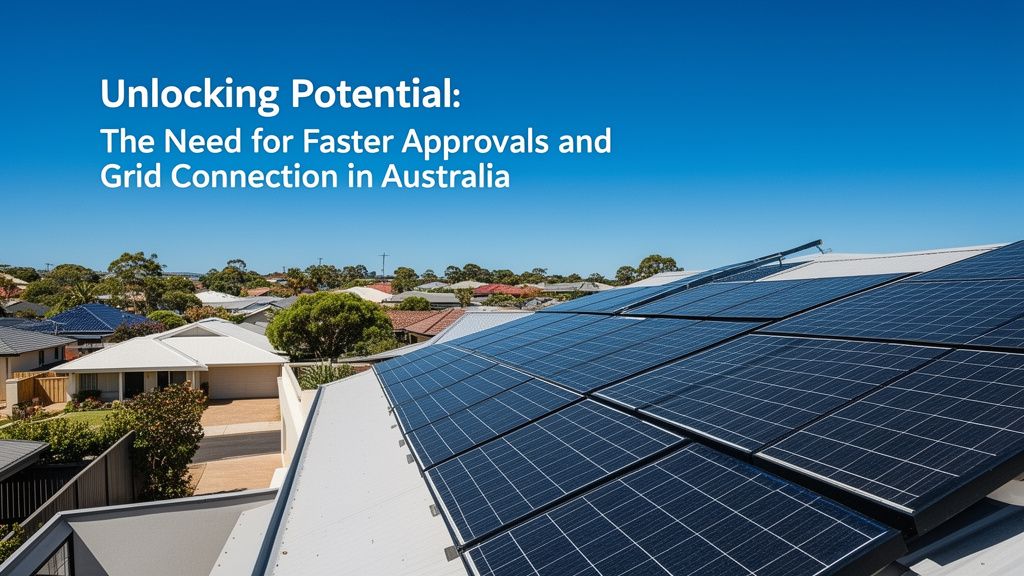
Unlocking Potential: The Need for Faster Approvals and Grid Connection in Australia
Introduction: The Sunburnt Country's Solar Paradox Australia, a land blessed with abundant sunshine, has rightfully earned its place as a global leader in rooftop solar adoption. Our homes and businesses are increasingly embracing the power of the sun, driven by the desire for lower electricity bills, energy independence, and a cleaner planet. Yet, despite this enthusiastic uptake, a growing frustration is bubbling beneath the surface: the snail's pace of project approvals and grid connections. We're a nation rich in solar potential, but we're increasingly hampered by bureaucratic hurdles and an aging infrastructure that struggles to keep up. This isn't just an inconvenience; it's a significant roadblock preventing Australia from fully unlocking its renewable energy future.
The Irresistible Promise of Solar The benefits of solar power are undeniable and widely understood across Australia. For homeowners, it translates to substantial savings on their quarterly electricity bills, often thousands of dollars over the system's lifetime. For businesses, it means reduced operating costs and a stronger commitment to sustainability, enhancing their brand image. On a national level, a robust solar sector creates jobs – from manufacturing and installation to maintenance and innovation. Environmentally, every solar panel reduces our reliance on fossil fuels, contributing directly to Australia's emissions reduction targets and combating climate change. This promise is too vital to be stifled by red tape.
The Bottleneck: Council Approvals and Red Tape One of the primary chokepoints lies in the often-complex and inconsistent process of obtaining council approvals. While most residential systems below a certain size (often 10kW or less) are typically exempt, larger commercial installations and even some unique residential setups can face significant delays. The issue isn't a lack of willingness from councils, but rather a patchwork of varying regulations, different submission requirements, and often under-resourced planning departments struggling to keep pace with the solar boom. Installers spend valuable time navigating diverse local government guidelines, preparing extensive paperwork, and then enduring lengthy waiting periods, all of which add to project costs and extend timelines for consumers. This bureaucratic maze can be a deterrent, slowing down the very progress we need to accelerate.
The Grid Connection Conundrum Even once a solar project has the green light from the council, the journey isn't over. Connecting to Australia's electricity grid presents another formidable challenge. Our Distribution Network Service Providers (DNSPs) are tasked with managing a grid originally designed for one-way power flow from large centralised generators. Now, with millions of rooftop solar systems feeding power back into the network, the grid faces new stresses and complexities. Obtaining connection agreements can be a protracted process, involving technical assessments, studies, and often, unexpected requirements. Export limits, where homeowners are restricted in how much surplus power they can send back to the grid, are becoming more common in certain areas, frustrating those who invested in larger systems for maximum energy independence. The result? Delays, increased costs, and sometimes, systems that can't operate at their full potential.


The Real Costs of Sluggish Progress These delays have tangible and detrimental consequences. For solar installers, project backlogs mean reduced cash flow and inefficient resource allocation, potentially impacting employment. For consumers, the wait translates into missed savings, as they continue to pay higher grid electricity prices while their installed solar system sits idle. On a broader scale, Australia risks falling behind in the global renewable energy race. Every day a solar project is delayed, we miss an opportunity to reduce our carbon footprint, create green jobs, and strengthen our energy security. The financial and environmental costs of this sluggish progress are accumulating, making it imperative that we find solutions.
Paving the Way Forward: Streamlining Approvals Addressing the approval bottleneck requires a concerted, multi-pronged effort. Firstly, we need greater standardisation of planning regulations across local councils, potentially through state or national guidelines for common solar installations. This would reduce ambiguity and the administrative burden on installers. Secondly, investing in digital platforms for application submissions and tracking could significantly speed up processing times, offering greater transparency for all parties involved. Thirdly, adequately resourcing council planning departments with staff trained in renewable energy projects is crucial. By simplifying and accelerating the approval process, we can ensure that solar projects move from concept to reality with greater efficiency.
Modernising the Grid for a Solar Future The grid connection challenge demands substantial investment and forward-thinking strategies. A key step is the accelerated modernisation of our electricity grid, transforming it into a smart grid capable of managing two-way power flows and integrating distributed energy resources like solar and batteries seamlessly. This includes upgrading transmission and distribution infrastructure. Network operators also need to streamline their connection application processes, embracing digital solutions and improving communication channels with installers and consumers. Encouraging the adoption of home battery storage can also help alleviate grid congestion by allowing homeowners to store their surplus energy rather than exporting it all at once, creating a more resilient and flexible energy system for everyone.
Australia's Brighter Solar Horizon Australia’s journey towards a renewable energy future is not just aspirational; it’s an economic and environmental imperative. We have the sunshine, the technology, and the public will. What we now urgently need is the administrative agility and infrastructure readiness to match our ambition. By committing to faster, more consistent approvals and proactively investing in a modern, smart grid, we can remove the current bottlenecks. It's time to unlock Australia's full solar potential, ensuring that the 'sunburnt country' truly shines as a world leader in sustainable energy. The opportunity is immense; let's not let bureaucracy dim its light.
Read More
For a comprehensive overview, check out our master guide: Read the Full Guide Here.