TL;DR: Massive residential solar adoption and a historic boom in battery installations have driven wholesale electricity prices down by 47 per cent in eastern Australia, yet energy chiefs warn that grid stability remains highly precarious as coal-fired plants face retirement.
The Dramatic Drop in Wholesale Electricity Costs
Australia’s energy grid is undergoing a rapid, structural transformation that is directly impacting the financial landscape of electricity pricing. According to the Australian Energy Market Operator (AEMO), wholesale electricity costs—the underlying prices that retail energy providers pay to generators before selling electricity to consumers—fell by a staggering 47 per cent year-on-year across eastern Australia during the June quarter. This decline marked the lowest wholesale price average recorded for that specific seasonal period since 2020.
This downward price trend was led by Victoria, which experienced a massive 60 per cent year-on-year drop, bringing wholesale electricity prices down to an average of just $56 per megawatt-hour. Regulators have attributed this substantial financial relief directly to two key factors: record-breaking renewable energy generation and an unprecedented boom in battery installations across the nation. These technologies have fundamentally altered how energy is supplied and priced in the national market.
How Solar and Batteries Defeat the Evening Peak
To understand why wholesale prices have plummeted, it is necessary to examine the daily patterns of electricity demand. Traditionally, the late afternoon and early evening hours represent the "evening peak." This is the period when families return home, turn on heating or cooling systems, and cook dinner, causing national electricity demand to surge.
Historically, energy retailers had to rely on expensive fossil-fuel generation—primarily coal and gas-fired power stations—to meet this rapid surge in evening demand, resulting in high wholesale price spikes. The recent boom in battery installations has broken this cycle:
- Daytime Harvesting: During daylight hours, millions of rooftop solar panels and large-scale wind farms flood the grid with low-cost, clean energy.
- Battery Storage: Large-scale and residential battery systems capture and store this abundant, cheap daytime electricity.
- Evening Dispatch: When the sun sets and solar generation drops, these batteries discharge their stored power. This directly cuts reliance on expensive fossil fuels during the evening peak, smoothing out wholesale price spikes and lowering overall market costs.
According to Violette Mouchaileh, AEMO's general manager of policy, these household-level and utility-scale technologies are actively "changing demand patterns, supporting system reliability and increasing the amount of lower-cost energy available across the market."


The Precarious Balance: Warnings from Energy Chiefs
While these lower wholesale prices have delivered welcome relief to hundreds of thousands of retail customers on basic energy plans—with some bills falling by up to 10 per cent—top energy executives caution that the grid remains in a precarious balance. The smooth performance of the electricity grid over the past year was partly due to exceptionally good luck, including milder-than-average winter weather that kept national heating demand unusually low, and better-than-average mechanical performance from ageing coal fleets.
"Not every winter will be this good," warned Frank Calabria, chief executive of Origin Energy. Winter represents a severe test for a solar-reliant grid, as sudden cold snaps can cause heating demand to skyrocket at the exact same time that shorter daylight hours and cloud cover reduce solar generation. Furthermore, Damien Nicks, chief executive of AGL, noted that while coal fleet availability was "the best it has been for a while," the market remains highly vulnerable and new renewable projects must be delivered with greater urgency.
This vulnerability is driven by the fact that ageing, emissions-intensive coal-fired power stations still supply nearly 50 per cent of eastern Australia’s electricity, but their years are numbered. More than half of the remaining coal generators are scheduled to close permanently by 2035 because they are becoming too costly to maintain and are prone to sudden, unexpected breakdowns that can trigger instant price spikes.
Adapting Your Household Energy Plan
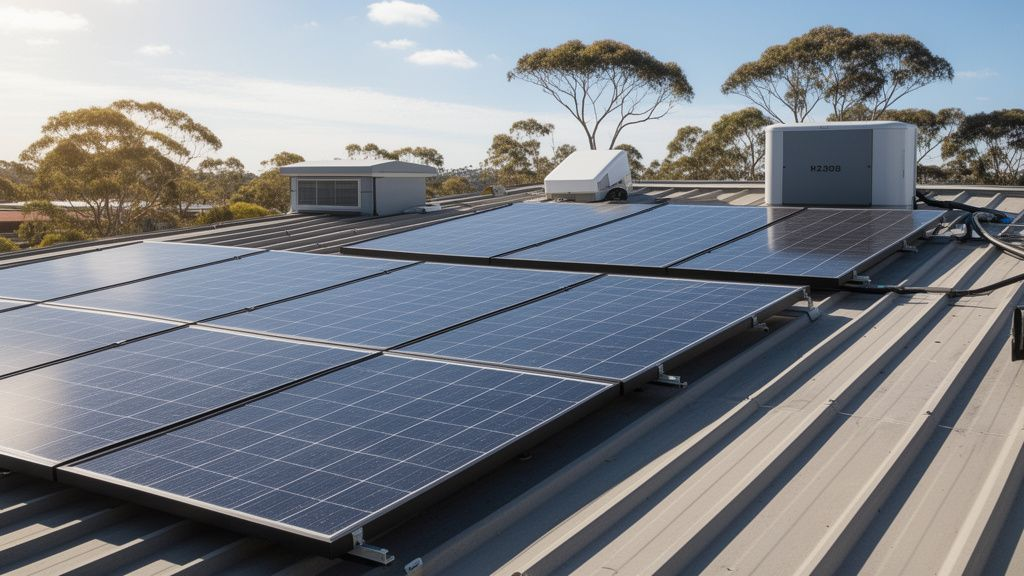
As the national grid transitions, retail electricity tariffs will continue to exhibit high variability. To shield themselves from this ongoing volatility, households are encouraged to structure their energy plans around localized self-generation. By sizing a home solar system appropriately—such as an entry-level 6.6 kW system (from $4,000), a battery-ready 10 kW system (from $6,500), or an EV-ready 13 kW system (from $8,500)—and pairing it with active storage, households can store their own cheap daytime solar power. This localized strategy ensures that regardless of how the national grid handles coal retirements, individual household utility bills remain low and predictable.
Key Takeaways
- Record-Breaking Price Drops: Wholesale electricity costs fell by 47% across eastern Australia in the June quarter, with Victoria’s prices plunging 60% to $56/MWh.
- The Battery Effect: Storage systems are successfully capturing low-cost daytime solar energy and discharging it at sunset, reducing reliance on expensive peak fossil-fuel generation.
- Ageing Coal Fleet Risks: Coal still supplies nearly 50% of the eastern grid, but over 50% of these plants are scheduled to close by 2035 due to unreliability and high maintenance costs.
- Winter Grid Vulnerability: Sudden cold snaps combined with fewer daylight hours pose an ongoing threat to grid stability, meaning recent low wholesale prices are not guaranteed to last.
- Self-Reliance is Key: Installing correctly sized solar systems and home batteries remains the most effective way for consumers to isolate themselves from ongoing retail price variability.