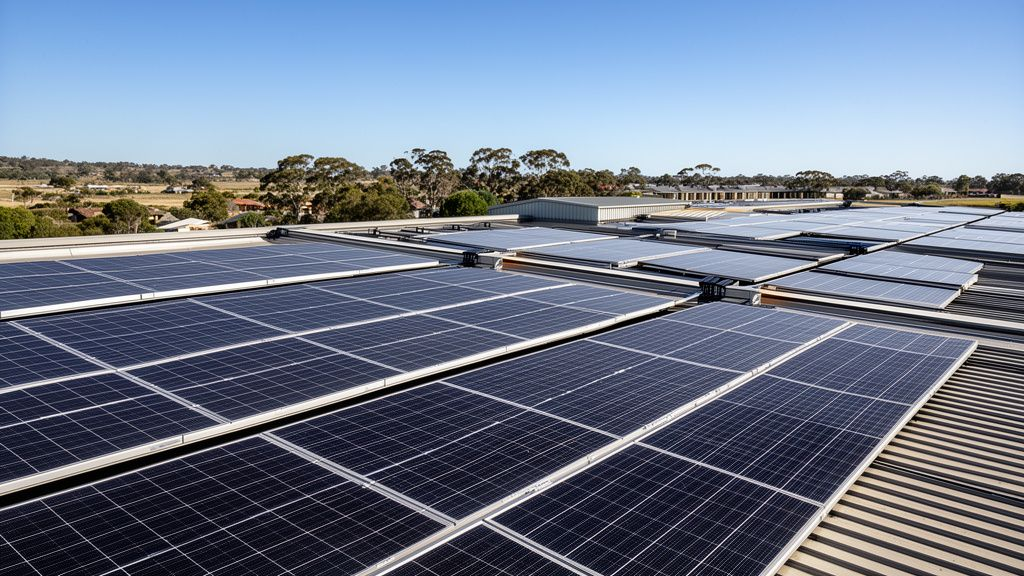
TL;DR: The expansion of the Small-scale Renewable Energy Scheme (SRES) from 100 kW to 1 MW will slash upfront commercial solar installation costs by approximately 20%. This regulatory change allows farms, warehouses, and factories to access substantial savings, such as over $230,000 for large-scale systems, while tapping into Australia's 80 GW commercial solar potential.
The Expansion of the SRES Threshold to 1 Megawatt
Australia's commercial and agricultural sectors are poised for a significant financial boost with the federal government's expansion of the Small-scale Renewable Energy Scheme (SRES). Climate Change and Energy Minister Chris Bowen announced this major reform, which increases the scheme's capacity limit from 100 kilowatts (kW) to 1 megawatt (MW).
Since its inception in 2011, the SRES has allowed solar installations to generate environmental certificates that are traded on the open market, effectively lowering the upfront cost of solar systems. However, because the scheme was capped at 100 kW, it primarily benefited residential properties. Medium and large businesses, which require far more power than a typical household, found themselves excluded from the scheme because their commercial needs exceeded the 100 kW limit.
By lifting this threshold to 1 MW, the government is making commercial-scale installations financially viable. The expansion is expected to slash the upfront installation costs of solar systems for commercial, industrial, and agricultural buildings by approximately 20 percent.
Quantifying the Savings for Businesses and Farmers
This 20 percent reduction in upfront costs translates to major financial savings for businesses of varying sizes. The federal government has released specific estimates detailing how different commercial operations will benefit from the expanded SRES:
- Mid-Sized Retailers and Commercial Properties: A business installing a 250 kW solar system is expected to save almost $70,000 on their upfront installation costs.
- Large Logistics Warehouses and Retail Complexes: A large industrial facility, warehouse, or retail complex installing an 850 kW system is projected to save more than $230,000.
These massive capital savings will allow businesses to redirect funds back into their operations, improving overall productivity. Farms, factories, and warehouses with large, empty roof spaces can now deploy systems sized to their actual operational needs rather than being artificially restricted by the old 100 kW limit.


Tapping Into the 80 Gigawatt Commercial Potential
Australia's residential rooftop solar capacity has reached about 22 gigawatts (GW), driven by strong household take-up. In contrast, commercial installations have lagged behind, accounting for just 5.6 GW of capacity—most of which consists of systems below the old 100 kW threshold.
This represents a massive gap in utilization. According to data from the Institute for Energy Economics and Financial Analysis, the technical rooftop potential for commercial, industrial, and agricultural buildings in Australia exceeds 80 gigawatts. This untapped space represents a key target for the government's clean energy strategy.
Minister Bowen noted that while residential solar panels are a common sight from an airplane flying over any capital city, very few panels are visible on commercial or industrial buildings. By expanding the SRES, the government aims to transform these vast, empty rooftops into productive solar generation assets.
Streamlining Approvals with the AEMC
To ensure that businesses can rapidly deploy these systems, the government is also tackling administrative barriers. Minister Bowen has instructed the Australian Energy Market Commission (AEMC) to work with network providers to ensure commercial and industrial solar connection approvals are processed at a faster pace.
This change has been welcomed by business operators, including Maggie Jarrett, the business development manager of See Saw Wine, a winery on the New South Wales Central Coast. Faster approvals and lower upfront costs will remove the primary obstacles that have historically delayed commercial clean energy investments.
Key Takeaways
- Threshold Increase: The SRES limit has been raised from 100 kW to 1 MW, allowing larger commercial solar systems to qualify for certificate trading.
- 20% Cost Reduction: The expansion is estimated to lower upfront commercial and agricultural solar installation costs by approximately 20%.
- Direct Financial Relief: Retailers can save nearly $70,000 on a 250 kW system, and large industrial warehouses can save over $230,000 on an 850 kW system.
- 80 GW Opportunity: The policy aims to tap into Australia's 80 GW of commercial, industrial, and agricultural rooftop solar potential.
- Accelerated Connections: The AEMC will push network operators to approve commercial solar grid connections more quickly, reducing administrative delays.