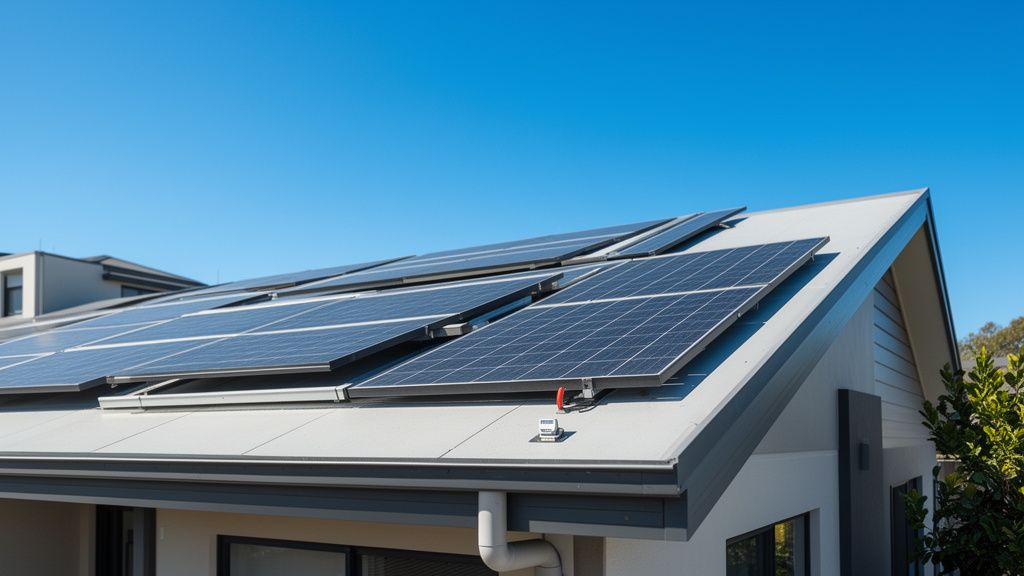
TL;DR: Smart meters are revolutionising energy sharing in Australian multi-owner buildings by providing the precise data needed to fairly allocate solar generation and consumption. This technology overcomes the complexities of traditional metering, enabling residents to access shared renewable energy benefits, reduce power bills, and boost sustainability.
What Challenges Do Multi-Owner Buildings Face with Shared Solar Energy? Multi-owner buildings in Australia often struggle with the equitable sharing and billing of solar energy due to limitations of traditional metering infrastructure. For strata schemes, the complexity arises from determining how to divide a single rooftop solar array's output among multiple apartments and common areas. Traditional electricity meters are designed to simply measure aggregate consumption from the grid, not individual solar usage or export. This makes it challenging to accurately calculate who benefits how much from the shared solar, leading to potential disputes and often deterring initial investment in communal solar systems. It's not just about common areas; the core issue lies in enabling individual units to seamlessly tap into a shared renewable resource and receive fair credit for their consumption and contribution.
Traditional Metering Limitations in Strata Schemes Traditional electricity meters are designed to simply measure total consumption from the grid for a single account, making them inadequate for scenarios where energy is both imported from the grid and generated on-site for multiple users. In a multi-owner building with shared solar, a single grid connection might serve several apartments, or separate meters exist but cannot differentiate between grid power and locally generated solar power. This fundamental flaw means allocating solar benefits proportionally to individual units is a complex, often impossible, administrative headache without upgraded infrastructure. Without accurate individual data, it’s a guessing game to determine who used what solar power and who should be credited for any excess exported to the grid.
Fair Cost and Benefit Distribution Distributing the financial benefits and environmental savings from a shared solar system fairly among residents is a major hurdle. Without smart meters, it's difficult to track individual unit consumption against the shared solar output. Should all residents pay an equal share regardless of their usage? What about residents who are heavy daytime users and directly benefit more from solar? And how do you fairly credit units for excess solar power they might indirectly contribute to exporting to the grid via the building's overall system? These questions often lead to reluctance from strata committees to invest in shared solar, as developing a transparent and equitable billing mechanism becomes overly complicated and prone to disputes.
How Do Smart Meters Enable Energy Sharing and Billing for Shared Solar? Smart meters provide granular, real-time energy consumption and generation data, which is crucial for accurately allocating shared solar benefits across individual units in multi-owner buildings. These advanced meters record energy usage at short intervals (e.g., 30 minutes), distinguishing precisely between imported grid power, exported power, and, importantly, self-consumption of locally generated solar. This precision allows building management or embedded network operators to track exactly how much solar energy each apartment consumes directly from the rooftop system and how much the building exports to the grid. This rich data forms the backbone for creating transparent, fair billing systems, enabling innovative concepts like virtual net metering and even peer-to-peer energy trading within the building.
Real-Time Data for Accurate Allocation Unlike traditional meters, smart meters collect and transmit detailed energy data frequently, sometimes every 15 to 30 minutes. This constant stream of information provides an unparalleled level of transparency regarding energy flows within a multi-owner building. For a shared solar system, this means knowing exactly how much electricity the solar panels are generating at any given moment, how much each individual apartment is consuming, and consequently, how much of that consumption is being met by the building's own solar array. This granular data is essential for developing bespoke billing algorithms that fairly credit each resident for their direct solar usage and contribute to any shared feed-in tariff income.
Facilitating Virtual Net Metering and Micro-Grids With smart meters, multi-owner buildings can implement advanced energy management strategies such as virtual net metering. This allows the total solar generation to be 'virtually' allocated to individual apartments based on pre-defined ratios or actual consumption patterns, even if each apartment isn't directly wired to the panels. This effectively enables individual residents to benefit from the building's solar output as if they had panels on their own roof. Furthermore, smart meters lay the groundwork for potential micro-grids, where the building can operate with increased energy independence, managing its own generation, storage, and consumption, and even facilitate peer-to-peer energy trading among residents – an exciting prospect for future-proofing buildings.


What Are the Key Benefits of Smart Meters for Australian Multi-Owner Buildings? Smart meters deliver significant financial savings, enhance sustainability, and provide greater energy independence for residents and strata management in multi-owner buildings. By accurately measuring and allocating solar consumption, residents can significantly reduce their individual power bills, optimising the building's solar self-consumption. This directly contributes to a substantial reduction in the building's overall environmental impact. Furthermore, smart meter integration can increase property value, making units more attractive to eco-conscious buyers. For strata management, these systems streamline administration, reduce billing disputes, and empower residents with detailed insights into their energy usage.
Financial Savings and Reduced Carbon Footprint The primary benefit for residents is often the substantial reduction in their electricity bills. By enabling efficient allocation of shared solar, residents can consume more self-generated renewable energy, displacing expensive grid power. This direct consumption of solar energy, typically valued around $0.25-$0.35 per kWh compared to feed-in tariffs of $0.05-$0.15 per kWh for exported power, maximises savings. For a typical apartment block with a 50kW solar system, this could translate to tens of thousands of dollars in annual savings collectively, which significantly reduces the carbon footprint of the entire building, contributing to Australia's renewable energy goals and enhancing green credentials.
Enhanced Transparency and Operational Efficiency Smart meters bring unprecedented transparency to energy consumption and generation within multi-owner buildings. Residents gain access to their own detailed energy data, empowering them to understand and manage their usage more effectively, fostering energy-conscious behaviour. For strata management, smart meters drastically simplify billing and administration related to shared solar. The accurate, automated data collection minimises manual intervention, reduces the potential for billing errors, and helps resolve disputes quickly, freeing up administrative time and resources. This operational efficiency contributes to a smoother running building and a more harmonious living environment, potentially increasing overall property value by making the building more appealing.
What is the Typical Cost and Payback Period for Smart Meter Implementation? The cost of implementing smart meters in Australian multi-owner buildings varies significantly, but the investment typically offers a compelling payback through long-term energy savings and increased property value. Costs can range from $200-$500 per meter, plus installation and potentially system integration software. For an apartment block with 50 units, the upfront cost could be $10,000-$25,000 for meters alone, excluding the solar system itself. The payback period is heavily influenced by the size of the shared solar system, the building's total electricity consumption, the current grid electricity prices (e.g., $0.25-$0.35/kWh), and available feed-in tariffs. Typically, with an appropriately sized solar system, smart meter integration can see a payback of 3-7 years, often boosted by government incentives or rebates available for energy efficiency upgrades in strata schemes, making the investment highly attractive.
Initial Investment Considerations When considering smart meter implementation, the initial outlay encompasses the cost of the meters themselves, typically between $200 to $500 per unit, depending on features and supplier. Beyond the hardware, professional installation is required, which can add another $100-$300 per meter, particularly if existing wiring needs modification. Furthermore, there's the cost of a central data aggregation system or software platform to process and manage the meter data for billing purposes. For a building with 50 units, the total investment for smart metering infrastructure alone could be in the range of $15,000 to $40,000. It's crucial to obtain detailed quotes and consider these costs as part of a broader solar or energy efficiency upgrade.
Calculating the Return on Investment The return on investment for smart meters in a multi-owner building primarily comes from the enhanced ability to maximise solar self-consumption and fairly distribute energy costs. By allowing residents to accurately consume and be billed for solar energy generated on-site, the reliance on more expensive grid electricity is reduced. For instance, if a building can shift 50,000 kWh annually from grid power ($0.30/kWh) to solar ($0.05/kWh cost to building), that's a saving of $12,500 per year. With an investment of, say, $25,000, the payback period could be as short as two years. This calculation doesn't even factor in potential feed-in tariff revenues or the increased market value of units in a sustainably managed building. Always consult with energy consultants to model specific savings for your strata.
Key Takeaways
- Smart meters overcome traditional metering limitations, enabling fair allocation of shared solar benefits in Australian multi-owner buildings.
- They provide granular, real-time data essential for virtual net metering and future micro-grid capabilities within residential complexes.
- Implementing smart meters significantly reduces residents' electricity bills and the building's overall carbon footprint.
- Enhanced transparency and streamlined administration reduce strata management complexities and potential billing disputes.
- While there's an upfront cost (e.g., $200-$500 per meter), the payback period is often short (3-7 years) due to substantial energy savings.
Read More
For a comprehensive overview, check out our master guide: Read the Full Guide Here.


