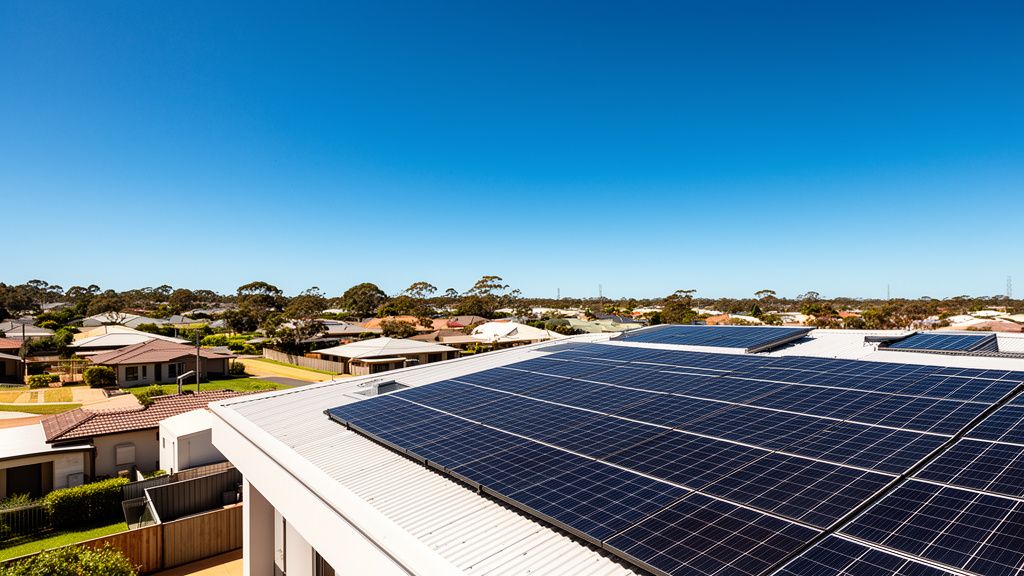
TL;DR: Australia needs significant investment to build a domestic polysilicon sector, which forms the foundation of solar panel manufacturing. This energy-intensive process can leverage Australia's abundant, cheap renewable electricity, but requires "brave" capital willing to commit to large upfront costs and long-term strategic goals for local supply chain security.
Why Does Australia Need a Domestic Polysilicon Industry?
Australia requires a local polysilicon industry to secure its future in renewable energy manufacturing and reduce reliance on overseas supply chains. Polysilicon, a hyper-pure form of silicon, forms the base material for nearly all solar photovoltaic (PV) cells. While Australia possesses abundant quartz – the raw material for silicon – and the world's best solar resources, it currently exports raw materials and imports finished solar panels. Building a domestic polysilicon capability closes a critical gap in the supply chain, moving Australia beyond raw material extraction to high-value manufacturing. This strategic move strengthens the nation's energy independence and creates highly skilled jobs. Analysts estimate that a single modern polysilicon plant can cost well over $1.5 billion to construct, highlighting the substantial financial commitment required.
The Energy Equation: Why Polysilicon Needs Abundant Power
Polysilicon production is extraordinarily energy-intensive, making it a perfect match for Australia's rapidly expanding renewable energy capacity. Converting metallurgical-grade silicon into solar-grade polysilicon typically consumes between 50 to 80 kilowatt-hours (kWh) of electricity per kilogram of product. This high energy demand has historically pushed production to regions with cheap, often coal-fired, power. However, Australia's declining solar and wind electricity costs now present a unique advantage. Large-scale solar farms in Western Australia or Queensland, for example, can produce electricity at a levelised cost of around $40-$50 per megawatt-hour (MWh), significantly cheaper than many international alternatives. This cost advantage means Australian polysilicon production could be among the greenest and most cost-effective globally, attracting manufacturers prioritising low-carbon footprints.
Securing the Supply Chain: Australia's Strategic Advantage
Developing a local polysilicon sector enhances Australia's energy security and provides a strategic buffer against global supply chain disruptions. Geopolitical events and trade tensions consistently demonstrate the fragility of relying on single-source suppliers for critical components. By manufacturing polysilicon domestically, Australia mitigates risks associated with international shipping delays, price volatility, and potential export restrictions from dominant producing nations. Furthermore, establishing this foundational industry encourages downstream manufacturing, such as wafer and cell production, creating a more integrated and resilient solar ecosystem within Australia. This national capability also positions Australia as a reliable supplier to international partners seeking diversified, ethically produced solar materials.
What Financial Hurdles Do Australian Polysilicon Projects Face?
Australian polysilicon projects face significant financial hurdles, primarily stemming from immense upfront capital requirements and the long lead times before generating returns. The construction of a world-scale polysilicon facility demands multi-billion-dollar investments, covering specialised purification reactors, sophisticated chemical processing units, and dedicated power infrastructure. Unlike typical commercial solar installations with payback periods often under five years, a polysilicon plant requires a decade or more to recoup its initial outlay. This extended timeline, coupled with the capital intensity, makes it a challenging proposition for conventional private equity or venture capital funds that seek quicker returns.
The Capital Expenditure Challenge
Building a state-of-the-art polysilicon plant involves colossal capital expenditure (CAPEX). Estimates for a modern facility capable of producing 50,000 tonnes of polysilicon annually hover between $2 billion and $3.5 billion, depending on location, technology, and scope. This figure includes land acquisition, construction, equipment procurement, and initial operational setup. Securing finance of this magnitude typically requires a consortium of banks, government backing, and strategic industrial partners. Investors must commit to a patient capital strategy, understanding that returns will materialise over an extended period, reflecting the foundational nature of the investment in a new industrial sector.
Competing on a Global Stage
Australia's nascent polysilicon industry must compete with well-established, often subsidised, international players, particularly those in Asia. These existing producers benefit from economies of scale, decades of operational experience, and mature supply chains. They have already amortised much of their initial CAPEX, allowing them to offer polysilicon at highly competitive prices. For an Australian venture, this means achieving superior operational efficiency, leveraging cheaper renewable energy, and potentially securing long-term offtake agreements at favourable terms to justify the initial investment. Government support, through grants or low-interest loans, becomes critical in levelling the playing field during the initial establishment phase.


What Investment Models Can Attract Capital to Australian Polysilicon?
Attracting the necessary "brave capital" for Australia's polysilicon sector requires innovative and collaborative investment models that de-risk the venture and offer long-term stability. Traditional financing alone often struggles with the scale and timeline involved. A multi-pronged approach combining government support, strategic industry partnerships, and specialised green finance initiatives can make these projects viable. This blend reduces individual investor exposure while aligning with national economic and environmental goals.
Government Support and Strategic Partnerships
Government grants, concessional loans, and tax incentives are essential to bridge the initial funding gap and signal national strategic importance. The Australian federal government, for instance, could offer direct grants for plant construction or provide loan guarantees to reduce lender risk. State governments could facilitate access to suitable industrial land, streamline permitting processes, and ensure robust renewable energy grid connections. Furthermore, strategic partnerships with international PV manufacturers seeking diversified supply chains can provide crucial early-stage investment and guaranteed offtake agreements. These manufacturers might invest directly in exchange for long-term supply contracts at agreed prices, ensuring market stability for the Australian producer.
Leveraging Green Finance and Offtake Deals
The rise of environmental, social, and governance (ESG) investing creates a new avenue for attracting capital to a green polysilicon industry. Dedicated green bonds and sustainability-linked loans, which typically offer more favourable terms, can fund projects demonstrating clear environmental benefits, such as those powered entirely by renewable energy. Investors focused on ESG impact may find Australian polysilicon particularly appealing due to its potential for ultra-low-carbon production. Simultaneously, securing long-term offtake agreements with Australian or international solar cell and module manufacturers reduces market risk. These contracts provide revenue certainty, making the project more attractive to lenders and equity investors by guaranteeing a buyer for the polysilicon even before production begins. For example, a 10-year agreement to supply 20,000 tonnes of polysilicon annually provides a stable income stream that underpins financial modelling.
Key Takeaways
- Australia needs to build a domestic polysilicon industry to secure its solar manufacturing supply chain and add value to its raw materials.
- Polysilicon production demands immense energy, making Australia's cheap, abundant solar power a significant competitive advantage.
- Establishing a polysilicon sector requires multi-billion dollar upfront investments and long payback periods, deterring traditional short-term capital.
- Attracting investment means combining government grants, low-interest loans, strategic industry partnerships, and green finance initiatives.
- Long-term offtake agreements with PV manufacturers are critical to de-risk projects and provide revenue certainty for investors.
Read More
For a comprehensive overview, check out our master guide: Read the Full Guide Here.


