TL;DR: Australia is navigating a complex shift toward clean energy through rapid deployment of small-scale hybrid solar systems, multi-million-dollar biomass developments, advanced wind turbine technologies, and robust engineering curricula designed to combat industry-wide disinformation.
Understanding the Australian Energy Landscape
The ongoing transformation of the Australian energy sector is a multi-dimensional challenge involving power prices, resources, renewables, and policy. As documented by News24 Australia, keeping the lights on in Australia requires a clear and analytical approach to managing the retirement of aging fossil fuel assets while integrating clean alternatives. Achieving a reliable, net-zero carbon energy grid requires addressing the global shift toward clean energy, decarbonisation, and sustainability. However, this transition is not just about installing solar panels; it requires structural changes in transmission networks, industrial manufacturing processes, workforce training, and public perception.
Traditionally, large-scale utility projects have been viewed as the primary mechanism for grid decarbonisation. Yet, many of these mega-projects are currently stalling due to their heavy dependency on the expansion of major transmission networks. Building long-distance high-voltage lines is a slow, capital-intensive process that can delay clean energy deployment by years. Consequently, energy policy and clean energy financing are shifting toward more agile, localized technologies that can be deployed rapidly to maintain grid stability and manage rising power prices.
The $100 Million CEFC Funding Campaign: Prioritising Solar Hybrids and Battery Retrofits
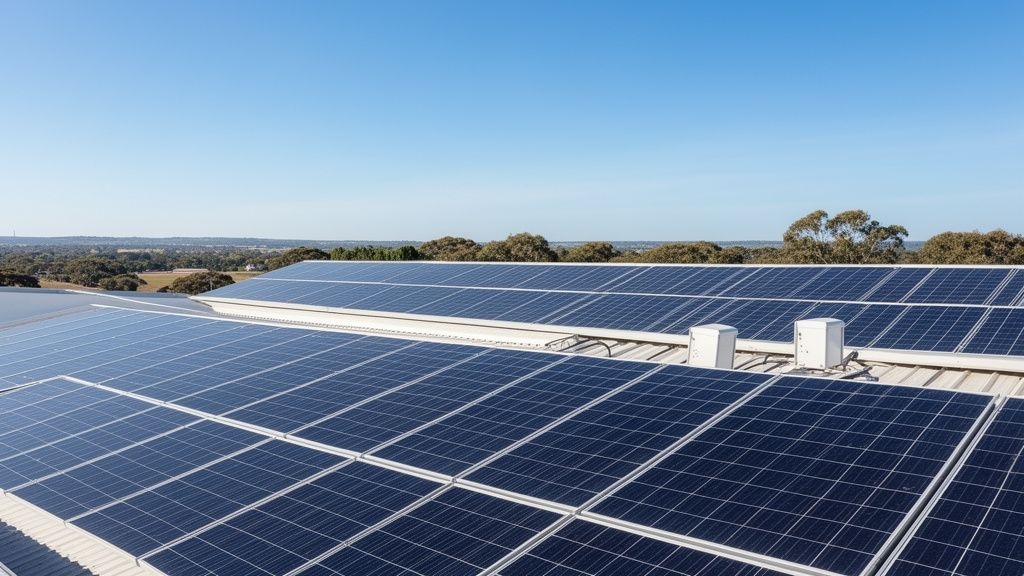
To address transmission bottlenecks, the Clean Energy Finance Corporation (CEFC) has launched a new $100 million funding campaign. As reported by Giles Parkinson on August 3, 2026, this targeted package focuses explicitly on small solar hybrids and battery retrofits. The primary advantage of these smaller-scale projects is that they can be developed far more quickly than massive transmission-dependent projects. By bypassing the delays associated with building new interstate grid infrastructure, these hybrid systems and battery retrofits can be deployed rapidly to localized networks.
This funding push represents a strategic shift in capital allocation. Instead of waiting for massive wind and solar farms to connect to the national grid, the CEFC is targeting smaller, distributed hybrid setups. These systems pair local solar generation with dedicated battery storage, allowing excess clean energy to be captured on-site and discharged during peak demand periods. This strategy reduces local network stress, lowers electricity costs, and provides immediate grid-balancing benefits while the nation's transmission framework catches up with utility-scale developments.
Industrial Decarbonisation: Bespoke Grids and Biomass Technologies
Heavy industry is also finding alternative pathways to transition away from fossil fuels. Giles Parkinson reported on July 31, 2026, that Fortescue is constructing bespoke green grids to tap directly into demand from data centres and green iron operations. Fortescue asserts that it can build green power installations faster and cheaper than traditional utility approaches, proving its point by rapidly deploying the country's largest wind turbines to support these industrial grids. This demonstrates how localized micro-grids can isolate and supply high-demand commercial users without overworking public transmission networks.
In tandem with green grids, major resource companies are investing directly in biomass to replace coal and gas. On June 4, 2024, Joshua S. Hill reported that mining giant Rio Tinto is investing $215 million in a new development facility in Australia to assess "BioIron." This innovative ironmaking process uses biomass instead of metallurgical coal to significantly reduce carbon emissions. Furthermore, renewable hydrogen technology engineered at Macquarie University has secured CEFC backing. This technology converts biomass into "carbon-negative" green molecules, offering a clean feedstock for industries that are traditionally hard to abate through electrification alone.
Wind Energy Dynamics: Offshore Challenges and Innovative Floating Designs
While onshore wind and solar progress, offshore wind in Australia faces significant hurdles. On July 31, 2026, Sophie Vorrath reported that the task of building Australia's first offshore wind farm has the odds stacked against it. State political turmoil and a looming election have increased the degree of difficulty, creating regulatory uncertainty that has slowed investment. However, offshore wind remains a key prospective resource for consistent baseload clean energy.
To address the high capital costs associated with traditional marine energy, Australian researchers have developed a new floating wind turbine design. Reported by Rachel Williamson on July 30, 2026, this design could cut capital costs by up to 40%. However, this cost reduction is currently limited to small machines. While not yet suitable for massive utility-scale offshore developments, this technology is highly useful for offshore industries, such as remote mining or offshore resource platforms, that require localized, reliable, and cost-effective power sources.


Storage Integration and Alternate Clean Fuels
Grid stability is also being enhanced through waste-to-energy and municipal scale projects. On November 20, 2023, Rachel Williamson reported that the Australian Capital Territory (ACT) expanded its municipal landfill gas generation. The ACT added a new 24 MWh battery to store power from its expanded 6.2 MW gas-to-energy power plant, allowing dispatchable power to be fed into the grid during peak demand periods. This project highlights how existing landfill infrastructure can be combined with modern battery technology to turn localized municipal emissions into a valuable grid asset.
In transportation, alternative liquid fuels are beginning to make commercial headway. On July 6, 2026, Robyn Wuth reported that jet fuel made from used cooking oil will be used at an Australian airport for the first time. This technology provides wings to clean transport, illustrating how organic waste can be converted into high-energy fuels to reduce emission profiles in sectors like aviation where direct electrification is currently unfeasible.
Fighting Disinformation in the Renewable Energy Sector
As the physical infrastructure of the transition takes shape, the industry is also confronting a battle over public perception. During the ACES summit in Sydney, industry leaders discussed the "wind drought" that has been widely talked about but poorly understood. On July 30, 2026, Giles Parkinson reported that a wind project faced formal referral due to a public meeting called because of submissions from mostly long-distance objectors, who cited the impacts of a wind farm that does not even exist.
This incident highlights a broader challenge identified by an outgoing senator, who urged the energy industry to step up and actively fight fossil-funded disinformation (as reported by Rachel Williamson on July 30, 2026). If the renewable sector is to successfully replace coal and gas, it must engage in clear, factual public communication to counter coordinated opposition campaigns that target clean energy developments.
Education, Training, and Professional Standards
To manage this transition, Australia requires a highly skilled professional workforce. Curtin University has established an Energy Engineering Major (BEng Hons) offered at Curtin Perth and Curtin Malaysia. This degree, which has sought provisional accreditation from Engineers Australia (EA), is designed to prepare the next generation of engineers. Following a foundational year, students study renewable energy technologies, energy storage and conversion systems, energy transport, low-carbon fuels, hydrogen production, energy policy, and economics.
Complementing university-level academic programs, Global Sustainable Energy Solutions (GSES) Australia serves as the nation’s premier renewables training group. GSES specializes in training engineers and technicians in practical solar PV and battery system design, ensuring that those working on the frontlines of the transition are equipped with the technical expertise to design and deploy safe, high-performing solar and battery storage systems.
Key Takeaways
- Agile Grid Solutions: The CEFC's $100M campaign prioritizes small solar hybrids and battery retrofits, avoiding the transmission-related delays that stall mega-projects.
- Industrial Innovations: Rio Tinto is investing $215M in its BioIron biomass facility, while Macquarie University's biomass-to-hydrogen technology has won CEFC backing.
- Offshore Wind Challenges: Australia's first offshore wind farm faces regulatory hurdles due to state political turmoil, though new floating turbine designs offer a 40% cost reduction for smaller applications.
- Disinformation Barriers: Outgoing senators have urged the energy sector to counter organized, fossil-funded disinformation campaigns that stall project approvals.
- Education and Training: Professional training programs from GSES and Curtin University's Energy Engineering Major are critical to preparing the workforce for net-zero delivery.
Related Guides
- Strategic Solar Hybrids and Battery Retrofits: Transforming Australia’s Grid Security
- Designing High-Performance Residential Solar Systems: Focus on Risen Solar Packages
- Industrial Decarbonisation and Biomass Innovation in the Australian Commercial Sector
- Engineering the Energy Transition: Higher Education and Professional Training Pathways