TL;DR: The Clean Energy Australia 2026 report outlines major milestones, with renewables supplying 43% of the nation's electricity, while highlighting an urgent need for new investment to sustain the net-zero transition.
Renewable Energy Milestones and Investment Realities
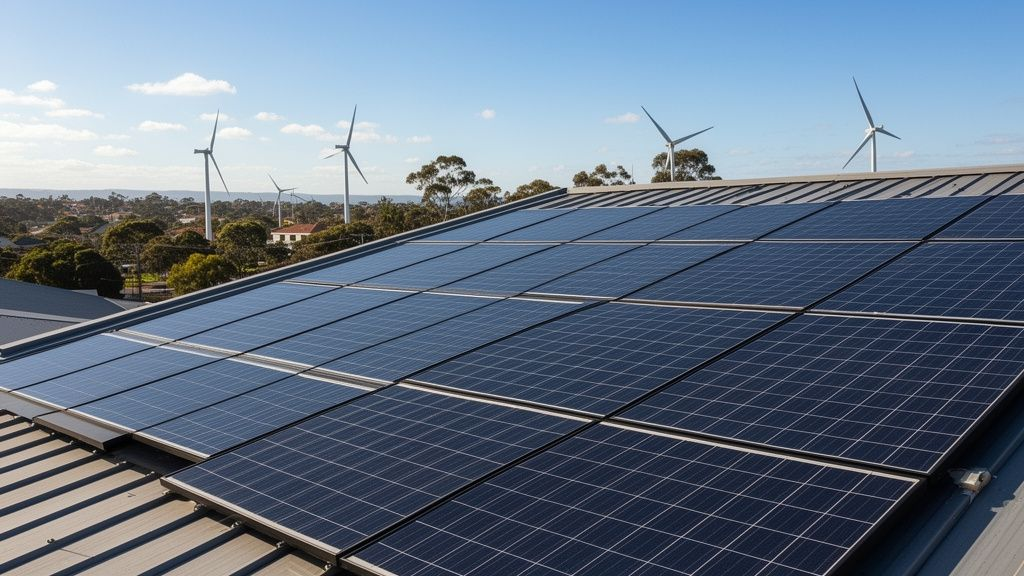
The Clean Energy Council's newly released Clean Energy Australia 2026 report paints a comprehensive picture of the current state of Australia's electricity transition. The data shows enormous momentum in the sector, with renewable energy sources growing to account for 43 percent of Australia's total electricity supply. This represents a significant shift from previous years, driven by the steady rollout of residential rooftop solar, commercial installations, and utility-scale wind and solar farms.
However, the report also highlights real urgency. While generation capacity has reached record highs, clean energy investment has fallen to one of its lowest levels in a decade. To achieve Australia's long-term emissions reduction targets, the industry must overcome barriers to investment and accelerate the development of transmission lines, large-scale storage, and generation projects. Resolving these challenges requires coordinated policy work, industry support programs, and strong collaboration between developers and government bodies.
Powering the Growing Digital Economy Sustainably
One of the most significant drivers of future electricity demand in Australia is the rapidly growing data centre sector. As the digital economy expands, data centres require vast amounts of consistent electricity to power servers and cooling systems. The Clean Energy Council emphasizes that this growing energy demand does not need to compete with households and businesses for existing electricity supplies.
Instead, the data centre sector has the potential to become one of the largest drivers of new clean energy investment in Australia. By partnering directly with renewable energy developers, data centre operators can help finance new solar and wind farms to cover their operational loads. This approach ensures that the digital economy grows sustainably without adding stress to the national electricity grid or driving up power costs for everyday consumers.


Building Community Support and Social License
For large-scale clean energy projects to succeed, they must secure a "social license" by earning the trust and support of the local communities in which they operate. The Clean Energy Council's Best Practice Charter for Renewable Energy Projects addresses this need. More than 50 member companies have committed to the charter, pledging to engage respectfully with local communities, respect environmental and cultural values, and make positive contributions to regional areas.
According to the Clean Energy Council's Best Practice Charter 2025 reports, there are more than 400 documented examples of clean energy projects delivering direct, tangible benefits to regional Australia, Traditional Owners, and local landholders. To support informed public discussion and counter mis- and dis-information, the council has developed resources such as the Energy Fact Check. This tool provides evidence-based, balanced answers to common questions regarding local renewable developments and the broader energy transition.
Key Takeaways
- Record Generation: Renewable energy sources have grown to generate 43% of Australia's electricity, according to the Clean Energy Australia 2026 report.
- Investment Warning: Clean energy investment has declined to one of its lowest levels in a decade, highlighting an urgent need for policy support and grid development.
- Data Centre Drivers: The expanding data centre sector can act as a primary catalyst for new clean energy investment rather than competing with households for electricity.
- Best Practice Charter: Over 50 Clean Energy Council members have committed to respectful community engagement, environmental sensitivity, and local benefit sharing.
- Regional Integration: More than 400 cases show clean energy projects actively delivering positive financial, environmental, and social outcomes to regional communities and Traditional Owners.